
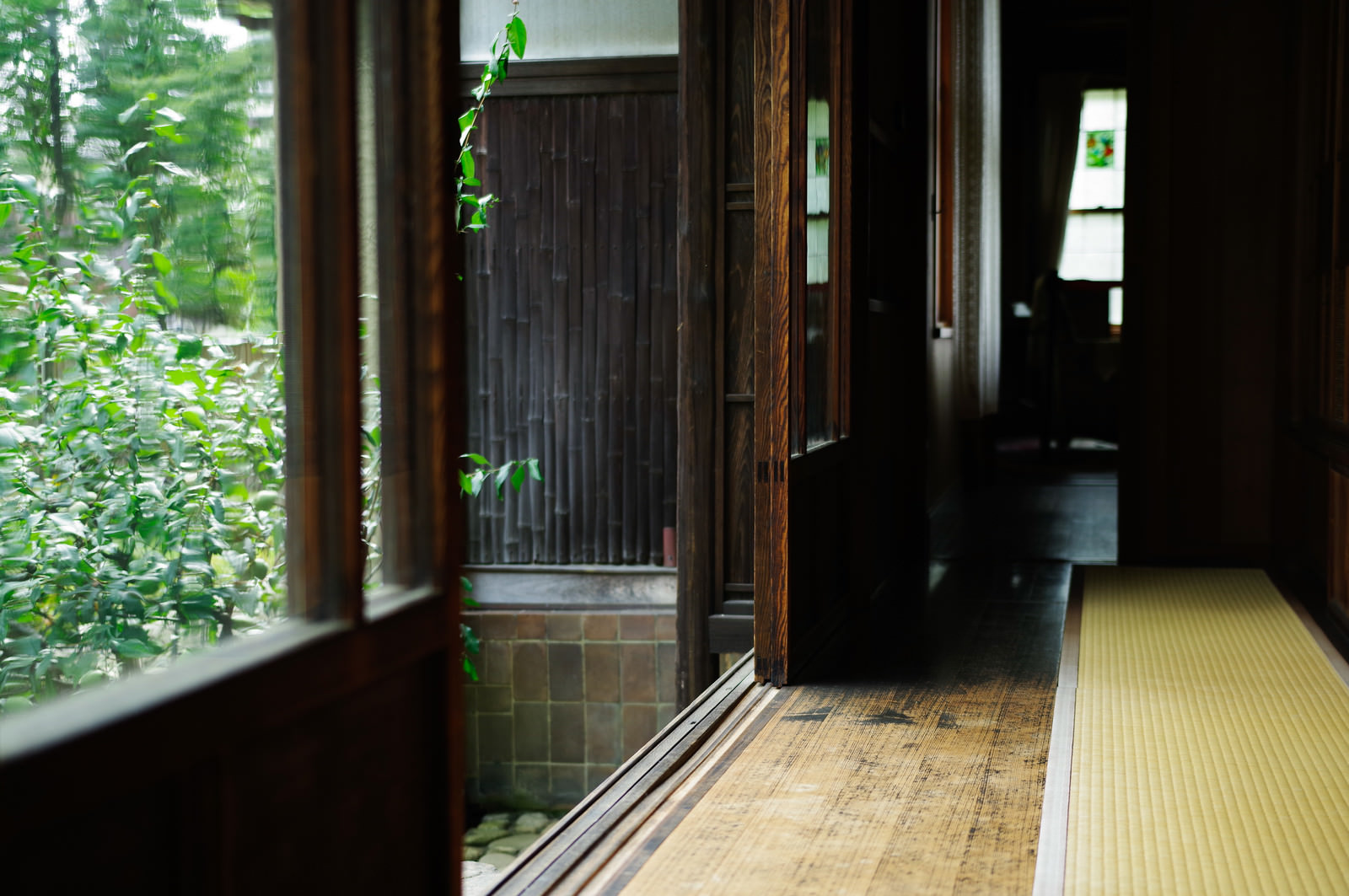
Opening Story: First Steps onto Tatami
The traveler had arrived in Japan after weeks of anticipation. He had read guidebooks about the neon lights of Shinjuku, the rush of bullet trains, and the endless allure of Tokyo’s crowded streets. Yet what he remembered most vividly after his first day was not the flashing signs or the high-tech wonders, but the moment when he stepped, barefoot, into a tatami room for the very first time.
It happened in a quiet ryokan tucked away in the mountains, far from the pulsing rhythm of the city. The inn was a modest wooden structure, built in a style that had barely changed for centuries. Sliding doors creaked softly as they were opened. Lanterns glowed dimly, illuminating narrow corridors that smelled faintly of cedar and smoke. The host—an elderly woman in a faded kimono—led him down the hall, bowing slightly as she gestured toward his room.
He removed his shoes, as instructed, feeling the cool wooden floor beneath his socks. Then came the threshold: a single sliding shoji door that revealed a square of pale, straw-colored flooring. He hesitated, then stepped forward.
The first sensation was touch. The soles of his feet pressed into the tatami, and he realized it was neither hard like wood nor soft like carpet. It was something in between—a firm resilience with a gentle give, almost as if the floor was breathing with him. His steps felt quiet, muted, respectful.
Then came smell. A subtle fragrance rose up—clean, grassy, slightly sweet. It was the smell of dried rush grass, igusa, woven tightly into mats that had been tended with care. The aroma was unfamiliar but strangely comforting, as if he were being welcomed not by people but by the room itself.
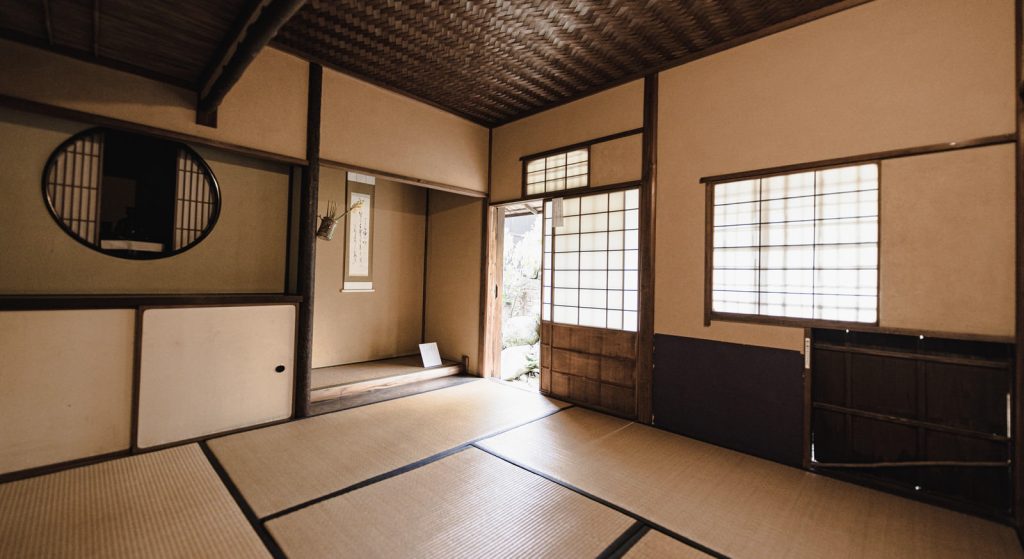
His eyes adjusted to the simplicity before him. The room was almost bare: no heavy furniture, no distractions. Just a low table set near the center, a hanging scroll on the wall, and a small alcove with a single flower arranged in perfect silence. The emptiness was not absence but presence—a spaciousness that invited the mind to rest.
For a moment, the traveler stood frozen. He had never experienced a room that seemed to calm him merely by existing. He thought of the hotel rooms back home, cluttered with lamps, desks, chairs, and buzzing electronics. Here, there was none of that. Only light falling softly through paper screens, only shadows playing gently on straw, only the muted creak of the wooden frame settling into the night.
As he sank to his knees, awkwardly imitating the seiza posture he had seen in guidebooks, the feeling deepened. The tatami carried the warmth of the day but cooled gradually as the mountain air slipped through the shoji. Silence wrapped itself around him, yet it was not an empty silence—it was a full silence, alive, textured, with the faint sound of wind outside and the beating of his own heart suddenly audible.
He realized, almost with surprise, that he was breathing differently. The shallow breaths he had carried from the city’s rush were giving way to slower, deeper inhalations. It was as though the room itself had taken hold of his body and was teaching him to calm down.
The innkeeper entered quietly, sliding the door open without a sound. She bowed and placed a tray before him. On it was a teapot and two cups, steam curling upward in delicate spirals. When she poured, she aligned the handle just so, turning the cup so the traveler could lift it easily. She said almost nothing, but her gestures were careful, deliberate. When the warm porcelain touched his hands, he realized that even this—this act of tea being placed on tatami—was part of the same language of quiet care.
Later, lying on the futon that had been laid out in perfect symmetry, he listened to the muted hush of the night. There were no cars, no chatter, no neon. Only the faint scent of the tatami rising as the warmth of his body pressed against it, only the sensation that the room was holding him gently in its stillness.
It was in that silence that the thought arose: This is not just a room. This is an environment designed to calm the human mind. The traveler, who had crossed oceans in search of adventure, found something unexpected. The stillness of a tatami room was not a void—it was a presence, a kind of quiet companionship that invited him to let go.
When he woke the next morning, sunlight filtered through the paper screens, illuminating the straw in a golden glow. He felt refreshed, but more than that, he felt reorganized, as if his thoughts had been put in order while he slept. The clutter of city life, the mental noise of travel, the tension he had carried for years—all seemed softened.
In that moment, he understood something profound: the tatami room had given him back his own mind.
The Sensory World of Tatami
When people speak about architecture, they often talk about scale, design, or functionality. But a Tatami 畳 room begins somewhere far subtler—at the level of the senses. It does not overwhelm; it whispers. It does not dazzle; it invites. To step into a tatami room is not simply to occupy space but to enter into a carefully woven dialogue with touch, smell, sound, sight, and even breath. Each element of the tatami’s sensory presence contributes to the deep calm so many visitors report.
The Fragrance of Igusa: A Living Memory
The first thing many notice, often without knowing what it is, is the smell. Tatami mats are woven from 井草 Igusa, a reed-like grass that grows in Japanese wetlands. Freshly woven, it carries a fragrance both grassy and sweet, reminiscent of summer fields at dusk. Over time, as mats age, the scent deepens, mellowing into something more subtle but no less comforting.
Scientists have even found that Igusa releases phytoncides—natural aromatic compounds that plants use to protect themselves—which have measurable relaxing effects on the human nervous system. In other words, the smell of tatami is not just pleasant; it is medicinal in its own quiet way.
Foreign travelers often describe the fragrance as “nostalgic,” even if they have never encountered it before. There is something in its freshness that recalls innocence: childhood summers, open fields, or the simplicity of life before constant digital stimulation. In Japan, many people associate it with home itself. For someone raised in a tatami room, stepping into one decades later can be like being embraced by memory.
Touch: The Ground That Softly Yields
Under the feet, tatami offers a texture that resists easy categorization. It is neither the hardness of tile nor the plushness of carpet. Instead, it yields slightly with each step, providing a subtle cushioning that makes walking barefoot instinctively pleasurable.
Children love to roll across tatami floors because the surface is forgiving. Elderly people appreciate the gentle give, which reduces strain on joints. And when one kneels in seiza, the traditional sitting posture, the tatami supports without numbing the body too quickly. It is flooring designed not for furniture but for human presence.
Touch is more than physical here—it becomes emotional. There is humility in lowering oneself to the level of tatami, where the floor is not something beneath us but something that holds us. Sitting on chairs elevates us; sitting on tatami levels us, reminding us that simplicity can be grounding in the most literal sense.
Sound: A Floor That Drinks Silence
Another quality of tatami is often overlooked until one notices its absence elsewhere. Tatami absorbs sound. The woven straw fibers mute footsteps, soften the clink of cups, and swallow the hollow echo of an empty room.
This acoustic softness is essential to the atmosphere of a tea room or meditation hall. Without harsh reverberations, voices naturally lower. Conversations slow. Even silence feels different—less like a void, more like a gentle fullness. Travelers often remark that in a tatami room, they can “hear themselves think.” In fact, what they are hearing is the absence of interference, a silence sculpted by natural material.
Light and Shadow: The Aesthetics of Restraint
Tatami is not only felt but seen. Its pale golden color reflects light softly, unlike polished wood or synthetic flooring. When sunlight passes through shoji screens and falls on tatami, the effect is diffused, almost watercolor-like.
The room’s emptiness accentuates this play of light and shadow. Because the space is uncluttered, a single beam of light sliding across the mats becomes a kind of artwork. In traditional Japanese aesthetics, this restraint—valuing what is subtle, understated, and half-hidden—is central. The tatami room does not demand attention but rewards it for those who look carefully.
Breathing with the Room
Tatami is alive. It absorbs and releases moisture depending on the season, moderating humidity. This breath-like quality makes the air inside such rooms feel fresher and more balanced. In humid summers, tatami absorbs excess dampness; in dry winters, it releases stored moisture. Without anyone noticing, it creates a microclimate that supports human comfort.
For a traveler used to sealed-off modern interiors, there is something almost magical about lying down in a tatami room and realizing the air feels different, cleaner somehow. The room itself participates in the rhythm of life.
The Constellation of Senses
Taken separately, each element—the fragrance of igusa, the soft resilience underfoot, the muffled acoustics, the diffused light—might seem minor. Together, however, they form an ecosystem of calm. A tatami room is not just an arrangement of mats on a floor. It is a sensory constellation designed, refined, and maintained over centuries to invite stillness into the body and mind.
It is why, when a foreign traveler lies awake on a futon, listening to the silence, they may feel something shifting inside them. Not through words or philosophy, but through the patient language of the senses, tatami teaches the body to rest.
Historical and Cultural Roots
Tatami may strike the casual observer as a simple floor covering—woven grass laid neatly in rectangular forms. Yet behind this apparent simplicity lies more than a thousand years of cultural refinement. To understand why the stillness of a tatami room calms the mind, one must look not only at its sensory presence but at the deep historical and philosophical roots that shaped its role in Japanese life.
From Elite Luxury to Everyday Life
The earliest records of tatami appear in the Heian period 平安時代 (794–1185). At that time, Tatami mats were not used to cover entire rooms. Instead, they were luxury furnishings reserved for aristocrats, laid out in partial sections on wooden floors. Their portability allowed them to serve as cushions for sitting or sleeping, symbols of refinement and comfort in a society obsessed with courtly elegance.
As centuries passed, tatami gradually expanded its reach. During the Kamakura 鎌倉時代 (1185–1333) and Muromachi 室町時代 (1336–1573) periods, the warrior class began to adopt tatami. With their emphasis on formality and discipline, samurai families arranged mats across entire rooms, giving birth to the Shoin-zukuri 書院造 style of architecture. In these rooms, space itself became a stage for etiquette, ritual, and contemplation. By the Edo 江戸時代 (1603–1868) period, Tatami had spread widely, and though still a marker of status, it increasingly entered the homes of common people. What began as elite luxury became a shared cultural foundation.
Tatami and the Aesthetics of “Ma”
Tatami did not evolve in isolation—it shaped and was shaped by the Japanese sense of space known as Ma. Unlike the Western emphasis on filling a room with objects, ma treasures what remains unfilled. The empty space between mats, the interval of silence between sounds, the pause between gestures—these gaps are not absences but presences of another kind.
Tatami flooring, with its measured proportions (traditionally based on a “Jo” (畳) unit), provided the rhythm upon which Japanese interiors were built. The very act of designing a room around the size and arrangement of tatami mats trained generations of architects, hosts, and guests to think relationally: how bodies, objects, and emptiness coexist. A tatami room is not about what is displayed, but about what is allowed to breathe.
Zen and the Discipline of Stillness
The spiritual depth of tatami becomes clear in the context of Zen Buddhism, which deeply influenced Japanese aesthetics from the 13th century onward. Zen temples often featured tatami-covered spaces for meditation and rituals. The mats provided a ground both literal and symbolic: they cushioned the body but also reminded practitioners of humility, as one knelt close to the earth.
Zen monks emphasized the stripping away of distractions. A tatami room, with its muted tones and natural materials, became the architectural embodiment of this teaching. Silence was not accidental; it was cultivated. Stillness was not emptiness; it was fullness of attention. The mats beneath one’s knees became a quiet partner in the practice of awareness.
The Tea Ceremony and Ichigo-Ichie
No discussion of tatami’s cultural roots can omit the tea ceremony (Sado or Chanoyu). Codified by masters such as 千利休 Sen no Rikyū in the 16th century, the tea ceremony crystallized the aesthetic and ethical values of tatami into ritual form.
In a tearoom often no larger than four-and-a-half mats, every gesture mattered—the placement of a cup, the turn of a wrist, the silence before sipping. This setting embodied Ichigo-ichie, the belief that each encounter is unique and unrepeatable, deserving of total presence. The tatami room was not a backdrop but an active participant: it constrained excess, framed movement, and provided the stillness within which subtle kindnesses could shine.
Foreign travelers who enter such a tearoom often describe the experience as paradoxical: at once formal and profoundly intimate. The mats underfoot, the empty alcove (床の間 Tokonoma), and the sound of water boiling in an iron kettle—all merge into an atmosphere where time itself feels reshaped.
The Ethos of Wabi-Sabi
Linked to both Zen and tea culture is the aesthetic philosophy of Wabi-sabi. At its heart, Wabi-sabi values imperfection, impermanence, and the quiet dignity of the humble. Tatami reflects this ethos perfectly. New mats gleam pale gold, but over time they darken, fray, and bear the marks of life. Far from being flaws, these changes are embraced as expressions of authenticity.
A tatami room teaches acceptance: the reed fibers that bend under weight, the scent that fades, the seams that wear. To sit in such a room is to sit within the flow of time itself, to realize that beauty is not static but lived.
Tatami and the Way of Courtesy
In samurai households, Tatami was also bound to codes of etiquette. Where one sat in a room—closer to or farther from the alcove—signaled rank and respect. Kneeling postures were disciplined by the mat’s geometry. Every line guided behavior, reminding individuals of their place within a larger social fabric.
Thus, Tatami was never just flooring. It was a moral teacher, an aesthetic canvas, and a silent companion to rituals of daily and spiritual life. Its stillness is not merely the absence of noise but the presence of centuries of discipline, philosophy, and subtle artistry.

Everyday Encounters with Tatami Rooms
For the foreign traveler, the first encounter with tatami may feel extraordinary—like stepping into another dimension of stillness. But for generations of Japanese families, tatami rooms have been woven into the rhythms of everyday life. They are not exotic but intimate, not ceremonial only but domestic, practical, and deeply human. By looking closely at the many ways people inhabit tatami spaces, one can see how stillness and simplicity subtly shape emotional well-being.
Family Gatherings and Domestic Warmth
In many Japanese homes, especially those that still preserve a Washitsu 和室 (traditional Japanese-style room), tatami is the ground upon which families gather. Meals may not always be eaten there, but seasonal festivals, conversations, and moments of rest often unfold on the mats. Children roll across them, grandparents nap on them, and visitors sit around a low table that seems almost to rise naturally from the floor itself.
Unlike Western living rooms dominated by couches and television screens, a tatami room offers versatility. The space can transform: at night, futons are laid out, turning the room into a bedroom; during the day, the futons are folded away, restoring an open floor for sitting, playing, or meditating. This fluid adaptability, centered on tatami, reinforces a lifestyle that values both functionality and stillness.
Rituals of Respect and Remembrance
Tatami rooms are often home to Tokonoma alcoves where scrolls, seasonal flowers, or family heirlooms are displayed. They are also where Buddhist altars (仏壇 Butsudan) may reside. These spaces serve as focal points for memory, respect, and quiet reflection.
Family members may kneel on Tatami to offer incense or prayers to ancestors. In these moments, the mats themselves hold a sacred role: they cushion not only the body but also the act of remembrance. Silence gathers naturally in such rooms, not as absence but as presence—a presence of gratitude, continuity, and belonging.
Arts of Discipline and Beauty
Traditional Japanese arts—茶道 Sadō (tea ceremony), 華道 Kadō (flower arranging), 書道 Shodō (calligraphy), 武道 Budō (martial arts)—have long been practiced in tatami spaces. Each art requires a controlled environment where posture, movement, and atmosphere matter.
- In tea ceremonies, the creak of footsteps on tatami sets the rhythm of anticipation.
- In flower arranging, the simplicity of the room heightens the impact of a single blossom.
- In calligraphy, the softness of the mat supports the steady breathing needed to guide a brush.
- In martial arts like aikidō, tatami (in its sturdier modern form) provides both safety and symbolic grounding.
These encounters remind practitioners that discipline and beauty emerge not from excess but from restraint. The mats themselves act as silent instructors, encouraging attentiveness, humility, and balance.
The Traveler’s Tatami Experience
For visitors staying in a Ryokan 旅館, the tatami room becomes an unforgettable highlight. The ritual unfolds almost predictably: shoes left at the entrance, sliding doors opened, a gentle rush of grassy fragrance rising from the mats. The room appears almost bare—perhaps a low table, a cushion, and little else. For those accustomed to crowded hotel rooms filled with furniture, this emptiness can feel startling.
Yet as the hours pass, the traveler begins to notice subtleties: the way the sunlight shifts across the woven surface, the muffled hush of footsteps, the sense of expansion that comes from an uncluttered floor. When futons are laid out in the evening, there is a moment of recognition: the room has transformed, yet it retains its stillness.
Many foreigners report that even one night in a Tatami room leaves them with a sense of purification. It is as if the quiet floor has absorbed their fatigue, returning them to themselves in the morning with a lighter spirit.
Tatami as a Stage for Everyday Kindness
Beyond family rituals or formal arts, Tatami also frames countless small acts of care. A parent quietly sliding a Shoji (障子) door so as not to disturb a sleeping child. A guest being offered the seat of honor near the tokonoma. Friends sitting in a circle on cushions, laughter softened by the mats beneath them.
These everyday encounters may seem ordinary, but they reveal something essential: the tatami room teaches people how to be together gently. Its stillness is not passive—it invites courtesy, patience, and attention to one another.
The Psychology of Stillness
Why does a tatami room feel so calming? The answer lies not only in cultural associations but also in psychology. Human beings respond to environments in ways that are often subtle, subconscious, and deeply tied to survival instincts. Tatami spaces—by their materiality, emptiness, and sensory qualities—activate patterns of perception that slow the mind and steady the body.
Simplicity as Cognitive Relief
Modern neuroscience shows that cluttered environments increase cognitive load. Every object we see is unconsciously processed and evaluated, demanding small bits of mental energy. In contrast, minimalist spaces reduce that burden, allowing the brain to rest.
A tatami room embodies this principle. Its design eliminates excess: low or absent furniture, natural materials, balanced proportions. For the visitor, the absence of visual noise creates an immediate sense of clarity. Thoughts that once scattered in many directions begin to gather and settle. The mind, like water in a quiet bowl, becomes transparent.
The Power of Natural Materials
Tatami is made from Igusa (rush grass) and rice straw—living materials that breathe. Studies suggest that natural scents can lower cortisol levels, reducing stress. The faint fragrance of tatami has been shown to have such an effect: it anchors the visitor in the present moment through olfactory memory, evoking associations with fields, earth, and seasons.
The texture underfoot also plays a role. Unlike hard flooring, tatami yields slightly, offering a sense of softness and safety. The body, perceiving this tactile support, loosens its tension. Small muscles in the feet and legs release. From there, the nervous system sends signals of relaxation upward through the body.
Acoustics and Quietude
Tatami absorbs sound. Unlike tile or hardwood, it muffles footsteps, cushions movement, and reduces echo. Silence, therefore, is not only cultural but architectural. The auditory system, constantly scanning for threats, calms down in such an environment. When noise is softened, vigilance decreases, and the parasympathetic nervous system—the branch responsible for rest and digestion—activates. Breathing slows, heart rate steadies.
Breathing and Posture in a Tatami Room
The design of the tatami room subtly guides posture. Sitting on the floor—whether cross-legged, kneeling, or in a relaxed position—encourages a closer relationship with gravity. The body aligns more naturally, the chest opens, and breathing deepens.
Many visitors report that when sitting in a tatami room, their breaths become slower without conscious effort. This is the body’s intuitive response to stillness. With deeper breathing, oxygen intake improves, stress hormones diminish, and mental clarity increases.
Escape from Information Overload
We live in an age of overstimulation: screens flashing, messages pinging, advertisements intruding. The nervous system is bombarded, often leading to fatigue, irritability, and anxiety.
A tatami room functions as a counter-environment. With fewer distractions, the mind can focus on the present. The play of light across the woven mats, the subtle creak of shoji doors, the rhythm of one’s own breath—these details rise to awareness. Instead of being pulled outward by constant alerts, attention turns inward. This shift cultivates mindfulness without forcing it.
Stillness as a Shared Psychological Language
Interestingly, foreigners with no prior knowledge of tatami traditions often feel calm within such rooms. This suggests that the psychological effects are not purely cultural but human. The senses respond universally to simplicity, softness, and silence. In this way, tatami becomes a quiet bridge between cultures: even without explanation, its stillness is understood.
Section 5: How Foreigners Experience It
For many foreigners, the first encounter with a Tatami room is both disorienting and enchanting. The space does not immediately “read” like a conventional room: no sofa, no bed, no chairs lined against the wall. Instead, there is emptiness—an absence that can feel almost unsettling.
Initial Confusion: “Where Is Everything?”
A traveler from Europe might step into a tatami room and instinctively look for familiar furniture. The absence of chairs and tables can trigger the question: How do people live here? For those used to the Western emphasis on filling a room with objects, the blankness may at first resemble incompleteness, or even poverty. Some may even feel awkward, unsure where to sit or how to behave.
This initial confusion is important—it reveals how strongly one’s cultural background shapes expectations of comfort. What feels “empty” to one person can be experienced as “complete” to another.
Gradual Recognition of Calm
Yet after a few minutes, something shifts. Once shoes are removed and the traveler sits down, the body registers the gentle texture beneath them. The scent of igusa rises, subtle but insistent, unlike anything encountered in hotels abroad. The absence of clutter begins to reveal itself not as lack, but as presence. The room seems to breathe.
Travelers often describe a sensation of release—as if the room itself invites them to exhale. Many notice that conversations naturally soften, movements slow, and even silence feels comfortable. The mind begins to mirror the calmness of the environment.
The Surprise of Deep Sleep
Visitors who stay overnight in a tatami room often report unusually restful sleep. Futons, laid directly on tatami, create a grounded feeling. The softness of the mats beneath, combined with the breathable materials of the bedding, encourage a deeper connection with the floor and thus with the earth itself. Jet-lagged travelers who expected to toss and turn may wake surprised at how deeply they slept.
For some, this first night is transformative: they realize that comfort does not require thick mattresses or heavy furniture, but an alignment between body and environment.
“Cleansed” Thinking
Many foreigners describe a Tatami room experience with words like “cleansing,” “purifying,” or “resetting.” After an evening spent in such a space, they often feel their minds have been clarified, as though clutter in their thoughts had been swept away along with the clutter of furniture.
One traveler from Canada remarked: “I came in restless, with a hundred things on my mind. But after sitting in silence on the tatami for an hour, I felt like I could finally hear myself think. The room didn’t give me answers—it gave me space to find them.”
A Cross-Cultural Lesson
What is striking is that foreigners do not need to know the philosophical traditions behind tatami to feel its impact. The concepts of Ma (space), Wabi-sabi (the beauty of imperfection), or Zen simplicity may be unknown to them, yet their bodies respond all the same. The calm of the tatami room is, in this sense, universal.
For some, the experience becomes a doorway to Japanese culture. They begin to understand why tea ceremony values simplicity, why temples preserve quiet halls, why Japanese design often celebrates minimalism. The room becomes not just a physical space, but an introduction to a way of seeing the world.
Lessons for Modern Life
The stillness of a tatami room is not confined to Japan—it carries lessons that anyone, anywhere, can apply in daily life. Its message is simple: calm does not come from adding more, but from allowing space for less. In a world dominated by constant notifications, crowded schedules, and restless consumption, the tatami teaches us the radical value of emptiness.
The Importance of “Ma” in Everyday Living
Japanese culture has long celebrated ma—the space between things—as a source of beauty and meaning. A tatami room embodies this principle: the blank walls, the open floor, the absence of excessive objects. Rather than filling every corner, the room allows silence and emptiness to hold their own weight.
Modern life, by contrast, often resists emptiness. We fill our calendars, our closets, our screens, our minds. But when we deliberately leave space—time without commitments, rooms without clutter, moments without noise—we rediscover balance.
Practical Ways to Create “Tatami Moments”
Even if one does not live in Japan, the essence of a tatami room can be integrated into daily life through small practices:
- Simplify a corner of your home. Clear a single space—a desk, a windowsill, or a section of floor—so that it holds nothing but stillness. Let that be your quiet place.
- Introduce natural materials. A woven mat, wooden flooring, or a small plant can echo the grounding presence of igusa.
- Use scent as a doorway. The fragrance of grass, wood, or incense can subtly shift mood, just as the smell of tatami transforms a room.
- Practice intentional sitting. Spend ten minutes daily seated on the floor in silence. Let the body’s weight settle downward, as it does in a tatami room.
- Respect pauses in conversation. Instead of rushing to fill silence, notice how waiting a few seconds can deepen understanding.
These small adaptations are not about replicating Japanese tradition exactly, but about translating its spirit into a context that fits modern life.
A Remedy for Digital Overload
In the digital age, one of the greatest sources of stress is constant presence: the sense that we must always be online, always responding, always producing. A Tatami room, in its minimalism, suggests another possibility: to be present by being still.
When we silence the phone, close the laptop, and sit quietly, we experience a kind of reset. The brain slows down, attention steadies, and emotions settle. Just as the tatami floor absorbs sound, stillness can absorb anxiety.
The Richness of Less
Tatami rooms remind us that richness is not measured in accumulation, but in depth. A room with few objects invites us to value each one. A day with few appointments allows us to truly engage with those we meet. A conversation with pauses enables us to listen more deeply.
The lesson is not minimalism for its own sake, but intentionality: choosing less in order to feel more.
Toward a Global Culture of Stillness
What began as a Japanese architectural tradition can become a global practice of wellbeing. Whether in a small apartment in New York, a flat in London, or a home in Mumbai, the spirit of tatami can live in the way we honor silence, create breathing space, and design lives not just for efficiency but for peace.
The gift of the tatami is not nostalgia for the past—it is guidance for the future.
Closing Reflection: The Gift of Quiet Floors
A Tatami room is never just a floor made of woven grass. It is a stage for silence, a vessel for stillness, a quiet companion to the human heart. Its power lies not in what it contains but in what it allows to remain—the sound of one’s own breath, the weight of stillness, the texture of space uncluttered.
For centuries, Japanese people have entered such rooms to gather, to contemplate, to practice art, to share tea, or simply to be. Travelers who step barefoot onto tatami for the first time may think they are encountering architecture, but what they are truly meeting is a philosophy. The mats beneath their feet whisper a message: calm is not something to be chased, it is something already here, if only you allow it to arrive.
In a world where so much of life feels crowded—by voices, by demands, by noise—the Tatami teaches another rhythm. It shows us that to sit in stillness is not to waste time, but to open time. That to embrace simplicity is not to give up richness, but to uncover a deeper kind of abundance.
The calm of Tatami is not loud, not dramatic, not fleeting. It is steady, humble, enduring. And in that steadiness, hearts remember what they often forget: that peace is possible, and that it begins with choosing space over clutter, breath over speed, quiet over constant noise.
As we close this reflection, we return to the philosophy of QuietTether:
“A tatami room teaches us that calm is not found in what we add, but in what we allow to remain—silence, stillness, and space for the heart to breathe.”