
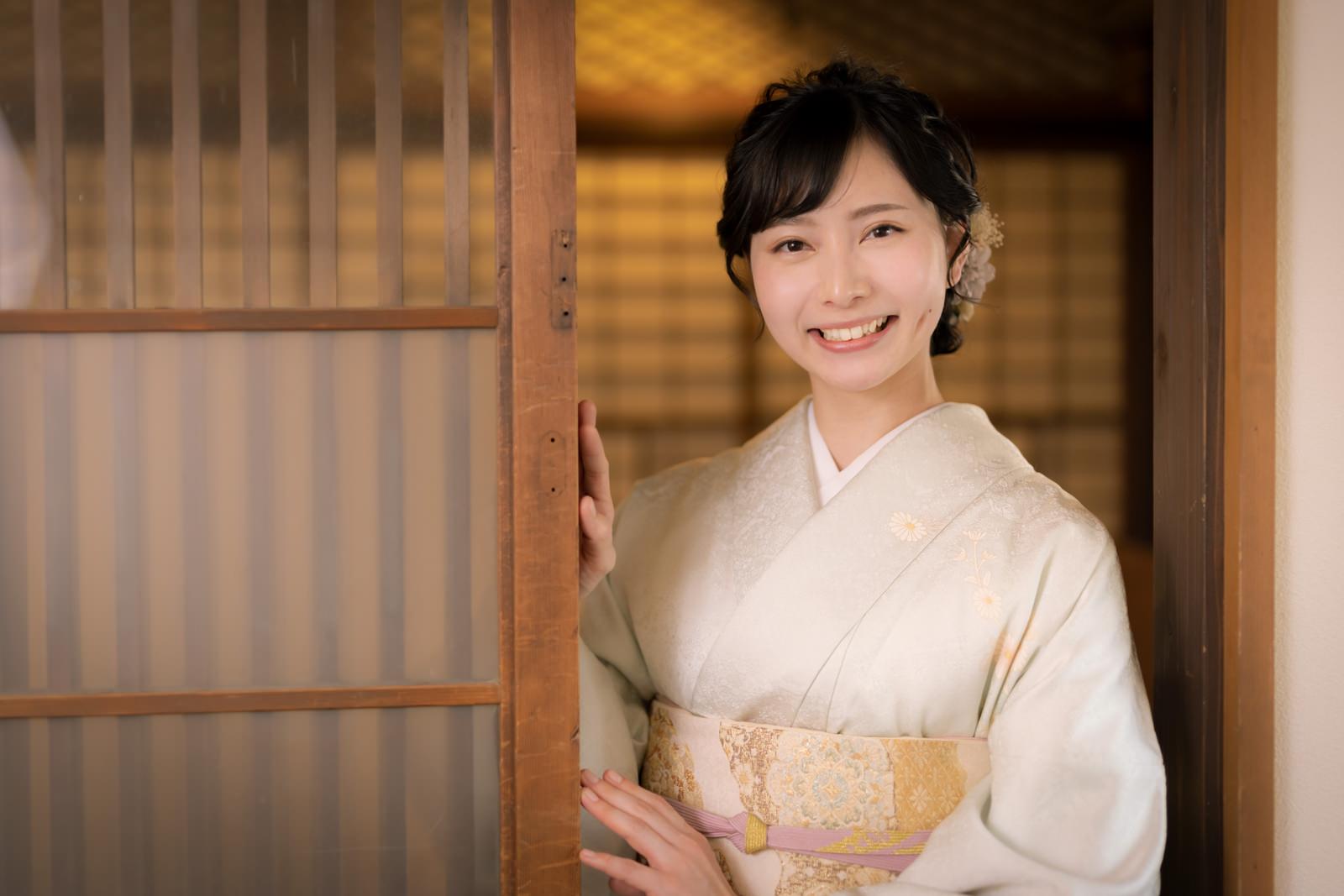
Opening Story: The Bow Instead of the Hug
It was late autumn in Kyoto, the kind of evening when the air grows crisp enough that one’s breath appears like faint smoke against the dim light of paper lanterns. The streets around the old neighborhood were narrow, lined with wooden houses whose latticed windows glowed warmly from within. A foreign traveler, Anna, had spent several weeks in Japan, and this evening she had been invited to dinner by a local family she had met during her stay.
The meal had been generous and carefully prepared: simmered vegetables, grilled fish, bowls of miso soup, and rice that seemed to glisten like small pearls. But more than the food, it was the warmth of conversation, the attentive listening of the hosts, and the quiet laughter shared that left Anna feeling embraced in a way that transcended words. For hours, she had felt not like a visitor, but like a welcomed friend.
When the evening drew to a close, coats were brought out, shoes were placed neatly at the entryway, and it was time for farewell. In Anna’s own culture, such a moment was almost instinctively accompanied by physical gestures: a firm handshake, or more often a hug—a way of saying thank you, I felt close to you, and I want to leave you with a token of my affection.
So, with a heart full of gratitude, Anna leaned forward slightly, opening her arms with the natural impulse to offer a hug to her host. Yet, before she could step closer, her host, Mrs. Tanaka, smiled softly, lowered her gaze just enough to signal respect, and bowed gracefully. It was not a hurried or perfunctory bow, but one carried out with a calm depth, as though each second of stillness carried meaning.
Anna froze for a moment, her arms still half-raised. She pulled them back, feeling awkward. Had she misread the situation? Was her host being polite but distant? Had she somehow overstepped an invisible boundary?
The silence lasted only a heartbeat, but in that heartbeat Anna’s mind raced with questions. In her world, physical touch was a way of confirming trust and closeness. Without it, she wondered, was the connection real?
Later, walking back to her hotel alongside her Japanese friend and informal guide, she voiced her confusion. “I thought she liked me,” Anna admitted, “but when I tried to hug her, she only bowed. It felt… cold, maybe even formal. Did I do something wrong?”
Her friend chuckled gently, not unkindly, and shook his head. “Not at all. That bow she gave you was very warm. You just don’t yet understand what it means. In Japan, a bow can hold more sincerity than a hug. It shows respect, gratitude, and closeness. Sometimes, by not touching, we protect the bond between us. It’s not distance—it’s dignity.”
Anna was silent for a moment, replaying the bow in her memory. She realized that it had not been quick or mechanical. There had been something deliberate, almost tender, in the way Mrs. Tanaka had bent forward, holding the pause as if to let the gratitude sink into the space between them. Perhaps that pause, that space itself, was the gift.
And in that realization, Anna understood something quietly profound: not every culture weaves closeness from touch. In Japan, sometimes the strongest bonds are protected by the very distance that keeps them from being smothered. A bow, instead of a hug, could be an embrace made of air—one that allowed each person to remain whole, unintruded upon, and yet deeply connected.
The Meaning of Distance in Japanese Culture
For someone raised in a culture where closeness is measured by touch, Japan can feel puzzling at first. The instinct to close the gap physically—with a handshake, a pat on the back, or a hug—often meets with a gentle but unmistakable preservation of space. To the untrained eye, this might look like formality, hesitation, or even aloofness. But within the Japanese cultural context, this distance is not a void; it is a carefully cultivated field of respect where bonds are allowed to breathe.
The Value of Personal Space
In Japan, the idea of personal space is deeply ingrained, not as a barrier, but as a form of consideration. On trains, people learn to stand close without brushing against each other unnecessarily. In queues, there is a quiet awareness of where one person ends and another begins. Even in crowded cities, where millions share limited space, the invisible lines of personal boundaries are respected. This respect is not an accident—it is a social contract that says, “I recognize your presence, and I will not intrude upon it.”
Whereas some cultures equate intimacy with reduced distance, Japan often equates dignity with preserved distance. Closeness is not measured by how much you can enter another’s space, but by how attentively you can protect it.
Distance as an Expression of Rei (礼)
The Japanese word Rei—often translated as “courtesy” or “etiquette”—is much more than politeness. It is the practice of acknowledging another person’s dignity, often expressed through bodily posture and spatial awareness. Bowing is the most visible form of Rei. Unlike a handshake, where hands must meet and pressure is exchanged, a bow asks nothing of the other person. It requires no touch, no physical claim. Instead, it creates a shared moment of lowered posture, a mutual acknowledgment that says: I see you, I honor you, and I give you this space as a gift.
This is why, in Japan, not touching is not the absence of connection, but its very affirmation. The bow is an embrace carried by the air between two people.
The Aesthetics of Ma (間)
Japanese culture has long cherished the beauty of Ma—the space between things, the pause that gives rhythm to sound, the gap that allows meaning to emerge. In architecture, gardens, theater, and conversation, ma is not emptiness but fullness waiting to be perceived.
This sensibility carries into relationships. The space between individuals is not seen as distance to be conquered but as a sacred interval where respect and trust can grow. Just as a tea master arranges empty space deliberately within a tea room, Japanese social interaction arranges silence, pause, and non-contact as essential elements of communication.
The absence of touch, then, is not a failure of warmth. It is the cultivation of ma, allowing a relationship to breathe without suffocating closeness.
Not Rejection, but Reverence
For foreigners, the instinctive thought is: If they don’t touch me, perhaps they don’t like me. Yet in Japanese cultural logic, the opposite is often true. By not rushing into another’s physical space, one demonstrates trust and reverence. The space is not a wall but a buffer of safety. It allows each person to remain whole while approaching the other with care.
The bow, the pause, the deliberate step back—all these gestures are ways of saying: Our connection is precious enough to deserve space. I will not collapse it with unnecessary intrusion. I honor you too much to assume permission.
Thus, Japanese distance is not coldness; it is warmth expressed through restraint. It is the discipline of affection that refuses to overrun the dignity of the other.
Everyday Practices of Non-Touch Bonds
If the previous chapter reveals the philosophy behind Japanese distance, this chapter shows how that philosophy is lived day by day. For in Japan, the art of connecting without touching is not reserved for ceremonial moments; it permeates the smallest routines of social life. These practices may look ordinary, even invisible, to those who live within them. But to an outsider, they stand as remarkable symbols of how a society builds bonds without physical contact.
The Bow over the Handshake
In many parts of the world, the handshake is the universal gesture of greeting. It is firm, tactile, and direct—an exchange of pressure that conveys trust and strength. But in Japan, the bow prevails. From a slight nod to a deep bend from the waist, bows vary depending on the relationship, the context, and the level of respect one wishes to show.
What is striking is not only the absence of touch but the elegance of distance. A bow creates a shared gesture without requiring the invasion of personal space. It is a way to say hello, goodbye, thank you, or I am sorry—all with a quiet dignity. The bow, repeated countless times each day across Japan, is perhaps the most visible everyday practice of non-touch bonding.
Space in Public: The Train and the Street
Step into a crowded Tokyo subway, and you will witness a paradox: millions of bodies compressed into a narrow space, yet each person makes subtle adjustments to avoid unnecessary contact. A turned shoulder, a carefully angled arm, an effort to keep one’s belongings from brushing against another. The politeness of distance is not erased even when physical distance becomes impossible.
On the street, too, there is a noticeable choreography of movement. People walk with an awareness of each other, rarely bumping shoulders even in busy crossings. The restraint may not be conscious, but it reflects the deeper cultural script: closeness without intrusion.
Family and Friends: Intimacy without Touch
Perhaps most surprising to outsiders is that this restraint continues even within families and among friends. Parents may hug young children, but physical displays of affection diminish as children grow older. Teenagers rarely hug their parents, and siblings may show love through shared meals, gifts, or words rather than touch. Friendships are expressed in loyalty, in showing up, in quiet listening—not in constant physical closeness.
This does not mean bonds are weaker; it means they are carried differently. A friend who always remembers your birthday, who silently walks with you after a long day, who bows deeply when thanking you—this is intimacy sustained not by touch but by presence.
Politeness in Language: Speaking of Others Before Self
The non-touch bond also extends into speech. Everyday greetings such as Otsukaresama desu (“you must be tired”) or Itsumo osewa ni natteimasu (“thank you for always looking after me”) center on the other person, not the self. The Japanese language itself offers non-physical ways to touch another’s heart through humility and consideration.
The Gift that Apologizes for Existing
In Japan, gift-giving is another way of strengthening bonds without contact. A gift is often offered with the phrase Tsumaranai mono desu ga—“this is a trifling thing.” Of course, the gift is not trifling, but the phrase is an expression of humility. To downplay one’s offering is to elevate the recipient. The act of giving becomes less about the object and more about the space of respect created between giver and receiver.
Silence as Care
Finally, silence itself functions as an everyday practice of non-touch bonding. Where Western conversation often prizes quick replies and expressive enthusiasm, Japanese conversation can pause without discomfort. Silence is not awkward; it is a shared space in which presence itself speaks. Sitting beside a friend without words can be one of the deepest forms of companionship in Japan—a closeness achieved by respecting the quiet space between two people.

Historical and Philosophical Roots
If daily practices show us how Japanese people live the art of distance, history and philosophy reveal why this art took root so deeply. Behind every bow, every pause, every carefully respected space, there are centuries of cultural formation—religion, ethics, aesthetics, and social codes that shaped Japan’s view of closeness and separation.
Buddhism: The Freedom of Non-Attachment
When Buddhism spread to Japan in the 6th century, it carried with it a vision of human connection that emphasized letting go of attachment. To touch, to grasp, to cling too tightly was seen as a path to suffering. True compassion, in Buddhist thought, is not about possession but about creating a safe space in which the other can exist freely.
This perspective infused Japanese social life with an appreciation for restraint. Even in friendship and love, closeness was best expressed not by merging too tightly but by giving the other breathing room. The absence of constant physical touch came to embody a higher form of care: a love that does not bind.
Confucianism: Ritual and Respect
Confucian philosophy, which entered Japan from China, also reinforced the value of distance. Central to Confucian thought is Li (礼)—ritual propriety. Proper behavior creates harmony, and harmony requires boundaries. By maintaining respectful distance, one upholds the dignity of both self and other.
In Japanese society, this meant that touch was rarely necessary to confirm trust or affection. Instead, properly observed forms—bowing, seating arrangements, careful phrasing—were the markers of relationship. To touch too easily, too quickly, could feel like a violation of the order that respect required.
The Samurai Code: Ma-ai and Trust
The ethos of the samurai deepened this cultural respect for space. In martial practice, Ma-ai (間合い)—literally “interval space”—was crucial. A swordsman’s safety depended on his awareness of the distance between himself and his opponent. To invade that distance carelessly was to invite danger.
Though born in combat, Ma-ai evolved into a broader metaphor. Even in peace, trust was built not by collapsing distance but by respecting it. The samurai who maintained composure, who gave others their space, was seen as disciplined and reliable. This martial sensibility seeped into the collective psyche: distance was not a barrier but a form of protection.
Aesthetics of Absence: Poetry and Art
Japanese literature and art also celebrate intimacy without touch. Haiku, with its brevity, rarely names the poet’s emotions directly. Instead, it evokes them through an image—a drifting petal, a sudden breeze, a silent moon. The reader feels the poet’s presence in what is not said, in the spaces between the words.
The same holds true in classical prose and theater. In The Tale of Genji, moments of longing are expressed not through embraces but through glances, letters, and the delicate ritual of exchanging fans. Noh theater leaves vast silences on stage, allowing emotion to emerge from stillness rather than dramatic gestures.
This aesthetic of absence mirrors the social ethic of distance: intimacy does not demand contact. On the contrary, what is left unsaid—or untouched—can be more powerful than what is declared.
Shinto: Purity and Boundaries
Even Japan’s indigenous spirituality, Shinto 神道, contributes to this reverence for distance. Shinto rituals emphasize purity and boundaries—between sacred and ordinary, clean and unclean, self and other. Touching too freely risks blurring these boundaries, while careful respect for space maintains harmony with the divine.
Thus, in Shinto shrines, worshippers bow, clap, and pray without physical contact. The relationship with the Kami 神 (deities) is mediated by gestures and distance, not closeness and touch. This spiritual pattern echoes in everyday human interactions: respect is shown by honoring boundaries.
In sum, the Japanese art of non-touch connection is not an accident of modern life, nor merely a response to crowded cities. It is the fruit of a long history of religious, philosophical, and aesthetic currents. Buddhism’s compassion without grasping, Confucianism’s ritual respect, the samurai’s ma-ai, the poetic beauty of absence, and Shinto’s sacred boundaries—all converge to shape a culture in which not touching becomes a profound expression of bond.
The Psychology of Non-Touch Connection
The idea that bonds can be strengthened without physical contact may sound paradoxical to many outside Japan. In societies where hugs, handshakes, and pats on the back are everyday markers of warmth, distance might appear cold or impersonal. Yet psychology reveals that in Japan, the very absence of touch often creates the emotional foundation for trust, respect, and enduring closeness.
Safety Through Space
One of the most basic human needs in social interaction is a sense of safety. When someone enters our personal space without invitation, we instinctively tense up. In Japan, where cultural norms consistently protect personal boundaries, people rarely feel threatened by unwanted closeness.
This security allows trust to grow. Because the individual knows their space will be honored, they can open up emotionally without the fear of being overwhelmed. What looks like restraint from the outside is, in practice, a way of giving the other person room to breathe—literally and figuratively.
Respect as Emotional Nourishment
In psychology, respect is often described as a “nutrient” for human relationships. Just as plants require sunlight and water, people require signals that their dignity is recognized. In Japan, distance is one of those signals. To not touch is to affirm: I see your boundaries. I will not cross them without your consent.
For the recipient, this message is deeply nourishing. Even without words, they feel valued and safe. The relationship becomes less about immediate gestures of closeness and more about a sustained atmosphere of mutual recognition.
The Quiet Power of Non-Intrusion
Paradoxically, sometimes the deepest connections form when nothing is forced. Western psychology often emphasizes “self-disclosure” as the path to intimacy—sharing personal thoughts and experiences. But in Japan, intimacy often grows in silence, in shared activities, or in the comfort of simply being together without pressing into each other’s private world.
The non-touch approach embodies this same principle: by not intruding, you allow the relationship to ripen naturally. There is no pressure to perform closeness through physical gestures. The bond develops in its own rhythm, sustained by trust rather than constant reaffirmation.
Boundaries as Bridges
In many psychological frameworks, boundaries are seen as barriers. But in Japan, boundaries are reinterpreted as bridges. By respecting the invisible line that separates one person from another, you actually create the conditions for a lasting connection.
This is why friendships and family ties in Japan can feel “light” on the surface but remain remarkably steady over time. They are not bound by constant touch, but by the quiet assurance that space will always be respected. Over years, this assurance transforms into deep loyalty.
Non-Touch as a Stronger Form of Presence
Interestingly, research in interpersonal psychology has found that people often feel more comfortable confiding in someone who listens attentively without interruption, rather than in someone who tries to comfort them through constant physical gestures. Japan’s culture of non-touch aligns with this finding.
The absence of touch does not mean absence of presence. On the contrary, the restraint often sharpens awareness. When a Japanese host bows instead of hugging, their presence feels more intentional, more concentrated. The energy is not scattered into physical gestures but contained within respectful acknowledgment.
Emotional Security in Long-Term Relationships
Relationships that rely heavily on physical touch for reassurance sometimes face difficulties when distance becomes inevitable—through travel, illness, or separation. By contrast, relationships rooted in non-touch respect can endure long silences and absences. The connection is not weakened because it was never dependent on constant physical reaffirmation.
In this sense, Japanese-style bonds can be astonishingly resilient. They are carried less by touch and more by trust, less by physical reinforcement and more by a quiet emotional contract: I will give you space, and in that space, our bond will endure.
In summary, the psychology of non-touch reveals that distance is not emptiness but emotional architecture. By holding back, one creates safety. By not intruding, one offers respect. By avoiding unnecessary touch, one builds a form of intimacy that may last longer and feel deeper than the fleeting warmth of physical contact.
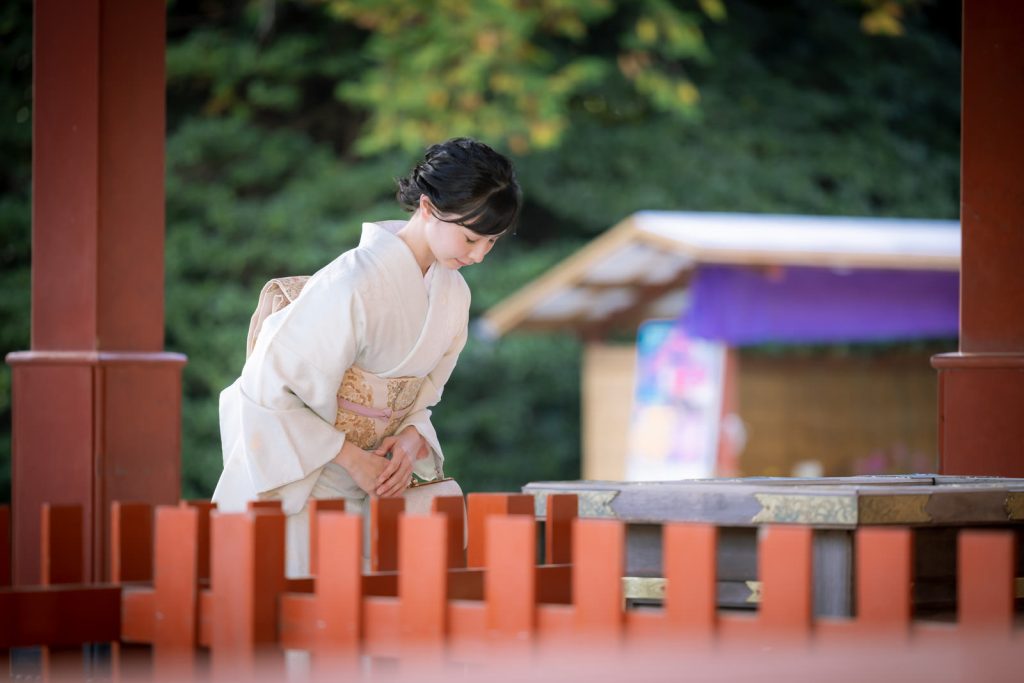
Cross-Cultural Contrasts
The meaning of touch—or the absence of it—varies dramatically across cultures. To understand Japan’s deep respect for distance, it helps to place it side by side with other traditions. What feels natural in one society may feel strange or even impolite in another. Yet, within each system, the gestures of closeness carry their own logic.
The Western Embrace: Closeness Through Contact
In much of Europe and North America, physical touch is the default language of connection. A firm handshake at a business meeting signals confidence. A hug between friends or family represents warmth. Even casual acquaintances might greet each other with pats on the back, cheek kisses (common in parts of Europe), or shoulder squeezes.
In these cultures, distance can feel like indifference. To stand too far apart may be interpreted as coldness or lack of trust. Intimacy is expressed by reducing physical space, often as quickly as possible.
From this lens, Japan’s bow—executed from a meter away—can be puzzling. To the Western traveler, it may seem reserved, even emotionally withholding. But within Japanese culture, the bow speaks volumes: I acknowledge you fully, I respect your dignity, and I honor the boundary that allows us both to be at ease.
Japan: Closeness Through Space
Japan, by contrast, has cultivated a different equation: closeness is measured not by how quickly you close the gap, but by how respectfully you preserve it. The bow instead of the hug is not a refusal of warmth—it is warmth expressed as respect.
The cultural keyword here is Ma (間)—the meaningful interval or space between people, sounds, and actions. Just as silence in music gives shape to melody, distance in relationships gives shape to intimacy. Without pressing into another’s body, one allows the relationship itself to breathe.
Thus, what seems “aloof” to some Westerners is, for Japanese people, the most natural way to protect bonds.
Korea and China: Shared Roots, Different Expressions
Neighboring cultures influenced by Confucian ethics also emphasize respect and ritual in relationships, but the way physical touch functions differs.
- Korea: Respect between generations is often shown through bows and honorific language, much like Japan. However, among friends of the same age, physical affection such as holding hands or linking arms—even between men—is more common and not necessarily romantic.
- China: Historically, Confucian traditions emphasized ritual distance, but modern urban life has seen a shift. Handshakes have become common in professional settings, and affectionate gestures between friends or couples are more visible than in Japan. Still, the idea of 礼 (li, propriety) continues to shape the expectation that one does not overwhelm another’s personal space without consent.
These subtle variations reveal how cultural scripts evolve. While Japan has maintained a strong non-touch ethos across contexts, its neighbors balance formality with more visible gestures of closeness in private life.
Middle Eastern and South Asian Cultures: Touch as Brotherhood
Traveling further west or south, the cultural script reverses again. In many Middle Eastern countries, greetings between men involve kisses on both cheeks, long handshakes, or holding hands during conversation. In India, families and friends often touch frequently as an expression of solidarity and warmth.
Here, to refrain from touch might feel unnatural or even insulting. Affection is validated through visible, tangible gestures. Bonds are strengthened not by distance but by a rhythm of repeated physical contact.
For Japanese people, such intensity may feel overwhelming. For those from touch-heavy cultures, Japan’s restraint can feel empty. Yet, both systems aim at the same human need: reassurance of belonging.
The Traveler’s Awakening
For many travelers, this cultural contrast becomes a moment of realization. A hug rejected in Japan is not a rejection of friendship. A bow returned instead of a handshake is not a dismissal but an elevation.
Through experience, visitors discover that there are multiple ways to express warmth. Touch is one path, space is another. What matters is not the gesture itself but the intention behind it—the willingness to honor the other person’s sense of comfort and dignity.
Globalization and the Reconsideration of Touch
As globalization brings cultures into closer contact, many Japanese people have adapted to Western habits—shaking hands in business, sometimes hugging close friends abroad. At the same time, many in the West, fatigued by constant intrusion into personal space, have come to appreciate the Japanese way of respectful distance.
The contrast is no longer a clash but a dialogue: one culture learning to soften its boundaries, another learning to embrace them.
In essence, cross-cultural contrasts show us that neither touch nor distance is universal in meaning. Each culture has developed its own grammar of intimacy. Japan’s unique contribution is the insight that the absence of touch can be as eloquent as its presence—that space itself can speak love.
Emotional Impact of Respectful Distance
Physical touch can be powerful—but so can its absence. In Japan, emotional connection is often deepened not through constant contact, but through the creation of a safe, respectful space in which feelings can quietly unfold. This form of closeness has its own psychological and emotional consequences, which, while subtle, are profound.
Safety Through Non-Intrusion
When someone refrains from touching you, it sends an unspoken message: “I will not invade your space. I honor your boundaries.”
This kind of respect produces a feeling of safety. In a world where many interactions can feel rushed or invasive, the Japanese bow, the measured distance in conversation, or the choice not to impose physical contact becomes a kind of gentle reassurance.
Rather than demanding intimacy, the gesture allows the other person to relax, knowing their comfort is prioritized.
Respect as a Form of Affection
Western expressions of affection often rely on physical intensity—an enthusiastic hug, a tight handshake, a kiss on the cheek. In Japan, affection is wrapped in restraint. By not touching, one communicates: “I care enough to let you be fully yourself, unpressured by my presence.”
The emotional impact here is subtle but lasting. People remember not the closeness of bodies, but the depth of respect. The warmth is felt in the atmosphere rather than on the skin.
Longevity of Bonds Through Balance
Psychological studies suggest that relationships thrive when boundaries are respected. Over time, bonds can erode if one person feels constantly intruded upon, even if the intrusion comes in the form of affectionate gestures.
Japan’s cultural norm of non-touch allows relationships to breathe. By not overwhelming the other, friendships and partnerships often gain durability. The connection does not depend on daily reaffirmation through contact, but rather on trust—trust that the bond endures even in silence, even at a distance.
Silence and Distance as Emotional Carriers
It is easy to think that silence means emptiness, or that distance means indifference. Yet in Japan, silence is often filled with meaning, and distance carries tenderness.
A quiet pause in conversation allows the other person’s words to echo and settle. A respectful space between two people leaves room for unspoken feelings—gratitude, admiration, affection—that might be diluted by overt physicality.
Here, emotional depth is not measured by how loudly one declares it, but by how gently one allows it to be felt.
The Foreign Visitor’s Turning Point
For the foreign traveler who initially misreads a bow as coldness, there often comes a moment of revelation. Perhaps after repeated interactions, they begin to notice how the bow is always accompanied by a warm smile, how the space maintained in conversation allows them to breathe more freely, how they feel seen without being pressed.
They realize: This is not emotional distance—it is emotional consideration. The absence of touch is not the absence of warmth. It is warmth expressed through dignity.
The Hidden Strength of Subtle Bonds
In modern societies where everything clamors for attention—loud voices, constant notifications, constant displays of affection—the Japanese mode of respectful distance offers an alternative vision.
It suggests that gentleness does not weaken relationships; it strengthens them. That restraint is not a lack of love, but its refinement. That the deepest bonds are often those that do not need to announce themselves, because they are quietly, confidently secure.
In essence, the emotional impact of respectful distance is paradoxical: by holding back, one actually comes closer. By not pressing into another’s life, one gives them the freedom to invite closeness at their own pace. And in that freedom, bonds rooted in trust and dignity can flourish for a lifetime.
Lessons for Daily Life
The Japanese way of showing closeness without touch is not limited to bows or formal rituals. It offers practical lessons for how we might navigate everyday relationships—with family, friends, colleagues, and even strangers—in a way that nurtures trust and dignity.
Practicing Gentle Space at Home
Love within a family does not always need to be proven by constant words or physical displays. Parents in Japan often embody affection by watching over their children quietly, stepping in only when necessary.
- A mother who lets her child struggle with tying shoelaces instead of immediately helping, showing trust in the child’s ability.
- A father who quietly waits at the school gate, not rushing to hug his child but offering a nod and smile of reassurance.
These small acts of restraint communicate a powerful message: I love you enough to let you grow on your own.
Respecting Distance in Friendships
In many cultures, friends show closeness through frequent hugs, backslaps, or arm-linking. Japanese friendships often thrive on shared activities—walking side by side, enjoying tea together, watching the seasons change—without the need for constant physical affirmation.
Here, restraint strengthens bonds. By not imposing, friends allow each other space to breathe, and in that breathing room, trust quietly deepens.
Building Trust in the Workplace
Professional settings are perhaps where the lesson of “non-touch bonds” becomes most visible. Instead of asserting dominance through a strong handshake or overly close proximity, Japanese colleagues often create trust through:
- listening before speaking,
- bowing instead of grabbing a hand,
- offering appreciation in words such as “otsukaresama desu” (thank you for your hard work).
The absence of physical gestures is not coldness—it is a way of ensuring that professionalism and respect remain intact.
Digital Spaces: The New Frontier of Distance
In the era of social media, “touch” takes on a digital form: constant comments, likes, and direct messages. Here too, the Japanese lesson of restraint is valuable.
- Instead of commenting on every post, a simple quiet presence—reading, respecting, occasionally sharing—can feel more supportive than overwhelming interaction.
- Not demanding instant replies acknowledges the other person’s time and space.
Digital restraint creates a sense of safety online, mirroring the cultural lesson of maintaining space offline.
Parenting with “Watchful Love”
Japanese culture often prizes “mimamoru”—to watch over someone attentively without interference. This principle can be a powerful approach to parenting.
- Instead of overprotecting, a parent offers space for mistakes, ensuring the child knows they are supported but not smothered.
- Children learn resilience, independence, and the comfort of knowing they are trusted.
This quiet watching teaches that love is not always about holding on tightly, but about letting go with confidence.
Quiet Bonds in Friendship and Romance
Even in romantic relationships, restraint plays a role. Couples may not always hold hands or embrace in public, yet their bond can be expressed through:
- sharing silence without discomfort,
- knowing each other’s preferences without words,
- small, understated gestures like preparing tea or walking a loved one home.
This demonstrates that affection, when expressed subtly, can sometimes feel even more profound because it respects the other’s autonomy.
The Wisdom of “Not Touching Too Much”
In daily life, applying this principle does not mean avoiding affection altogether. Rather, it means:
- Recognizing when space is needed,
- Offering presence without pressure,
- Allowing others to express closeness in their own time.
QuietTether’s perspective captures it beautifully:
“Distance is not absence. It is the quiet respect that allows closeness to endure.”
In essence, the Japanese lesson of bonds protected by not touching teaches us that love, respect, and trust do not always need to be proven through physical closeness. Sometimes the deepest care lies in stepping back, leaving room for another person’s comfort and dignity to flourish.
Closing Reflection: The Silent Bond of Distance
At first glance, the absence of touch may seem like absence of warmth. To many visitors, a bow instead of a hug might appear reserved, even distant. Yet beneath that quiet gesture lies a profound truth: bonds are not always strengthened by closeness of bodies, but by respect for space.
Japanese culture teaches that distance is not rejection. It is protection—of dignity, of boundaries, of the delicate balance that allows two people to stand together without overwhelming one another. A bow offers something that a hug cannot: recognition of the other as whole and complete, without the need to invade their space.
In a world where physical touch is often equated with intimacy, Japan whispers a different wisdom: closeness can be found in silence, in gestures, in the willingness to not press too hard. A friendship may grow stronger when each person feels safe, not compelled. A love may deepen when there is no fear of suffocation. A community may flourish when each member respects the invisible lines that protect individuality.
This is not coldness—it is warmth expressed with subtlety. It is love that breathes.
QuietTether’s philosophy brings this reflection to its heart:
“The gentlest bonds are those that do not press, but allow space to breathe. In distance, love finds its dignity, and in silence, connection speaks.”
To live with this wisdom is to understand that not touching can itself be a form of touch—the kind that lasts, the kind that protects, the kind that allows relationships to endure over time.