

Opening Story: A Traveler Alone in a Teahouse
It was late afternoon in Kyoto, the kind of golden hour when the light softens and lingers, painting wooden eaves with a glow that feels almost timeless. The traveler, a foreigner who had been wandering through the city’s narrow lanes and temple gardens, stepped into a small, almost hidden teahouse near a moss-covered shrine. The door was a sliding panel of wood and paper, the handle worn smooth by centuries of hands.
At first, stepping inside felt awkward. The traveler was alone. He had always associated tea or meals with company—with friends, with conversation, with the background hum of shared presence. To walk into a quiet teahouse without companions felt, at least initially, like exposing himself to a silence he was unsure how to hold.
A soft-spoken hostess welcomed him with a bow, leading him to a low table near the window. Beyond the sliding shoji panels stretched a small garden: a stone lantern half-buried in moss, a shallow pond reflecting fragments of clouds, and the steady trickle of water from a bamboo pipe.
The hostess brought a tray: a cup of freshly whisked matcha, steaming and vibrant green, accompanied by a small wagashi sweet shaped like a camellia blossom. She bowed once more and retreated, leaving the traveler alone.
At first, he felt self-conscious. He glanced around at the empty tables, wondered if he looked out of place, and noticed the unfamiliar weight of silence pressing around him. No chatter of nearby diners, no clinking glasses, no need to keep conversation flowing. Just him, the tea, and the quiet.
But then something shifted. He lifted the tea bowl in both hands, feeling its rough ceramic texture, warm against his palms. He noticed the faint grassy scent rising with the steam, the almost bitter taste of the first sip balanced by the sweetness of the wagashi. And slowly, his awareness expanded outward. He began to hear the garden—the faint rustle of leaves, the steady rhythm of dripping water, the almost imperceptible hum of cicadas beginning their evening chorus.
The silence, which had seemed awkward at first, deepened into something else: a gentle invitation. Without conversation to distract him, his mind began to soften, like water settling after being stirred. He found himself noticing details he might otherwise have overlooked—the delicate pattern of the tatami mat, the way the light shifted as a cloud passed overhead, the fragrance of cedarwood in the beams above him.
And in that moment, the traveler realized he was not lonely. He was accompanied—by the space, the tea, the garden, and his own unhurried thoughts. What had felt at first like emptiness became fullness, and what had seemed like isolation turned into a rare luxury: the chance to be alone, but not abandoned.
As he finished his tea, he smiled quietly to himself. He had entered the teahouse expecting to feel the sting of solitude. Instead, he discovered that solitude, at least here in Japan, was not a punishment to endure, but a gift to embrace. It was not absence, but presence—an invitation to step fully into the moment and savor it without needing to share or explain.
For the first time in a long while, he felt his heart unclench. Alone, in the quiet of a Kyoto teahouse, he discovered that solitude could be not an emptiness, but a form of abundance—a gentle wealth available only when one dared to sit still, to notice, and to let silence speak.
The Cultural Value of Being Alone
To understand why the traveler’s experience in the Kyoto teahouse felt so transformative, one must first explore the cultural soil from which Japan’s approach to solitude has grown. In many societies, being alone carries an undertone of deficiency: a suggestion that one lacks company, that one has failed to secure belonging, or that one’s social life is somehow incomplete. In Japan, however, the story is more nuanced. To be alone is not necessarily to be lonely. Instead, solitude can be a space of dignity, reflection, and even quiet joy.
“Hitori” and Its Shades of Meaning
The Japanese word hitori (一人), meaning “one person” or “alone,” does not always carry a negative connotation. Depending on context, it can signal freedom, self-sufficiency, and independence. While English often equates “alone” with “lonely,” Japanese distinguishes between the neutrality of hitori and the heaviness of kodoku (孤独, loneliness) or sabishii (寂しい, feeling lonely). This subtle linguistic distinction reflects a cultural recognition that solitude can take many forms—some heavy, some light, some liberating.
In recent decades, Japan has even developed a cultural trend known as ohitorisama (おひとりさま)—literally, “the honored one who is alone.” What began as a term describing women who remained single and independent into middle age has broadened into a lifestyle embraced by all genders and ages. Restaurants advertise “solo-friendly” seating, karaoke boxes promote hitori karaoke (singing alone), and hot springs welcome solo bathers. Far from being stigmatized, these activities are often celebrated as empowering expressions of personal choice.
Solitude as Inner Space
The cultural roots of this comfort with solitude can be traced deep into Japanese tradition. Zen Buddhism, which profoundly shaped Japanese aesthetics and philosophy, places great emphasis on dokusaza (独坐), or “sitting alone.” A Zen monk in meditation is not fleeing from society but entering into a more intimate conversation with existence itself. Solitude here is not absence—it is presence stripped of distraction.
Similarly, in the practice of tea ceremony (sado or chanoyu), a guest often enters the tearoom alone, passing through a small, humble entrance that requires bowing. The architecture itself enforces solitude as a moment of leveling, where worldly hierarchies dissolve and one meets the host—and oneself—on equal ground. This ritual act communicates that solitude is not shameful, but rather sacred.
Solitude in Literature and Aesthetics
Japanese literature, too, reveals a long-standing respect for solitude. The haiku of Matsuo Bashō, wandering through the countryside with little more than a straw hat and a notebook, elevates the solitary traveler to a figure of beauty. His verses often capture moments of quiet perception that emerge only in solitude: a frog jumping into an old pond, the sound of wind in the pines, the loneliness of a moonlit road.
The aesthetic concept of wabi-sabi—an appreciation of imperfection, impermanence, and simplicity—also aligns closely with solitude. An old tea bowl with cracks repaired in gold, a single flower in a rustic vase, a solitary figure in a wide landscape: these images embody an elegance that solitude makes visible. Without distraction, one learns to see depth in simplicity.
The Social Balance of Solitude
Japan is not a society of hermits; communal life is strong, and social obligations—work, family, neighborhood duties—are dense and continuous. Yet perhaps precisely because social bonds are so pervasive, solitude becomes an important counterbalance. One’s hitori jikan (time alone) is not an escape from society but a necessary pause that allows one to return to relationships with renewed clarity.
The culture accepts, even encourages, small rituals of solitude: eating ramen alone at a counter, taking a solitary walk beneath cherry blossoms, or slipping into a hot spring bath without company. These acts do not invite pity; they invite understanding. They are moments when the individual quietly acknowledges their own existence apart from the group, and in doing so, becomes more ready to belong to it again.
Rethinking Solitude as Luxury
In this way, Japanese culture reframes solitude from a deficit into a form of wealth. The traveler in the Kyoto teahouse discovered what many in Japan already know: to sit alone is not to be diminished, but to have the rare privilege of unbroken attention—to the present moment, to one’s surroundings, and to oneself.
In a world where constant connectivity is often mistaken for value, Japan’s respect for solitude offers a counter-narrative. It suggests that silence can be as nourishing as conversation, and that presence without others can be as full as presence with them.
Everyday Practices of Solitude
If the traveler’s first lesson in solitude came in the teahouse, the second unfolds not in temples or poems, but in the humdrum of everyday life. In Japan, solitude is not confined to monks or poets—it is woven into the fabric of daily existence. From dining to leisure, from commuting to relaxation, one can see how Japanese society normalizes and even celebrates being alone. These practices transform solitude from a feared condition into an accessible luxury.
The Rise of “Solo Activities”
Perhaps nowhere is this more visible than in the phenomenon of solo activities (hitori katsudō 一人活動). What might appear strange or even pitiable in other countries—going to a karaoke box, a barbecue restaurant, or even Disneyland alone—has become an accepted, even fashionable, way of life in Japan.
Take hitori karaoke (一人カラオケ). At first glance, the idea of singing to an empty room might seem melancholic. But ask those who indulge in it, and you hear a different story: freedom. No waiting for your turn, no embarrassment over song choice, no worry about mismatched enthusiasm. Just you, your voice, and the microphone. It becomes not a lonely act, but a personal concert, an exercise in self-expression without judgment.
Similarly, hitori yakiniku (一人焼肉)—eating barbecue alone—has grown popular enough that restaurants now design counter seats with personal grills. Far from awkward, these establishments market themselves as sanctuaries for individuals who wish to savor each bite at their own pace. What outsiders might label as “sad” is reframed as “liberating.”
Solitude in Cafés and Parks
Walk through any Japanese city and you will find countless people sitting alone in cafés, not as exceptions but as a norm. A solitary office worker with a book, a student scribbling notes, a retiree gazing out the window at passersby—each inhabits a private bubble of reflection within a public space. Unlike some cultures where “a table for one” is awkward, in Japan it is an everyday sight.
Public parks also become stages for solitary enjoyment. One can see individuals quietly sitting on benches during cherry blossom season, not necessarily accompanied by friends or family, but content in simply witnessing the petals fall. To share such beauty with oneself alone is considered no less valid than sharing it with a crowd.
The Solitude of Commuting
Japan’s transportation systems, especially its trains, offer another unique expression of solitude. In crowded subway cars, silence often reigns. Passengers immerse themselves in novels, close their eyes for a brief nap, or scroll quietly on their phones. The train, though packed with bodies, becomes a shared chamber of individual solitude.
Unlike in many cities where strangers strike up conversations, Japanese commuters rarely disturb each other. This unspoken agreement—that one’s silence is a form of respect—creates a paradoxical solitude within community. The very density of urban life creates opportunities for internal retreat.
The Solitude of Hot Springs
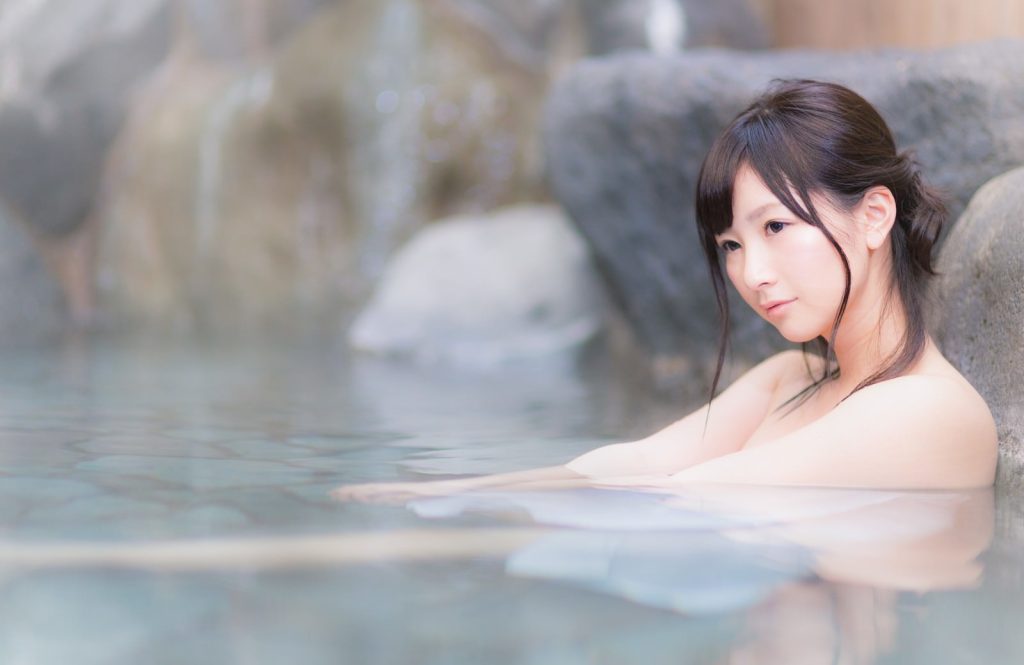
Another everyday practice where solitude shines is the Japanese onsen (hot spring). While hot springs can be communal, there is also deep respect for the solitary bather. To slip into steaming water, surrounded by mountains or forests, is to dissolve into a moment of self-contained luxury. Words become unnecessary; the warmth of the water and the sound of nature provide all the companionship one needs.
Even in shared baths, the etiquette of silence ensures that each person’s solitude is preserved. Unlike spas in other parts of the world, where conversation often flows, Japanese onsen culture values the inward gaze. The bath is not merely about cleansing the body—it is about cleansing the mind through solitude.
Freedom and Healing Through Solitude
Across these practices—karaoke, dining, commuting, cafés, hot springs—the recurring theme is that solitude is not a punishment, but a choice. To eat alone, to sing alone, to bathe alone, to walk alone—these are not signs of abandonment but of agency. They offer freedom from social performance, healing from overstimulation, and the space to notice details often drowned out by chatter.
In Japan, solitude is not an awkward condition to be explained away; it is a cultivated lifestyle. One does not need to retreat to a monastery to find it. A simple bowl of ramen at the counter, a quiet song in a private booth, or a few minutes of silence on the train suffices. The luxury lies not in grand gestures, but in the ordinariness of solitude made natural.
Historical and Philosophical Roots
To understand why solitude in Japan is not stigmatized but celebrated, one must turn to history and philosophy. The cultural ease with being alone did not appear by accident; it was nurtured by centuries of spiritual practice, artistic expression, and moral discipline. Solitude in Japan is not mere absence of company—it is presence of spirit, sharpened by tradition.
Zen Monks and the Practice of Seated Solitude
One of the deepest roots lies in Zen Buddhism. Within Zen practice, zazen (seated meditation) is often undertaken in solitude, even when performed alongside others. The monk sits facing the wall, eyes lowered, breathing steady, body still. In this posture, solitude is not loneliness but the gateway to enlightenment.
The phrase dokuzaza (独座)—literally “sitting alone”—captures this essence. The monk withdraws not from compassion for others, but from noise, so that he may encounter the ground of being itself. For Zen, solitude is not an escape from life but a plunge into its truest form.
This philosophy seeped beyond monasteries into the culture at large. It taught that silence can be abundant, that emptiness can be full, and that one’s company with oneself is not to be feared but embraced.
Bashō and the Beauty of Wandering Alone
From Zen temples, the sensibility of solitude flowed into literature. Consider the great haiku master, Matsuo Bashō. His life as a wandering poet was a continuous dance with solitude. He walked the highways of Edo-period Japan with little more than a notebook, his loneliness transforming into verses of timeless resonance.
In Oku no Hosomichi (“The Narrow Road to the Deep North”), Bashō writes not with bitterness about isolation, but with reverence. The solitude of mountain paths, the hush of evening rivers, the stillness of ancient temples—these moments became the canvas for his haiku.
Bashō shows us that solitude can sharpen perception. When one is alone, the song of a frog jumping into a pond, or the silence after autumn wind, carries infinite depth. Solitude thus becomes a lens that magnifies the ordinary into the eternal.
The Samurai’s Strength in Solitude
Parallel to monks and poets, the samurai class cultivated another dimension of solitude: discipline and self-mastery. A warrior was often alone in his training, facing the sword, the bow, or his own fear. Solitude was the ground on which courage was forged.
Texts like Hagakure remind us that solitude was essential to the samurai’s way. It allowed reflection on impermanence, acceptance of death, and clarity of purpose. The ability to stand alone was not weakness but proof of inner strength. For the samurai, solitude was not indulgence but necessity.
Solitude in Poetry and Aesthetics
Beyond monks, poets, and warriors, Japanese aesthetics themselves encode solitude as beauty. Traditional waka and haiku often portray solitary figures in vast landscapes: a lone pine on a shore, a traveler on a distant road, a widow in the autumn wind. These images evoke not despair but poignancy—the beauty of being small within the cosmos.
The aesthetic of wabi-sabi reinforces this: imperfection, impermanence, and incompleteness are not flaws but profound truths. A solitary tea bowl, chipped and weathered, holds more beauty than a flawless mass-produced cup. So too, a solitary moment of silence holds more weight than endless chatter.
The Ethical Thread: Confucian and Buddhist Influence
Solitude was also shaped by ethics. Confucian thought emphasized self-cultivation, and solitude was the furnace where one refined character. Buddhism emphasized compassion, but it also taught that wisdom requires stillness, often found only in solitude.
Together, these streams formed a cultural attitude: solitude is not selfish; it is the ground from which one returns to others with clarity and kindness.
A Culture Rooted in Solitude
Thus, solitude in Japan is not incidental. It flows from Zen’s stillness, Bashō’s wandering, the samurai’s discipline, and the poet’s poignancy. It is reinforced by philosophies that see aloneness not as a deficiency but as a stage for truth.
When a modern traveler in Japan sits alone in a teahouse or an onsen, they are not just practicing personal choice. They are stepping into a river that has been flowing for centuries. In solitude, they are accompanied—by monks, poets, warriors, and countless souls before them who found not emptiness, but richness, in being alone.
The Psychology of Solitude
Modern psychology gives us language to understand what Japanese culture has long practiced: solitude is not deprivation, but nourishment. Where many societies fear being alone as a symptom of weakness, Japanese traditions reveal solitude as a form of strength. This distinction is crucial, and it is now echoed by neuroscientists, psychologists, and wellness researchers who study the profound benefits of being by oneself.
Solitude as a Self-Reset
When one steps away from the demands of constant interaction, the mind recalibrates. Solitude functions like a reset button. Research in cognitive psychology shows that our brains, when freed from external demands, engage in default mode network activity—a state associated with reflection, creativity, and meaning-making.
This explains why sitting quietly in a park, soaking in an onsen, or walking alone through a bamboo grove can feel restorative. It is not mere leisure—it is the brain reclaiming balance. In Japan, the value of this “self-reset” has long been intuitively woven into practices like shinrin-yoku (forest bathing) or silent temple stays.
Solitude ≠ Isolation
An essential distinction: solitude is not the same as isolation. Isolation implies being cut off against one’s will; solitude is chosen space, embraced with intention.
Psychologists define solitude as “positive aloneness”—time in which one is free from the social gaze, yet not burdened by disconnection. Japan’s cultural framing helps highlight this difference. A person enjoying ramen alone at a counter is not “isolated” but savoring a personal ritual. A traveler alone in a teahouse is not abandoned but enriched.
The Western fear of loneliness often obscures this nuance, but Japanese society demonstrates that solitude can be social in its own way—a quiet togetherness with place, nature, or even memory.
The Restorative Effect of Reduced Stimulation
Modern life overwhelms the senses. Notifications ping, conversations swirl, obligations stack. In solitude, stimulation decreases, and the nervous system shifts. Psychologists call this “down-regulation”—a biological easing of stress hormones, heart rate, and mental load.
This is why a train ride in silence with a book, or a solitary soak in hot springs, feels like medicine. The absence of demands is itself a gift. The Japanese language even has phrases like mushin (no-mind) and ma (the interval, the pause), both pointing to the importance of these empty, restorative spaces.
Solitude as a Seed of Creativity
Psychological studies show that solitude enhances creativity. Free from external judgment, the mind dares to wander. This wandering—what researchers call “diffuse thinking”—is often where breakthroughs occur.
Japanese artists and writers have embodied this truth for centuries. Bashō’s haiku, born in solitary travels, still resonate globally. Sesshū’s ink paintings, created in quiet concentration, capture the vastness of nature with sparse strokes. In solitude, creativity is not pressured but allowed to flow.
Solitude for Better Relationships
Perhaps paradoxically, solitude deepens our capacity for connection. Psychological research indicates that those who nurture alone time are better at empathy and communication. Why? Because solitude replenishes the self.
When one enters solitude, they return with more patience, clarity, and presence. A person who has sat quietly with themselves can listen more deeply to another. Japanese culture, by valuing solitary moments, indirectly strengthens communal bonds.
A Psychology of Gentle Power
From a psychological standpoint, solitude offers three gifts:
- Restoration – calming the nervous system, reducing stress.
- Reflection – creating space for meaning, perspective, and creativity.
- Resilience – building the inner strength to connect more fully with others.
In this light, solitude is not weakness, but gentle power. It is a quiet training ground for emotional balance. And Japan, with its cultural embrace of hitori-jikan (time alone), has cultivated this wisdom far ahead of modern psychology.
Cross-Cultural Contrasts
The meaning of solitude is not universal—it shifts dramatically across cultures. What feels liberating in one society may feel shameful in another. To understand why Japan regards solitude as a quiet luxury, it helps to contrast it with other cultural lenses.
Western Views: Solitude as Suspect
In many Western societies, solitude is often conflated with loneliness. From childhood, social integration is emphasized: group sports, open discussion, networking. To be alone can appear as social failure, an inability to “fit in.”
This attitude is reflected in everyday expressions. To say someone “eats alone” may imply sadness. Solitary dining in the U.S. or Europe is often framed as undesirable—restaurants may even cater their seating to couples and groups, not individuals. The cultural bias leans toward extroversion, where self-worth is measured by the number of social interactions.
Yet, even in the West, there is growing recognition of solitude’s healing power. Retreat centers, meditation apps, and “digital detox” trends suggest a rediscovery of what Japanese culture never forgot: being alone is not inherently negative, but restorative.
Japan: Solitude as Acceptance and Luxury
In Japan, being alone is neither stigmatized nor pathologized. A person enjoying hitori yakiniku (grilled meat alone) or hitori karaoke is not judged; these activities are socially normalized, even celebrated.
This stems partly from Zen Buddhist influences, where sitting alone in silence is regarded as profound practice. Solitude is not an absence but a presence—presence with self, nature, and spirit.
The phrase ohitorisama—literally “honorable alone”—captures this nuance. Rather than belittling those who are by themselves, the honorific sama elevates the status of solitude, reframing it as refined, independent, and dignified.
Thus, solitude in Japan is not only tolerated but embraced as a form of wealth: time unclaimed by others, open for reflection and inner nourishment.
Middle Eastern and Indian Traditions: Community First
In contrast, Middle Eastern and Indian cultures often emphasize communal belonging. Hospitality is expansive, meals are shared, and solitude may be interpreted as withdrawal or even impoliteness.
In these cultures, social warmth is demonstrated by inclusion. A guest eating alone might provoke concern—“Why don’t you join us?” To refuse could seem like a rejection of kinship. Solitude here is less about personal restoration and more about suspicion: does this person not want to belong?
Still, spiritual traditions within these regions—such as Sufi retreats or Hindu yogic meditation—recognize the transformative power of solitude. The difference lies in its framing: solitude is sacred for saints and seekers, but in everyday life, community remains the anchor.
Solitude vs. Loneliness: A Global Misunderstanding
The critical distinction across cultures lies between solitude (chosen, enriching aloneness) and loneliness (unwanted isolation). Japan’s contribution is showing how this distinction can be practiced in daily life, not only in monastic or artistic contexts.
Where Western societies may ask, “Why are you alone?” Japan instead asks, “How do you wish to spend your time?” This subtle shift honors personal autonomy.
Why Japanese Solitude Stands Out Globally
In a globalized world that increasingly feels overconnected and overstimulated, the Japanese model of solitude resonates. It demonstrates:
- That being alone is not antisocial, but deeply human.
- That solitude can be woven into daily routines without stigma.
- That quiet time is not wasted time, but refined living.
This cultural stance is why international travelers often describe Japan as both serene and liberating. In Japan, solitude does not mark deficiency; it signals maturity, balance, and self-possession.
Emotional Impact of Solitude
Solitude in Japan is not merely an arrangement of circumstances; it is an emotional experience that carries depth, subtlety, and resonance. To step into it is to step into a different texture of time, where the heart breathes more slowly and the mind grows clearer.
Rediscovering the Self
In daily life, the self often becomes diluted by constant demands—emails, conversations, meetings, obligations. Alone time becomes a mirror: suddenly, there is no one else to perform for, no role to play. In Japanese solitude, this rediscovery is not framed as dramatic but as gentle.
A person sitting in a quiet café in Tokyo, enjoying a single cup of coffee without checking their phone, may notice a small but profound shift: the ability to hear their own inner voice again. This is the emotional gift of solitude—self-return.
The Sense of Safety in Stillness
Many people associate aloneness with vulnerability, but in Japan, solitude is often wrapped in safety. A woman traveling alone can enter a teahouse, a businessman can soak alone in an onsen, and neither is looked upon as suspicious or pitiable.
This social permission creates a unique psychological comfort: solitude becomes a sanctuary rather than a risk. Emotionally, this transforms being alone from something to escape into something to savor. The sound of water, the warmth of tea, the rustle of trees—these sensory details calm the nervous system, producing a sense of emotional security.
Creativity and Imagination Awaken
Solitude in Japan has long been associated with creativity. Poets like Bashō wrote some of their most luminous haiku while traveling alone. Artists, monks, and writers often found their muse not in social bustle but in silent moments of observation.
Emotionally, solitude clears space for imagination. In stillness, ideas rise like ripples in a pond. The absence of interruption allows creativity to bloom not as forced productivity but as effortless play. A simple walk through a moss-covered garden may spark more clarity than hours of group discussion.
The Warmth Within Solitude
Perhaps the most surprising emotional impact of solitude in Japan is its warmth. Instead of cold emptiness, solitude is filled with gentle presence. It may come from the soundscape of cicadas, the fragrance of tatami mats, or the sight of sunlight filtering through shoji screens.
These subtle details form a companionship of their own. One does not feel “alone” but accompanied—by nature, by tradition, by the self. The heart, far from feeling abandoned, feels embraced.
Loneliness Transformed
For many visitors from abroad, the Japanese relationship with solitude is transformative. What they first expect to be lonely turns into a form of luxury. A traveler dining alone in Kyoto may enter with hesitation but leave with gratitude, realizing that solitude gave them space to taste more deeply, see more clearly, and feel more fully.
In this transformation lies a powerful lesson: loneliness is not the inevitable outcome of being alone. With the right cultural frame, solitude can be abundance—an emotional richness that restores rather than depletes.
Lessons for Daily Life
The Japanese way of solitude is not about retreating into mountains for years, but about weaving quiet moments into the ordinary rhythm of life. These lessons are not exotic but practical, accessible, and deeply nourishing.
Creating Pockets of Solitude
Solitude does not need to be measured in days. It can exist in small, intentional moments. A five-minute walk without headphones, a few breaths taken before entering a crowded meeting, or brewing tea alone before the household awakens—all are acts of solitude.
Japanese culture teaches us that solitude does not need to be grand to be transformative. The very act of noticing silence—even briefly—creates space for the mind to reset.
Digital Fasting and Detachment
One of the greatest obstacles to solitude today is the constant tether of digital life. Social media, messages, and notifications erase the possibility of being alone even when physically isolated.
In Japan, practices like ensō (a single brushstroke circle in Zen art) or tea rituals remind us of the discipline of focusing on one thing at a time. To apply this in modern life, one might practice digital fasting: setting aside an hour or a day without screens. The quiet that emerges is not empty—it is full of clarity.
Respecting Solitude in Relationships
Another lesson is cultural: respecting the solitude of others. In many families and workplaces, there is a tendency to assume that constant togetherness equals love or loyalty. But in Japan, it is understood that giving space is also a form of care.
Allowing a partner, a colleague, or even a child a quiet hour alone is not abandonment—it is trust. Emotionally, it communicates: “You are whole enough to stand on your own, and I respect your inner world.” This small shift can strengthen bonds rather than weaken them.
Solitude as Healing in Parenting and Friendship
Parents often worry when children prefer to play alone. But in Japanese sensibility, a child building quietly with blocks or drawing alone is not “isolated” but practicing self-trust. Similarly, friends who can enjoy silence together often share the deepest connection.
This reframing of solitude as healing rather than worrisome offers a practical way to ease the anxiety of modern social life.
QuietTether’s Perspective
At the heart of these lessons lies a simple truth: solitude is not the enemy of connection but its companion. By stepping back into silence, we return to others with more presence, patience, and depth.
“Solitude is not the absence of connection, but the space where connection to self is restored.” — QuietTether
In this way, solitude becomes not just a personal luxury but a shared gift.
Closing Reflection: The Gentle Wealth of Solitude
To many, solitude carries the weight of loneliness. Yet in Japan, solitude is seen not as a void, but as a garden—quiet, alive, and nourishing. A traveler who sits alone in a Kyoto teahouse may first feel the absence of company, but soon the sound of water, the soft moss, and the warmth of tea reveal a deeper truth: solitude itself is a presence.
This is the quiet wealth Japan offers the world—the reminder that being alone can be a form of abundance. In solitude, one hears the self more clearly, notices the subtle beauty of the world, and discovers that silence can embrace as warmly as words.
Unlike material wealth, solitude cannot be bought. It is not a luxury of money, but of awareness. To pause, to breathe, to let the heart rest without performance—this is the hidden luxury of a culture that honors silence as deeply as sound.
From the stillness of Zen monks to the solitary wanderings of Bashō, from the single sip of tea in a quiet tatami room to the soft hum of solitude on a Tokyo train, Japan shows us that solitude is not emptiness. It is fullness—an invisible gift that nourishes presence, clarity, and peace.
And so we return to the lesson whispered through moss, water, and silence:
“Solitude is not emptiness but abundance. It is the quiet wealth that allows the heart to breathe, to notice, and to be whole.” — QuietTether
In solitude, we are not apart from the world. We are, finally, fully within it.