
Opening Story: The Train Conversation
The afternoon train was gliding quietly through the suburbs of Tokyo, its steady rhythm like a heartbeat pulsing beneath the chatter of passengers and the faint hum of the air conditioning. Outside the window, the city unfolded in muted shades—rows of apartments, narrow streets, a small shrine half-hidden behind cherry trees whose blossoms had already fallen. Inside, however, the carriage carried a subtle blend of silence and togetherness, a kind of social harmony that seemed to weave strangers into a shared yet unspoken agreement: we are all here, traveling side by side, respecting each other’s presence by not intruding too much.
Among the passengers was Daniel, a traveler from Canada. He had been in Japan for only two weeks, but already the country fascinated him—not just its temples and neon-lit streets, but the way its people moved, spoke, and related to one another. On this particular ride, he found himself seated next to a middle-aged Japanese man in a gray business suit. The man held a slim leather briefcase on his lap, and his posture was upright but relaxed, as if years of commuting had trained his body to adapt to the rhythm of the train.
Daniel had always been curious, and after several minutes of quiet travel, he turned to the man with a friendly smile.
“So, what kind of work do you do here in Tokyo?” he asked in English, speaking clearly but gently.
The man looked slightly surprised, perhaps because a stranger had addressed him directly, but he quickly responded with a polite nod. His English carried a careful, deliberate rhythm, the kind that revealed years of study and practice rather than casual fluency.
“Ah… work, yes,” he said. He paused, then smiled faintly. “But first—welcome to Japan. Are you… enjoying your trip?”
The shift startled Daniel. He had asked about the man’s life, expecting perhaps to hear about his profession, his company, or the long work hours often associated with Japanese salarymen. Instead, the man redirected the conversation back to Daniel himself.
“Yes,” Daniel said, chuckling a little. “It’s been amazing so far. I’ve visited Kyoto and Osaka, and now I’m exploring Tokyo. Everything feels… different from home. The people are very polite, and things seem to work so smoothly.”
The man’s eyes brightened slightly, and he leaned just a little closer.
“Oh, Kyoto,” he said softly. “Many temples… beautiful. Which temple did you like?”
Daniel thought for a moment, recalling the stillness of the moss garden at Saihō-ji, the golden shimmer of Kinkaku-ji reflected in the pond, and the quiet alleyways where time seemed to stand still. He described them enthusiastically, and the man listened with genuine interest, nodding thoughtfully.
Ten minutes passed, and still the man had not spoken about his own job. He asked instead:
“Do you like Japanese food? Sushi, ramen…?”
“Where are you staying in Tokyo?”
“Is train travel comfortable for you?”
The questions felt personal yet gentle, always centering Daniel’s experience rather than the speaker’s own life.
Finally, when Daniel noticed this pattern, he laughed softly and said, “You know, I’ve been asking about you, but you keep asking about me. I’d really like to know—what do you do?”
The man smiled again, almost apologetically, as if caught in a small act of humility. “Ah… I work for a company. But… not so interesting. My work is… ordinary. Better to speak about your journey.”
At first, Daniel thought the man was being evasive. Back home, people often introduced themselves by profession as soon as they met. In Canada, when someone asked, “So, what do you do?” the expected answer would come quickly: “I’m an engineer,” “I’m a teacher,” “I’m in finance.” Identity was often tied closely to career. To avoid answering might even seem rude or suspicious.
But here, Daniel realized, something else was at play. The man was not trying to hide himself—he was trying to honor Daniel by giving him space to speak, to share, to feel seen. He was downplaying himself not out of shame but out of courtesy, allowing the foreigner to shine.
The train slowed as it approached Shinjuku Station, the great hub where thousands would soon pour into the platforms. The man adjusted his briefcase and prepared to stand. Before leaving, he turned to Daniel once more and said, “I hope… your time in Japan will be happy. Please take care.” He bowed slightly, then stepped off into the crowd, disappearing without ever once detailing his occupation, his company, or his achievements.
Daniel sat there for a moment, the scene imprinting itself deeply into his memory. It was such a small interaction, but it carried a profound lesson: in Japan, one often thinks of others before speaking of oneself. The measure of respect was not in how much the man revealed but in how much space he gave for another to feel acknowledged.
For the rest of his journey, Daniel began to notice the subtle ways this cultural value appeared everywhere—in greetings, in conversations, in the quiet restraint people showed in daily life. It wasn’t silence, he realized. It was consideration.
And in that quiet consideration lay a gentle wisdom: sometimes, the greatest way to introduce yourself is by first making room for the other person’s story.
The Cultural Value of Putting Others First
When Daniel reflected on his train encounter, what struck him most was not the polite bow or the reserved manner, but the deliberate choice the man made: he placed Daniel’s story above his own. This seemingly small gesture represented more than individual modesty; it was an expression of a cultural value deeply rooted in Japanese life—the practice of putting others before oneself.
In many Western societies, conversation is often framed around the self. One is taught to “introduce yourself confidently,” “present your achievements,” and “make a strong impression.” Success in communication is frequently measured by how well one can articulate their identity, ambitions, and strengths. In Japan, however, the emphasis shifts. Communication is less about declaring who you are and more about acknowledging who the other is.
Humility as a Cultural Foundation
The Japanese concept of 謙遜 (Kenson)—humility—is not simply a virtue; it is a social necessity. From early childhood, children are taught to avoid boasting, to speak modestly of their own abilities, and to deflect praise with phrases like “まだまだです” (“I still have much to learn”). To speak too highly of oneself risks creating discomfort, as it disrupts the social balance of a group where equality and harmony are valued.
Closely related is 遠慮 (Enryo)—a form of restraint or consideration for others. Enryo is the quiet pause before speaking, the instinct to hold back one’s desires, and the discipline of not imposing one’s presence too strongly. In conversations, it manifests as letting others speak first, giving them the spotlight, and softening one’s own self-presentation.
These values reflect a society where the individual is inseparable from the group. In Japanese culture, the self is not viewed as an isolated entity but as part of a web of relationships. To speak too much of oneself risks pulling attention away from the group’s collective rhythm. To defer to others, by contrast, strengthens the bonds of harmony—和 (Wa)—which lies at the heart of Japanese social life.
Respecting Others Before Speaking of Self
This cultural orientation is not just an abstract philosophy; it is practiced in daily life. Consider greetings. In English, one might say:
- “Hi, I’m John. I work as a software engineer.”
The focus begins immediately with the speaker.
In Japanese, a common greeting among coworkers is:
- “いつもお世話になっております。” (“I am always indebted to your kindness.”)
Notice the difference: one begins with me, the other begins with you. The Japanese speaker acknowledges the other’s role, care, or presence before anything else. This pattern repeats across many layers of social interaction.
Even in formal speeches, it is common for Japanese presenters to begin not by introducing their own achievements, but by thanking the audience for attending, acknowledging the efforts of organizers, or apologizing for their own lack of expertise. This framing places the audience first, positioning the speaker as a humble participant rather than the central figure.
Family and Educational Foundations
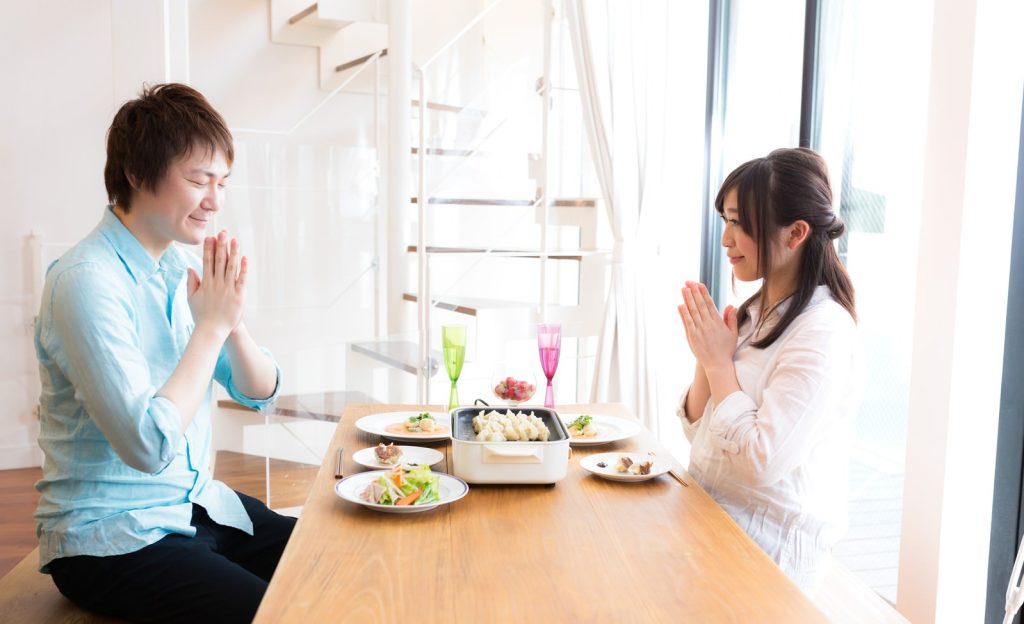
These habits do not arise spontaneously; they are cultivated from an early age. In Japanese families, children are often reminded not to interrupt, not to dominate conversations, and to show gratitude before asking for something. The simple custom of saying “いただきます” before a meal exemplifies this: the phrase is not a declaration of “I will eat now” but an acknowledgment of others—the farmers, the cook, even the life of the food itself.
In schools, group activities are emphasized over individual achievements. Students clean classrooms together, serve lunch to one another, and participate in collective projects. Within these activities, the lesson is subtle but profound: the group thrives when individuals think of others before themselves. This training naturally shapes communication styles, where listening becomes as important as speaking.
Harmony Over Assertion
While Western education often encourages children to “speak up” and “find their voice,” Japanese education teaches children to listen well and respect the group’s harmony. This does not mean that Japanese people lack individuality or opinions, but that the way they express them is carefully attuned to the presence of others.
In a society where silence is not equated with weakness but with thoughtfulness, the ability to hold back one’s self-expression can actually be a mark of maturity. Speaking less about oneself does not erase identity; rather, it demonstrates confidence that one’s worth does not need constant proclamation.
Contrast With Western Individualism
The contrast becomes clearer when seen against Western values of self-expression. In the United States, for example, job interviews often hinge on the ability to “sell yourself,” to make bold statements about personal strengths and achievements. In Japan, however, an overly assertive self-promotion can appear arrogant, potentially harming rather than helping one’s reputation. Employers and colleagues may value humility, quiet diligence, and evidence of teamwork over flashy self-descriptions.
Whereas Westerners may ask, “What do you do?” as a way to place someone socially, Japanese people often begin by asking, “Where are you from?” or “How do you find Japan?” These questions gently invite the other to share, offering space rather than demanding identity.
A Foundation of Respect
Ultimately, the cultural value of putting others first reflects a foundational truth about Japanese society: respect precedes self-expression. To honor the other is to affirm one’s own humanity. To speak less of oneself is not to deny the self, but to recognize that relationships thrive when they are not competitions for attention, but invitations to mutual presence.
In this sense, Japanese communication is not about withholding identity but about creating space—space for the other to feel acknowledged, space for trust to grow, and space for conversation to unfold naturally without the pressure of self-centeredness.
As Daniel learned on the train that day, a conversation that begins with you may end up saying more about us.
Everyday Expressions of Self-Restraint
The cultural value of thinking of others before oneself is not confined to ideals taught in schools or philosophies read in books—it is visible in countless small gestures that quietly shape Japanese daily life. These expressions of self-restraint and other-centeredness often go unnoticed, precisely because they are not performed to be noticed. They emerge in the everyday rhythm of speech, etiquette, and interpersonal exchanges, forming a subtle fabric of social life.
For foreigners like Daniel, it is often in these seemingly ordinary details that Japan reveals its deepest lessons: kindness is not necessarily found in grand acts, but in the quiet discipline of placing others before the self, again and again, until it becomes second nature.
Language That Places the Other First
Language is one of the clearest mirrors of cultural values, and in Japanese, the linguistic patterns themselves encourage humility and self-restraint.
- Pronouns and Deference: Unlike English, where “I” is frequent and central, Japanese conversation often avoids “私 (watashi)” altogether. Instead, speakers rely on contextual cues, letting the listener infer the subject. By speaking less directly about oneself, the language creates space for the other.
- Honorifics (Keigo 敬語): Japanese honorifics are elaborate systems that allow speakers to elevate the other’s position while lowering their own. Phrases like “Haiken itashimasu 拝見いたします” (“I will humbly take a look”) or “Ossharu toori desu おっしゃる通りです” (“It is exactly as you say”) are linguistic acts of restraint, signaling respect for the other person’s perspective.
- Greeting Rituals: Daily greetings embody this tendency as well. Instead of a neutral “hello,” coworkers begin with “Otsukaresama desu お疲れさまです” (“Thank you for your hard work”) or “Itsumo osewaninatte orimasuいつもお世話になっております” (“I am always indebted to your support”). These greetings acknowledge the other’s role before affirming one’s own presence.
Even gift-giving language reflects restraint. When handing someone a present, the giver often says, “つまらないものですが” (“This is a trivial thing, but please accept it”), downplaying their own offering to center the receiver’s value.
Everyday Situations of Self-Restraint
Beyond language, daily interactions in Japan provide countless examples of putting others before self.
- On Public Transportation: Trains, buses, and stations are spaces where restraint is vividly on display. Talking loudly on the phone is frowned upon, not because of strict rules, but because it disturbs others. Priority seating is reserved not only by signage but by social conscience; even young, healthy passengers will stand rather than risk inconveniencing someone who may need the seat more.
- In Conversations: When someone asks a question, it is common for a Japanese person to respond by first showing interest in the other. For instance, if Daniel had asked a coworker about their weekend, they might gently deflect by asking about his experience first, subtly redirecting the focus outward.
- In Workplaces: During meetings, it is considered polite to let senior colleagues or guests speak first. When sharing ideas, employees may phrase contributions tentatively—“Hitotsuno ikenni sugimasenga 一つの意見にすぎませんが” (“This is only one humble opinion, but…”)—so as not to dominate the discussion.
- In Schools: Children learn restraint through group practices. Before beginning lunch, students wait until everyone is served and recite “いただきます” together, ensuring the act of eating begins with collective gratitude, not individual hunger.
- In Social Gatherings: At a dinner, the host often ensures that everyone else’s glasses are filled before pouring their own drink. The simple act of waiting to toast—“Kanpai 乾杯”—only once every glass is ready demonstrates attentiveness to the group.
The Invisible Side of Kindness
What makes these acts of restraint powerful is their invisibility. In many cultures, kindness is something to be recognized, praised, or even displayed publicly—through photos, social media posts, or verbal acknowledgment. In Japan, however, kindness is often designed to disappear into the flow of daily life.
- A person who notices you dropped your wallet will quietly hand it to the station attendant without seeking thanks.
- A neighbor might shovel snow in front of your house before you wake up, leaving no evidence of who did it.
- A coworker may fix an error in a shared document without pointing out your mistake, allowing the team to move forward smoothly.
In all of these examples, the giver refrains from drawing attention to their own effort. The focus remains on the benefit to others, not on the ego of the self.
The Psychology of Everyday Self-Restraint
Why do these small habits matter? Because they create a social atmosphere where everyone feels cared for, even without words. When people consistently hold back for others, trust accumulates. The train is quiet not because everyone is controlled, but because everyone is trusted to think of others. The meeting runs smoothly not because one voice dominates, but because each participant listens before speaking.
This atmosphere of respect produces a unique kind of safety: the safety of knowing that one’s dignity will be considered before another person’s self-expression.
Lessons for Observers
For foreigners experiencing Japan, these small gestures can be both surprising and disarming. Some may interpret them as excessive formality, while others may find them deeply moving. What matters is the underlying principle: in Japan, everyday life is a stage for humility, and restraint is not a loss of individuality but a gift of space to others.
Daniel began to notice this after his train conversation. He saw how clerks in shops bowed slightly as they handed back his change, how strangers stepped aside on narrow streets, how coworkers prefaced their ideas with self-effacing words. Each act reinforced the same truth: to put others first is not a rare virtue, but an everyday rhythm, woven into the language, customs, and habits of society.
Historical and Philosophical Roots
To understand why Japan nurtures a culture where people think of others before speaking of themselves, one must look beneath the surface of modern manners and trace the deep historical and philosophical currents that shaped these behaviors. Far from being accidental or merely practical, the Japanese tendency toward humility, restraint, and attentiveness to others reflects centuries of moral teaching, cultural adaptation, and literary expression.
The Influence of Confucianism: 礼 (Rei) and Humility
Confucian thought, imported from China during the early centuries, left an enduring mark on Japanese culture. Central to Confucian ethics is the concept of 礼 (rei)—ritual propriety, respect for order, and appropriate conduct in social relations.
- In Confucian teaching, one’s behavior is judged not by how well one asserts the self, but by how harmoniously one interacts within the hierarchy of family, community, and state.
- Humility is considered not weakness, but wisdom: by minimizing oneself, one maximizes harmony.
- In Japan, this translated into the widespread use of honorifics, bowing rituals, and patterns of speech that emphasize the other’s dignity before the speaker’s own.
Thus, the cultural instinct to say “It’s only a small thing, but please accept it” rather than “Look at this wonderful gift I’ve brought” is not merely politeness—it is the continuation of Confucian ideals that value humility as the foundation of social order.
The Buddhist Concept of 無我 (Muga) and Compassion
If Confucianism emphasized the external order of society, Buddhism, which flowed into Japan from India through China and Korea, emphasized the internal cultivation of compassion through the dissolution of ego.
- 無我 (Muga), or “no-self,” teaches that clinging to one’s own ego leads to suffering. To see beyond oneself is to approach enlightenment.
- In practice, this translated into a cultural suspicion of excessive self-praise or self-assertion. Speaking too much of oneself was considered spiritually immature, a sign of attachment to ego.
- Instead, compassion—karuṇā カルマ (Go 業) in Sanskrit, Jihi 慈悲 in Japanese—was practiced through attentiveness to others’ needs before one’s own.
In a conversation, this manifests not as a debate where each speaker fights for dominance, but as a mutual listening where each person makes room for the other. Daniel noticed this in his train encounter, but its roots lie in centuries of Buddhist practice emphasizing silence, restraint, and kindness without expectation of return.
Edo Period Communal Values: Harmony in Daily Life
During the Edo period (1603–1868), Japan experienced centuries of relative peace and stability under the Tokugawa shogunate. In this environment, communal living and mutual reliance became deeply embedded in daily life.
- Villages organized themselves into 五人組 (gonin-gumi), groups of five households responsible for each other’s conduct. Cooperation was not optional; it was survival.
- Mutual aid extended to agriculture, where neighbors gathered to help plant rice or harvest crops. Speaking of oneself too much, or putting personal interests ahead of the group, threatened harmony.
- Over time, this cultivated an ethic where “和 (wa)”—harmony—was considered the highest virtue.
Thus, self-restraint was not only spiritual but also practical. By putting others first, the village maintained balance, and every individual ultimately benefited from the group’s well-being.
The Samurai Ethos: 義 (Gi) and 情 (Jō)
The samurai class, though numerically small, exerted outsized influence on Japanese values. Central to Bushidō 武士道 (the way of the warrior) were the concepts of 義 (Gi, righteousness) and 情 (Jō, human feeling or compassion).
- A true samurai was expected to uphold justice, not personal gain. This often required suppressing one’s own desires for the sake of duty.
- At the same time, compassion for others—whether subordinates, villagers, or even opponents—was regarded as a mark of true strength.
- In conversation, this translated into restraint: to boast of oneself was to dishonor one’s humility and betray immaturity of spirit.
Even in literature, samurai heroes are often depicted as quiet, self-effacing figures, whose dignity lies in action, not in words about themselves.
Literary Echoes: Disappearing the Self
Japanese literature provides some of the most beautiful evidence of this ethos. From court writings to poetry, we see a consistent tendency to minimize the self and elevate the world outside.
- The Pillow Book (Makurano soushi 枕草子) by Sei Shōnagon 清少納言 (10th century) often focuses less on the author herself and more on the elegance of seasons, rituals, and the conduct of others at court.
- Essays in Idleness (Tsurezuregusa 徒然草) by Yoshida Kenkō 吉田兼好 (14th century) reflect on impermanence and humility, encouraging readers to find beauty not in self-aggrandizement but in restraint.
- Haiku 俳句 poetry, perfected by Matsuo Bashō 松尾芭蕉, embodies the principle of self-erasure: the poet disappears, leaving only the image—an old pond, a frog jumps in, sound of water. The “I” dissolves into the scene.
This literary tradition reinforced a broader cultural principle: to speak less of oneself is not silence, but a way of letting the world, and others, shine more brightly.
A Culture Woven by Multiple Threads
Thus, Japan’s tendency to think of others before speaking of self is not the result of one single doctrine but a tapestry woven from many threads:
- Confucian propriety ensured that speech placed others above oneself.
- Buddhist selflessness cultivated compassion and humility in expression.
- Edo-period communal structures made restraint a practical necessity for harmony.
- Samurai ethics emphasized quiet dignity over boastful self-expression.
- Literature taught the art of disappearing the self so that beauty and connection might appear.
Together, these influences shaped not only customs but a worldview: the individual’s worth is not diminished by restraint, but deepened by how they make space for others.
Daniel, reflecting on this history after his train encounter, realized that what felt like a small conversational quirk—the Japanese man asking about his journey before talking about himself—was in fact the living legacy of centuries of philosophy, religion, and literature. It was not simply “manners,” but a worldview in motion.
The Psychology of Listening First
The act of listening before speaking is not only a cultural courtesy in Japan—it is also deeply tied to psychological dynamics that influence trust, empathy, and the rhythm of human relationships. To Western eyes, this restraint may appear like hesitation or lack of confidence, but in truth, it represents a profound strength: the ability to prioritize the other person’s emotional space before asserting one’s own.
Respect as the Foundation of Trust
When a Japanese speaker listens before talking about themselves, the first message being conveyed is simple yet powerful:
“I value you more than I value my own words.”
- This immediate recognition of the other builds an environment of psychological safety.
- The listener demonstrates that they are not in competition but in cooperation, not trying to dominate the conversation but to open it.
- In cultures where first impressions matter, this small act has an outsized impact. The foreign traveler on the train felt, perhaps without realizing it, that his words mattered.
Trust, in this sense, is born not of eloquence but of attentiveness.
The Paradox of Self-Erasure
One of the psychological mysteries of humility is that by not speaking of oneself first, one actually creates a stronger presence.
- When someone constantly speaks about themselves, they risk appearing insecure or boastful.
- By contrast, the person who listens carefully, asks questions, and shows genuine interest is often remembered as gracious, intelligent, and kind—even if they have revealed very little about themselves.
- The paradox is that self-restraint amplifies presence. By disappearing, one becomes unforgettable.
Japanese culture has long intuited this paradox, which modern psychology now supports: people like those who make them feel heard.
Anxiety and Reassurance in Social Encounters
In many social situations, both sides of a conversation carry some degree of anxiety—“Will I be judged? Will I be understood?”
- By listening first, the Japanese style of communication reduces this anxiety. The speaker senses they are not competing for space.
- The one who listens communicates reassurance: “You may speak freely; I am here to understand, not to judge.”
- This contrasts with conversational models where each party rushes to present themselves quickly, which can create a subtle sense of rivalry.
Thus, silence and attentiveness become tools of comfort, transforming an interaction from confrontation to communion.
Self-Restraint as a Form of Strength
In Western psychology, assertiveness is often equated with confidence. But Japanese culture demonstrates another truth: restraint can be strength.
- It takes discipline to resist the impulse to talk about oneself immediately.
- It requires maturity to hold one’s words until the other has spoken, showing patience and self-control.
- This restraint signals not weakness but mastery—mastery of self, mastery of ego.
From a psychological perspective, such mastery inspires respect. Just as a martial artist controls their power rather than flaunts it, the quiet listener demonstrates a subtler but no less profound authority.
Listening as Empathy in Action
Empathy is often defined as the ability to “put oneself in another’s shoes.” Yet empathy does not emerge merely from sentiment—it requires action.
- To listen first is to perform empathy. It is not abstract but concrete: the act of prioritizing another’s story, needs, or feelings over one’s own.
- In Japan, this practice is embedded even in everyday greetings. When someone says “お疲れさまです” (otsukaresama desu, thank you for your hard work), they are acknowledging the other’s effort rather than announcing their own.
- This habitual centering of the other builds a culture where empathy becomes second nature, woven into the rhythm of speech itself.
Psychologically, those who feel understood open themselves more, creating deeper, more authentic relationships.
The Role of Silence
Silence is often feared in Western conversations, where pauses can be interpreted as awkwardness. In Japan, however, silence is not absence but space.
- Silence allows the other to gather thoughts, to feel safe before responding.
- It demonstrates patience, a willingness to wait rather than rush.
- Psychologists note that silence can signal validation: “I am not interrupting because what you say matters.”
The quiet intervals of Japanese conversation reveal an understanding that speech is not a contest, but a dance—one where pauses are as essential as words.
Freedom for Both Speaker and Listener
Perhaps the most beautiful psychological effect of listening first is the freedom it grants to both parties.
- For the speaker: They feel respected, safe, and unhurried. They can reveal themselves without fear of interruption or comparison.
- For the listener: They are relieved of the burden to prove themselves immediately. By focusing on the other, they gain perspective, patience, and deeper understanding before offering their own thoughts.
This freedom is especially valuable in cross-cultural encounters, where miscommunication is common. The Japanese way of listening creates a cushion of kindness where misunderstandings are softened.
A Strength Misunderstood Abroad
To outsiders, especially in societies where self-promotion is encouraged, Japanese restraint can sometimes be misread as shyness, lack of confidence, or even submissiveness.
Yet psychology suggests otherwise:
- True confidence is not needing to prove oneself constantly.
- True maturity is knowing when to speak and when to remain silent.
- True respect is demonstrated not by eloquent self-praise but by sincere listening.
Thus, what might appear as “holding back” is in fact a display of inner security and cultural wisdom.
A Whisper of Universality
While this practice is strongly associated with Japan, its psychological effects are universal. In any culture, the person who listens first and speaks later is more likely to be trusted, respected, and remembered warmly.
Daniel, reflecting on his train encounter, realized that the Japanese man’s choice not to speak of himself immediately was not a lack of openness, but a form of generosity. It was a gift: the gift of being heard first.
In sum, the psychology of listening before speaking transforms ordinary conversation into something deeper. It is not silence born of insecurity, but restraint born of respect. It creates trust, reduces anxiety, and allows empathy to flourish. And most of all, it teaches a profound truth: sometimes the greatest strength in communication is not in speaking, but in making space for another’s voice.
Cross-Cultural Contrasts
Cultural values often reveal themselves most clearly when placed side by side with other traditions. The Japanese habit of thinking of others before speaking of oneself may feel natural in Japan, but to many outsiders it stands in sharp contrast to their own conversational norms. This section explores how self-expression and self-restraint differ across societies, why these differences matter, and what lessons can be drawn from them.
Western Self-Introduction: A Culture of Self-Expression
In many Western societies—particularly the United States and much of Europe—conversations often begin with self-presentation.
- First impressions matter, and people are encouraged to quickly share who they are, what they do, and what they stand for.
- The interview, the networking event, and even casual small talk revolve around the skill of “selling oneself.”
- Psychologically, this stems from a value system that equates openness and confidence with trustworthiness. If you introduce yourself clearly and boldly, you are seen as someone with nothing to hide.
Thus, when a Westerner sits on a train and asks, “What do you do?”, they expect the answer to be equally forthcoming and self-revealing.
Japanese Self-Restraint: A Culture of Other-Centeredness
By contrast, in Japan, speaking about oneself too quickly may be interpreted as boastful or inconsiderate.
- The Japanese person often feels that before talking about their own life, they must first make space for the other.
- In practical terms, this means deflecting personal questions, gently asking about the other person, or keeping responses modest.
- Even when speaking about their own achievements, Japanese people tend to understate them, often using phrases like “たいしたことはありません” (“It’s nothing special”).
The emphasis lies not on putting the self forward, but on ensuring that the other feels respected and acknowledged.
The Role of Reciprocity in the West
In the West, kindness and conversation often function through reciprocity.
- A person asks you about your job, you answer, and then you return the question.
- Politeness is demonstrated through this exchange of information, where balance is maintained by alternating turns of self-expression.
- Even in kindness, reciprocity is emphasized—tipping after service, thanking profusely for favors, or feeling indebted when someone goes out of their way.
From this perspective, Japanese silence or restraint may seem puzzling: “Why won’t they tell me about themselves? Why won’t they accept my thanks openly?”
The Flow of Kindness in Japan
Japan operates on a different model. Here, kindness and conversation flow more like water.
- Instead of strict reciprocity, generosity is passed along, often without being directly repaid.
- Similarly, in conversation, one listens and prioritizes the other not to create a debt, but to keep the interaction harmonious and fluid.
- The Japanese principle of “和” (wa, harmony) underpins this approach, ensuring that speech does not disturb the balance of the relationship.
Thus, what may appear as self-suppression is actually a cultural strategy to sustain connection without conflict.
Comparison with Korea and China
Neighboring East Asian cultures also place a high value on politeness and relational balance, yet the expressions differ.
- Korea: Strong emphasis on hierarchy and respect. Speech often highlights status differences, and self-restraint is tied to deference to elders or superiors. However, Koreans may be more direct in sharing personal information once hierarchy is established.
- China: The Confucian legacy emphasizes filial duty and proper etiquette, but self-presentation can sometimes be more assertive, especially in modern urban settings where business competitiveness encourages boldness.
- Japan: Distinct in its subtlety. Even without strong hierarchical differences, there is a cultural tendency to minimize the self, soften statements, and focus on the other, maintaining harmony as the highest goal.
This distinction helps explain why Japanese modesty often feels more radical to Westerners—it is humility not only in hierarchical contexts but even among equals.
Misunderstandings Across Borders
Cultural contrasts often create misunderstandings.
- A Westerner may perceive Japanese restraint as evasiveness, lack of confidence, or unwillingness to connect.
- A Japanese person may perceive Western directness as arrogance, insensitivity, or self-centeredness.
- Both interpretations, however, miss the underlying intentions: in each case, people are trying to show respect and build trust—just in different ways.
Psychological research on cross-cultural communication suggests that being aware of these differing “scripts” can greatly reduce frustration and open the way to deeper understanding.
The Global Shift Toward Listening
Interestingly, globalization is leading many Western societies to reevaluate the importance of listening.
- In business leadership, emotional intelligence and active listening are now seen as essential skills.
- In therapy and counseling, the ability to hold silence and let others speak is recognized as healing.
- In conflict resolution, mediators emphasize creating space for all voices before offering solutions.
Thus, Japan’s traditional practice of letting the other speak first is increasingly seen not as passivity, but as wisdom—something the world urgently needs in an era of noise and competition for attention.
A Traveler’s Reflection
For Daniel, the traveler on the train, the cultural contrast was striking. In his home country, conversations often began with a strong self-introduction, sometimes even exaggerated to leave a strong impression. But here, the Japanese man had quietly redirected the focus: “Tell me about your journey. What has Japan been like for you?”
Daniel realized something profound: kindness is not always shown by sharing, but sometimes by withholding. By not putting himself forward, the Japanese man had given Daniel the stage, making him feel seen, respected, and welcomed.
In conclusion, the contrast between Western self-expression and Japanese self-restraint is not a matter of right or wrong but of different philosophies of communication. Where one values visibility, the other values humility; where one prioritizes reciprocity, the other prioritizes harmony. Both approaches contain wisdom, but Japan’s quiet model of listening first offers a counterbalance to a world increasingly dominated by the loudest voices.

Emotional Impact of Self-Restraint in Speech
At first glance, self-restraint in conversation might appear to be a limitation—a barrier to connection or an avoidance of authenticity. Yet, in the Japanese context, it serves as the very opposite: a means of deepening emotional bonds and fostering an atmosphere of respect. By putting others before oneself in speech, people create subtle but powerful emotional effects that ripple through relationships.
The Gift of Safety
When someone chooses not to speak about themselves first, they give the other person a sense of safety.
- There is no pressure to immediately compare, compete, or match personal stories.
- The listener’s silence communicates: “You are the focus here. I am ready to hear you.”
- Especially for those who may be shy, foreign, or uncertain of cultural norms, this restraint feels like an open invitation to relax.
Psychologically, humans feel safest when they are heard before being judged. Japanese restraint creates precisely this environment.
Respect as an Emotional Currency
Words shape how people feel about their worth. By asking first about the other person’s experiences or feelings, the Japanese conversational style places emotional value on the other.
- The traveler who is asked, “How are you finding Japan?” rather than, “This is what I do for a living,” instantly feels prioritized.
- This respect builds trust quickly, even in short encounters like on a train or in a shop.
- Respect shown through speech can linger in memory far longer than facts shared about oneself.
In this way, humility becomes a form of emotional generosity.
Reducing the Burden of Reciprocity
In many cultures, when someone shares openly about themselves, there is an unspoken obligation to respond in kind. This can feel heavy, particularly for someone unfamiliar with the language, the context, or the person.
By restraining self-disclosure, Japanese speakers lighten the emotional burden of reciprocity.
- The other person does not have to “perform” or “match” stories.
- Instead, they can share at their own pace, if they wish, or simply enjoy the attention.
- The atmosphere remains free of debt, which encourages natural, unforced connection.
This is why many travelers in Japan remark that conversations feel unexpectedly gentle.
The Strength Behind Modesty
In Western contexts, modesty in conversation may sometimes be mistaken for weakness, shyness, or lack of confidence. Yet in the Japanese framework, restraint often reflects inner strength and maturity.
- Choosing not to dominate a conversation requires self-control.
- Allowing silence or turning the spotlight on another shows confidence that one’s own identity does not need constant reinforcement.
- Psychologists note that strong listeners often exhibit higher emotional intelligence than constant speakers.
Thus, Japanese conversational modesty represents not absence of self, but presence of composure.
The Emotional Warmth of Being Prioritized
For the one who receives attention, the emotional impact can be profound.
- They feel seen in a way that goes beyond surface politeness.
- They sense care in the fact that the other person would rather know about them than talk about themselves.
- They experience warmth, because the conversation is not about competing stories but about shared humanity.
This emotional impact explains why foreigners in Japan often leave with anecdotes of kindness not tied to grand gestures, but to small conversations where they felt truly acknowledged.
Quiet Empathy That Deepens Bonds
Japanese restraint in speech functions as a form of empathy. By holding back one’s own narrative, the speaker signals: “I want to step into your world before inviting you into mine.”
- This order of priority reflects a psychological humility: to understand before being understood.
- Over time, it creates bonds of trust deeper than those formed through fast, enthusiastic self-promotion.
- In friendships and workplaces alike, this approach nurtures stable, long-term relationships.
It is no coincidence that many Japanese friendships grow slowly but endure for decades; they are rooted in this quiet empathy.
The Subtle Emotional Education of Society
Children in Japan grow up surrounded by these emotional cues.
- In greetings, they are taught to say “お世話になっています” (“I am indebted to your care”) rather than boast about themselves.
- In classrooms, students often hear teachers say, “まず皆さんの考えを聞きましょう” (“Let’s hear your thoughts first”) before giving their own.
- In families, children observe parents modestly deflecting praise with “いえいえ、まだまだです” (“Oh no, I still have a long way to go”).
Through repetition, they internalize that real connection is achieved not by pushing oneself forward, but by lifting others up. This collective emotional education creates a society where restraint is not suppression but shared respect.
The Traveler’s Emotional Awakening
Returning to Daniel, the traveler on the train: he expected to hear a Japanese man talk about his job or hobbies. Instead, the man asked about Daniel’s journey, his impressions, his experiences. At first, Daniel thought the man was being evasive. But slowly, he realized that this was a gift—a quiet assurance that his presence mattered more than the stranger’s own story.
Daniel later wrote in his journal: “In that silence about himself, he gave me space to exist fully. I felt lighter, freer, more welcome than I had expected. It was not the absence of his voice that moved me, but the way it made mine feel heard.”
The Global Relevance of Emotional Impact
In a world saturated with noise—advertisements, self-promotion, constant social media updates—the Japanese way of speaking less of oneself offers a counterbalance.
- It teaches that emotional connection does not require constant self-disclosure.
- It shows that restraint can itself be communication, filled with respect, care, and strength.
- It invites the world to consider: What if listening more and speaking less about oneself created not distance, but closeness?
The emotional impact of this lesson extends beyond Japan, offering a path for more humane global dialogue.
In summary, the Japanese practice of thinking of others before speaking of self reshapes the emotional landscape of conversation. It creates safety, conveys respect, eases burdens, and communicates empathy without words. Its true impact is not in what is withheld, but in what is offered: a space where another person can feel valued simply by being heard.
Lessons for Daily Life
The cultural wisdom of thinking of others before speaking of oneself is not something confined to formal rituals or traditional settings in Japan. It is a philosophy that can be woven into everyday moments, conversations, and even digital interactions. For those living in Japan or those simply inspired by its culture, there are many ways to apply this principle in daily life. The practice may appear small on the surface, but the emotional resonance it creates is profound.
The Everyday Conversation: Asking Before Telling
In many contexts, the natural impulse is to share one’s story first—whether it’s about work, travel, or opinions. But the Japanese approach suggests a shift: start with the other person.
- Instead of beginning a conversation with “I’ve been so busy lately”, one might ask “How have you been managing your week?”
- Rather than diving into one’s own news, one could invite: “Tell me what’s been happening with you.”
This simple reordering of priorities changes the emotional texture of the interaction. It signals to the other person that their presence matters more than one’s own agenda.
Greetings as Emotional Anchors
Japanese greetings such as “お疲れさまです” (“Thank you for your effort”) or “お世話になっています” (“I am indebted to your care”) reflect a worldview that places the other person first.
Adapting this into daily life—even outside Japan—can reshape interactions:
- At work, saying “I appreciate the effort you’ve put in” instead of a neutral “Hi”.
- In friendships, beginning with “How are you holding up these days?” before sharing one’s own updates.
- In family life, starting with gratitude—“Thank you for making dinner”—before expressing one’s own needs.
Such greetings act as emotional anchors, reminding both speaker and listener that connection begins with acknowledgment, not self-expression.
Writing with Humility: Notes, Emails, and Gifts
Another way to embody self-restraint is through writing and giving. In Japan, when offering a gift, one might say, “つまらないものですが” (“It is just a trivial thing, but please accept it”), not to diminish the gift, but to elevate the receiver.
Applied broadly, this can become:
- Writing emails that begin with appreciation for the other person’s time, rather than immediately stating one’s own requests.
- Sharing on social media not only personal achievements but stories that highlight others’ efforts and contributions.
- Offering gifts or favors with modesty, framing them as gestures of thoughtfulness rather than demonstrations of generosity.
This creates an atmosphere where the focus shifts from self-promotion to mutual respect.
Workplace Lessons: Listening Before Proposing
In professional settings, the Japanese principle of listening first fosters collaboration and trust.
- In meetings, taking time to ask for colleagues’ views before presenting one’s own ideas ensures that voices are heard equitably.
- When conflicts arise, showing willingness to understand others’ positions before defending one’s stance reduces defensiveness.
- Leadership that prioritizes listening builds loyalty, because employees feel valued not as tools but as humans.
Western management often emphasizes assertiveness; Japanese culture shows the balancing power of humility.
Parenting and Family: Teaching Empathy through Speech
At home, this principle becomes a form of emotional education. Parents who model speaking of others first teach children that relationships are not competitions of self-expression but acts of mutual care.
- Instead of immediately correcting children, parents might ask: “How did you feel when that happened?” before giving guidance.
- Siblings can be encouraged to ask about each other’s day before boasting of their own achievements.
- Family meals can become spaces where everyone first acknowledges someone else’s contribution (e.g., “Thank you for cooking”) before sharing their own updates.
Over time, children internalize that to honor others is not to lose oneself, but to build stronger connections.
Digital Spaces: The Challenge of Social Media
Perhaps the most difficult arena to practice this lesson is online, where self-expression often dominates. Yet, the Japanese value of restraint can bring balance even in digital contexts.
- Instead of posting only about personal milestones, one might also highlight friends’ or colleagues’ achievements.
- Before commenting with one’s own opinion, one could first acknowledge the other person’s perspective: “I see where you’re coming from.”
- Practicing mindful sharing—asking “Is this for me, or for the connection it builds with others?”—can reduce the performative pressure of digital life.
Social media becomes less of a stage for self-promotion and more of a circle of empathy.
QuietTether’s Perspective
From the QuietTether lens, this principle reflects a deeper truth about human connection:
“Speaking less of oneself is not silence, but space for others to bloom.”
In practical terms, this means that every time we step back, we create a stage for another person to step forward. The humility of restraint does not diminish our presence—it enriches the relationship by letting others feel seen.
The Small Practices That Build a Culture
To embody this value daily, we can start with small practices:
- In conversation: Ask two questions about the other person before sharing one detail about yourself.
- In meetings: Summarize another’s point respectfully before presenting your own.
- In family life: Begin dinner with thanks before updates.
- In digital life: Share one post that uplifts someone else for every post that highlights your own story.
These practices, repeated over time, cultivate an atmosphere of humility and respect that mirrors the Japanese cultural spirit.
The Emotional Reward of Restraint
Finally, what is the reward of living this way? At first, it may feel like a sacrifice—less spotlight, less attention. But over time, one discovers a deeper satisfaction:
- Relationships rooted in respect rather than performance.
- A reputation for thoughtfulness that draws people closer.
- A quiet joy in seeing others flourish, knowing you gave them space to grow.
In this sense, thinking of others before speaking of oneself is not only a courtesy but also a path to personal fulfillment.
Closing Reflection: The Gentle Power of Speaking of Others First
In a world saturated with voices eager to be heard, where speed and self-promotion often seem like the only ways to secure attention, Japan offers a different kind of wisdom—one that values humility, patience, and the dignity of giving space to others before speaking of oneself. This closing reflection is not merely a summary of cultural observations; it is an invitation to pause, to rethink the very nature of human communication, and to rediscover the gentle power hidden in restraint.
A Quiet Beauty in Self-Restraint
There is a subtle beauty in holding back one’s own story to allow another’s to unfold. It is not an act of erasure, nor is it weakness. Instead, it is a deliberate act of generosity. When we put others first, we are saying, “Your voice matters. Your presence is important.”
The Japanese way of conversation shows that restraint is not silence but an art form. It is the art of listening, of framing the self in a way that does not overshadow but complements the other. This is why travelers often feel something quietly profound when they encounter Japanese communication: the feeling that they are being honored simply by being given space to speak.
The Balance Between Expression and Restraint
The reflection is not meant to suggest that self-expression is unnecessary. On the contrary, one’s voice and individuality are vital. But the Japanese lesson reminds us that expression without consideration can easily slip into noise, while expression that follows listening becomes meaningful dialogue.
In this balance lies harmony:
- Too much self-expression risks drowning out others.
- Too much restraint risks suppressing one’s own truth.
- Balanced humility allows both voices to coexist in mutual respect.
This balance is not easy to achieve, but cultures like Japan show that it is possible—and deeply rewarding.
The Emotional Impact on Human Connection
When someone speaks of others before speaking of themselves, the emotional effect is profound. The listener feels valued, respected, and safe. It removes the subtle competition of conversation and replaces it with cooperation.
- The speaker experiences the joy of giving space.
- The listener feels the warmth of being prioritized.
- Together, both build trust that words alone cannot secure.
In this way, restraint becomes a bridge, a silent architecture that supports the relationship.
A Lesson for a Noisy Age
Modern life—especially in global, digital contexts—often rewards volume. Social media platforms thrive on attention-seeking, while workplaces value the boldest voices. Yet amid this noise, the Japanese cultural habit of modesty and self-restraint offers an alternative path: not one of silence, but of intentional presence.
By thinking of others first, we counteract the chaos of constant self-assertion. We learn that not every thought must be spoken, not every achievement must be announced, and not every moment must be about us. Sometimes the most powerful statement is a pause that allows others to fill the silence.
The Universal Application
Though rooted in Japanese culture, this wisdom is not limited to Japan. Any culture, community, or individual can adopt the practice of honoring others before oneself. The result is universally human: deeper respect, stronger relationships, and more harmonious interactions.
The lesson is not to become invisible but to create visibility for others. In doing so, we paradoxically make our own presence more meaningful.
QuietTether’s Philosophy
From the perspective of QuietTether, the idea of speaking of others before oneself reflects the very essence of connection:
“In a world where voices compete to be heard, Japan whispers another wisdom: Let others speak first, and in their words, you will find your own place. True strength is not in declaring the self, but in creating space for another’s heart to be seen.”
This statement captures the quiet strength of humility. It is not about erasing the self, but about weaving oneself into the shared fabric of humanity.
Closing Thought
The gentle power of speaking of others first is not about rules or restrictions. It is about presence, empathy, and grace. When we choose to honor another before we honor ourselves, we plant seeds of trust and kindness that grow far beyond the moment.
Perhaps this is why travelers often leave Japan with a sense of calm they cannot fully describe. They have experienced conversations where their voices mattered, not because they shouted the loudest, but because someone quietly made space for them.
And in that silence, in that act of restraint, lies a lesson worth carrying into every corner of our noisy world.