
Opening Story: A Whisper on a Train
The metallic chime of the Yamanote Line signaled the doors closing. Anna, a traveler from Europe, stepped inside the crowded carriage and instinctively braced herself for the chaos she knew so well from subway systems in her own cities. In London, the Tube was alive with chatter, headphones leaking music, phone conversations competing with the screech of brakes. In New York, it was even louder—voices pitched high to assert themselves over the metallic grind, as though silence itself was an unwelcome intruder.
Here, however, Tokyo presented her with something astonishingly different.
The train was full—every handrail claimed, every strap pulled taut with passengers leaning into the rhythm of motion—yet the atmosphere was hushed, as if an invisible hand had turned down the volume of the world. Anna noticed the soundscape immediately: the faint swish of fabric as jackets brushed against each other, the click of heels on the train floor, the mechanical hum of acceleration. But human voices, which usually dominated any urban crowd, were absent or softened to the point of near invisibility.
She glanced around, her foreign ears searching for the familiar anchors of noise. There were high school students in uniform, holding their bags tightly against their sides, whispering in tones so low they seemed to belong more to the air between them than to the carriage itself. There was an older businessman, his tie loosened just slightly, speaking to a colleague with his head tilted forward, voice contained like water in a small bowl, never spilling into the space around them. Even a mother with her child sat quietly, the child’s curious questions answered with a gentle murmur, as though both had agreed to protect the tranquility of this shared environment.
And then Anna saw it.
Two young men, perhaps university students, chatting casually near the doors. They weren’t whispering out of secrecy—she could tell from their relaxed expressions, the easy curve of their smiles. Yet their voices flowed like a stream under ice, restrained and careful, carrying warmth but never intruding on others. One leaned slightly forward, lowered his tone, and said something that made the other laugh softly, the sound no louder than the rustle of turning pages in a library.
It was then that Anna felt a sudden clarity: lowering one’s voice here wasn’t about fear. It wasn’t about suppression. It was about consideration. A cultural instinct woven into the daily rhythms of life.
Her mind flicked back to her experiences back home. On the London Underground, conversations often spilled into everyone’s ears, uninvited. She remembered one commute when she had unwillingly learned the intimate details of a stranger’s break-up, shouted into a phone across the carriage. In New York, she had once found herself unable to read because a group of friends were telling stories so loudly, every passenger became an audience to their night out. Back then, she had sighed, thinking noise was simply the price of life in a crowded city.
But here, in Tokyo, she realized it was possible to share space with hundreds of strangers and still feel a cocoon of personal peace. Not because people said less, but because they said things more quietly. The silence was not emptiness—it was a collective act of respect.
As the train passed through Yoyogi and the windows revealed fleeting glimpses of cherry blossoms swaying in the breeze, Anna reflected deeper. She remembered something a Japanese acquaintance had once told her over tea: “In Japan, loudness often means taking space away from others. Softness gives that space back.” At the time, it had sounded poetic, almost abstract. But now, seeing it enacted in real life, she understood.
The act of lowering one’s voice was more than etiquette. It was thoughtfulness made audible—or perhaps, made nearly inaudible.
Anna leaned against the rail, letting the rhythm of the train sway her slightly. She realized that here, the true conversation wasn’t just in words. It was in the space between words, in the restraint of tone, in the collective agreement that everyone deserved calm. This wasn’t silence imposed; it was silence shared.
Her eyes lingered on the two students again. Their smiles, their whispers, their effortless harmony with the surrounding quiet. It struck her that in this small, unremarkable scene lay a truth about Japanese culture: compassion often reveals itself not in what is said, but in how it is said—or in how gently it is spoken.
The train slowed into Harajuku, and as more passengers boarded, the atmosphere remained the same: composed, measured, respectful. Anna, still new to Japan, felt as though she had stumbled into an unspoken philosophy carried in the very cadence of human voices. A lesson in humility, subtlety, and care—all whispered in tones soft enough not to disturb the world around them.
And in that moment, she thought: Perhaps the most powerful expressions of thoughtfulness are not the ones that demand to be heard, but the ones that quietly honor the presence of others.
The Cultural Roots of Quiet Speech
When Anna stepped off the train later that day, the memory of the hushed carriage stayed with her. She kept turning it over in her mind: Why had it felt so natural for everyone to lower their voices? Where did this instinct come from? In her own culture, volume was often associated with confidence, clarity, even charisma. Yet here in Japan, restraint seemed to carry its own eloquence.
To understand the cultural roots of quiet speech in Japan is to step into a long history shaped by geography, philosophy, and social organization. The habit of lowering one’s voice in public—or in many private contexts—did not appear overnight. It is a custom deeply embedded in the Japanese sense of harmony, aesthetics, and interpersonal respect.
The Value of Wa (和): Harmony as Social Bedrock
At the heart of Japanese social life lies the concept of Wa, often translated as “harmony.” Wa is not simply about avoiding conflict; it is about creating a balanced, integrated whole where individual behavior does not disturb the collective rhythm. From ancient village communities that depended on cooperative rice cultivation, to modern urban environments where millions share the same train lines daily, harmony has been a survival mechanism as much as an ethical principle.
In this framework, noise is more than an annoyance. Excessive loudness is a breach of Wa—it asserts the self at the expense of the group. A lowered voice, by contrast, signals deference to the collective. It says: I recognize that we share this space, and I will not intrude upon it.
This explains why Japanese people often instinctively lower their voices not only on trains but also in cafes, offices, libraries, shrines, and even at home when others are resting. It is an everyday practice of harmony, not a special courtesy reserved for certain situations.
The Aesthetic of Quietude
Beyond social harmony, Japan has cultivated an aesthetic appreciation for quietness itself. From the subdued elegance of tea ceremonies to the serene gardens of Zen temples, silence and soft tones are celebrated as beautiful in their own right. The soundscape of traditional Japan—wind in bamboo groves, the trickle of water in stone basins, the rustle of sliding shoji doors—encourages sensitivity to subtle sounds.
In such a cultural environment, loud speech can feel not only disruptive but aesthetically unpleasant. A quiet voice, by contrast, blends seamlessly into an environment designed to highlight the delicate rather than the forceful.
This is why even today, advertisements on trains or public announcements are delivered in carefully modulated tones. Even the electronic jingles that signal train departures are short, melodic, and restrained compared to the blaring horns of Western subways. Quietness is not just a behavior; it is part of a broader cultural preference for subtlety over volume.
Historical and Linguistic Layers
Linguistically, Japanese itself favors nuance and understatement. The language is rich in indirect expressions, humble forms, and honorifics that soften the impact of statements. This tendency toward verbal restraint naturally aligns with vocal restraint: it feels contradictory to speak loudly while using words designed to minimize imposition.
Historically, Confucian ideals also played a role. In the Edo period (1603–1868), Confucian teachings emphasized order, respect, and hierarchy. Students were taught to speak deferentially to superiors, not to raise their voices inappropriately, and to value collective discipline. These principles trickled down through education, etiquette manuals, and family customs. Over centuries, they became second nature.
Public Spaces as Shared Spaces
Another key root of quiet speech lies in the Japanese view of public space. In many Western contexts, public space is seen as neutral territory where individuals can express themselves freely. In Japan, however, public space is more often conceived as shared space—a place requiring mutual responsibility.
On trains, for example, the notion of “public manners” (Kōkyō mannā 公共マナー) is reinforced through posters, announcements, and subtle social pressure. Signs gently remind passengers: Please set your phone to silent mode. Please refrain from talking loudly. These messages resonate because they align with deeply held cultural values.
The result is not silence born of fear, but quietness born of awareness: the recognition that one’s voice carries beyond the self and has real effects on others. Lowering one’s voice is thus both a moral choice and a practical gesture in a densely populated society.
The Contrast with Western Norms
For a traveler like Anna, the cultural roots of quiet speech only become fully visible when contrasted with her own background. In much of Europe and North America, raising one’s voice is often seen as positive—evidence of confidence, enthusiasm, or authenticity. Children are sometimes encouraged to “speak up” to show engagement. Leaders often raise their voices to inspire or command attention.
But in Japan, those same signals can be interpreted very differently. A loud voice may be perceived as arrogant, insensitive, or disruptive. The difference is not simply in volume but in the meaning attached to volume. Where one culture hears confidence, the other hears disregard.
Everyday Examples of Quietness as Thoughtfulness
- On the Train: The archetypal example, where thousands of strangers coexist in close quarters without intruding upon each other.
- In the Café: Customers often lean forward, lower their voices, and create an atmosphere of gentle murmur rather than chatter.
- At the Shrine or Temple: Even tourists often instinctively quiet themselves, sensing the sacredness of the space.
- In Business Meetings: Professionals sometimes lower their voices when making important points, signaling seriousness and respect rather than weakness.
Each of these examples reinforces the same principle: lowering one’s voice communicates thoughtfulness, humility, and awareness of others.
The Misunderstanding of Quietness
Foreign travelers sometimes misinterpret this quietness as emotional restraint or lack of expressiveness. But as Anna realized on the train, quietness in Japan is not absence. It is presence in a different form. It is speech calibrated to fit the surrounding environment, like adjusting the brightness of a lantern so that it illuminates without blinding.
The cultural roots of quiet speech are thus deeply layered—woven from the threads of harmony, aesthetics, history, language, and social norms. Together, they create a context where lowering one’s voice is not a loss of self-expression but a refined form of it.
For Anna, reflecting on all this as she wandered the streets of Shinjuku later that evening, the insight felt profound: in Japan, the quiet voice does not diminish meaning. It deepens it.
Silence, Sound, and Social Harmony
Anna remembered her first week in Japan, when she found herself on a crowded morning train from Shibuya to Shinjuku. Dozens of people pressed close together, each silently scrolling on their phones, reading a paperback, or gazing out the window. The only sounds were the hum of the rails and the occasional muffled announcement over the intercom. She had never experienced such a densely packed space that felt so quiet. In her home country, a train that full would have been alive with chatter, laughter, and the overlapping tones of mobile phone calls. Here, the silence felt deliberate, almost choreographed.
She soon realized that silence in Japan is not an absence but a presence—a form of communication, a mode of respect, a social agreement that underpins the functioning of daily life. To understand this, one must explore how silence and sound interact with the Japanese ideal of social harmony.
Sound as a Social Signal
In every culture, the use of sound—especially speech volume—carries social meaning. In Japan, however, this meaning is acutely heightened. A voice that is too loud disrupts the equilibrium of a shared space. A voice that is soft, on the other hand, communicates consideration, humility, and awareness.
This is why in a Japanese café, one hears the gentle clinking of cups and subdued conversations rather than booming laughter. It is why on the streets of residential neighborhoods, people instinctively lower their voices at night. And it is why even in bustling Tokyo, with its neon lights and endless energy, there are moments when the city seems to collectively inhale and hush itself.
Sound in Japan is not just a byproduct of living—it is a signal of social alignment.
The Concept of Wa Revisited
The Japanese word wa (和), meaning harmony, comes alive most vividly when thinking about sound. In music, harmony is achieved not by one instrument overwhelming the others, but by balancing each contribution so that the ensemble creates beauty together. Japanese society extends this metaphor to everyday life.
To speak too loudly is to play one’s instrument out of tune, forcing others to adjust or tolerate the imbalance. To lower one’s voice, by contrast, is to match the rhythm of the collective, ensuring that the “social orchestra” maintains its flow.
This is why silence itself is not considered awkward or empty in Japan. A pause in conversation—ma (間)—is often valued as much as words. It allows balance, reflection, and alignment.
Silence as Respect
In many Western cultures, silence in a group can feel uncomfortable, as if something is missing. People often rush to fill the space with chatter, jokes, or commentary. But in Japan, silence often carries a positive meaning: attentiveness, respect, and the willingness to give space to another.
Consider a business meeting in Tokyo. When one person speaks, others may nod quietly, respond with short affirmations like hai or sō desu ne, but rarely interrupt. A long pause before replying is not a sign of uncertainty—it is evidence of thoughtful consideration. Silence, in this context, is a gesture of respect for the speaker and for the weight of the words themselves.
The Shared Comfort of Quiet
On the train that morning, Anna realized something subtle: the silence was not oppressive. It was comfortable. Despite the physical closeness of dozens of strangers, the subdued atmosphere made the environment bearable, even peaceful. Each person seemed to recognize that by refraining from raising their voice, they were protecting the collective comfort of the group.
This is one of the most fascinating aspects of Japanese social silence—it creates psychological space in physical proximity. In a crowded society, where privacy is often limited, the lowering of voices functions as an invisible barrier, granting each person a measure of solitude even when surrounded.
Cross-Cultural Contrasts
In Western cultures, particularly in the United States, volume is often associated with vitality. People raise their voices to project confidence, to be heard over others, or to emphasize passion. A lively dinner conversation is expected to be noisy. A classroom filled with overlapping voices is sometimes seen as energetic.
For Japanese people, however, such volume can be jarring, even inconsiderate. It may signal a lack of control or disregard for others’ comfort. Where one culture equates loudness with strength, the other interprets quietness as maturity.
Anna noticed this when she met up with fellow travelers at a Tokyo izakaya. They laughed loudly, clinked glasses with exuberance, and drew glances from nearby tables. To them, this was a normal expression of joy. But to the Japanese patrons, their volume likely seemed excessive. Anna began to adjust, speaking more softly, discovering that her laughter did not lose warmth when expressed in a gentler tone.
Sacred and Secular Quiet
Japan makes little distinction between sacred quiet and secular quiet—they are deeply connected. The stillness of a Shinto shrine, the whispered prayers at a Buddhist temple, and the subdued voices in a train carriage all spring from the same cultural soil. Each setting reinforces the idea that quietness protects shared space, whether it is spiritual, physical, or social.
Travelers often notice how quickly people adjust their voices when entering a shrine. Children who moments before were chattering may instinctively lower their tones, imitating their parents. The environment itself invites this transformation, teaching even the youngest members of society that silence can be a form of reverence.
Silence as Emotional Comfort
Psychologically, silence and soft voices create a sense of safety. Loudness can feel like intrusion, while quietness allows emotions to surface without pressure. In personal relationships, a lowered voice can communicate intimacy—like sharing a secret—or gentleness, as when consoling a friend.
For Anna, one of the most touching moments came later in her trip, when a Japanese acquaintance shared a personal story in a quiet café. The friend’s voice lowered almost to a whisper. Anna leaned in, sensing that this was not just about words but about trust. In that hushed tone, she felt a bond deeper than if the same words had been spoken loudly.
Lessons for Travelers
Foreign visitors often struggle with Japanese quietness at first, but those who adapt quickly discover its beauty. Lowering one’s voice is not about suppressing individuality; it is about participating in a subtle dance of mutual respect.
- On trains: Recognize that silence is a collective gift.
- In cafes: Try speaking in softer tones; notice how the atmosphere becomes calmer.
- In temples: Allow silence itself to be the form of communication.
- In conversations: Experiment with pauses and lowered voices; see how they change the emotional texture of dialogue.
These small adjustments can transform not only how one is perceived in Japan but also how one perceives oneself.
Toward Social Harmony
Ultimately, silence and sound in Japan are not about rigid rules but about the pursuit of harmony. Lowering one’s voice is a way of saying: I see you. I respect you. I will not impose myself upon you unnecessarily. It is an act of thoughtfulness disguised as restraint.
For Anna, this realization deepened her appreciation of Japanese society. She came to understand that the quiet carriage was not empty of sound but full of meaning. The harmony created through silence was a collective achievement, a daily practice of empathy woven into the fabric of life.

The Language of Subtlety
When Anna first began learning Japanese, she often wondered why her Japanese friends sometimes responded with a soft “Chotto…” (ちょっと…) followed by silence, or with a barely audible “Sō desu ne” (そうですね). The words themselves seemed incomplete, but the tone, the pause, and the lowered voice conveyed an entire world of meaning.
It dawned on her that communication in Japan is rarely about volume or even about explicit words. It is about subtlety, a nuanced dance of tone, timing, and context. And lowering one’s voice plays a central role in that subtle language.
Ambiguity as Politeness
In Japanese culture, ambiguity is not a flaw—it is often a form of kindness. Saying “no” directly may feel too harsh, so people choose softer alternatives. A lowered voice, paired with a phrase like “Kangaete okimasu (考えておきます)” (“I’ll think about it”), communicates hesitation without confrontation.
Here, the quiet tone itself softens the impact. Even if the words could be taken negatively, the volume assures the listener that the intent is gentle, not dismissive.
For travelers from cultures where clarity and assertiveness are prized, this subtlety can be disorienting. But once understood, it reveals a cultural preference for preserving relationships over blunt accuracy.
Ma — The Power of Silence
The Japanese concept of Ma (間), often translated as “the space between,” is vital to understanding voice modulation. In music, ma is the rest between notes. In conversation, it is the pause that gives weight to words.
When someone lowers their voice and lets silence linger after a statement, it invites reflection. The listener is encouraged to think deeply, to consider implications, to feel the emotional undercurrent rather than rushing to respond.
Anna noticed this in a Kyoto tea house. The hostess, after serving her matcha, bowed slightly and spoke softly: “Omatase itashimashita(お待たせいたしました).” Then she paused. The words themselves—“thank you for waiting”—were simple. But the lowered voice and brief silence made them feel profound, as if acknowledging not just time but Anna’s presence and dignity.
Quietness as a Signal of Trust
In Western contexts, lowering one’s voice can suggest secrecy or conspiracy. In Japan, however, it often signals trust and intimacy. When a Japanese colleague leans in during a meeting and lowers their tone, it conveys seriousness, respect, and sometimes vulnerability.
This dynamic is especially visible among close friends. After a few drinks at an izakaya, voices may grow louder, but when someone shares a deeply personal thought, they instinctively drop their tone. The hushed words carry an emotional weight that no loud declaration could match.
For Anna, one evening with a Japanese friend was unforgettable. Amid laughter and clinking glasses, the friend suddenly leaned closer, voice softening almost to a whisper, to share a painful memory. The contrast between the earlier boisterousness and this quiet confession highlighted the intimacy encoded in a lowered voice.
Business Etiquette and Quiet Authority
In Japanese professional settings, a soft voice can signify authority rather than weakness. Leaders who speak gently are often perceived as more thoughtful and credible than those who dominate with loudness.
For example, a manager may lower their tone when giving feedback, signaling that the words are not for public shaming but for careful reflection. The quiet delivery conveys confidentiality, dignity, and seriousness. Employees listen more intently because the quietness demands attention without demanding force.
This contrasts sharply with Western boardrooms, where assertive volume is often equated with leadership. In Japan, true authority can be exercised with calm restraint.
Subtle Language in Daily Life
The lowered voice permeates everyday life in Japan:
- In families: Parents often discipline children by lowering their voices rather than shouting. The quietness carries gravity.
- In relationships: A softly spoken “arigatō” between partners communicates gratitude more deeply than a loud declaration.
- In customer service: Store clerks lower their voices when handling delicate matters, like discussing payment errors, preserving the customer’s dignity.
For Anna, these moments showed her that volume in Japan is not just about sound—it is about emotion, context, and relationship.
Foreigners’ Experiences of Subtlety
Many foreign travelers describe their first encounters with Japanese subtlety as confusing. A softly spoken phrase may feel evasive. A long silence may feel uncomfortable. But with time, they learn to read the cues.
Anna remembered a dinner with Japanese acquaintances where she mistook a lowered-voice “chotto…” as agreement, only to realize later it was a polite refusal. She laughed at her misunderstanding but also felt humbled: communication here required listening beyond words.
The experience taught her that lowering one’s voice is not about muting oneself—it is about layering meaning in tone, timing, and gesture.
Subtlety as a Bridge
For foreigners willing to adapt, the language of subtlety becomes a bridge rather than a barrier. Learning to lower one’s voice in the right moments—whether in a café, at a meeting, or during a heartfelt conversation—opens doors to deeper trust and mutual understanding.
Anna found herself gradually adopting this habit. She noticed that when she lowered her tone in conversation, her Japanese friends leaned in, smiled, and seemed to relax. It was as if she had tuned her voice to their cultural frequency.
She realized that subtlety, far from being weakness, was a deliberate act of care—a choice to prioritize connection over self-assertion.
The Quiet Precision of Japanese
The Japanese language itself reinforces this culture of subtlety. With its reliance on context, honorifics, and indirect expressions, it provides infinite ways to soften, nuance, or shade meaning. Lowering one’s voice becomes an additional layer in this tapestry, shaping not just what is said but how it is felt.
For Anna, the revelation was profound: in Japan, meaning is not only in words. It is in pauses, in tones, in the quiet spaces where thoughtfulness lives.
Spaces of Quiet Consideration
When Anna boarded a Tokyo commuter train during rush hour, she expected chaos—after all, back home in London the Underground at peak times was filled with chatter, laughter, phone calls, and sometimes even street musicians hopping aboard. But what she encountered was something entirely different. The car was full, yet wrapped in a strange, almost reverent silence. People scrolled on their phones, read novels, or simply gazed out the window. The only sounds were the rhythmic hum of the train and the occasional muffled station announcement.
In that silence, Anna noticed something remarkable: when two friends sitting nearby exchanged words, their voices were automatically lowered, barely audible above the mechanical sounds. It wasn’t that anyone enforced silence—it was an unspoken agreement, a social choreography built on consideration for others.
This experience led Anna to reflect on how Japan has cultivated spaces of quiet consideration, where lowering one’s voice is not merely polite, but essential to the integrity of the shared space.
Trains as Moving Sanctuaries
Public transportation in Japan is perhaps the clearest example of this phenomenon. Signs in carriages politely remind passengers to switch their phones to “manner mode” (silent mode), and to avoid talking on them. Yet what is most striking is that enforcement rarely requires authority figures. It is collective discipline born from cultural expectation.
Lowering one’s voice—or refraining from speaking at all—creates an environment where strangers coexist without intruding on each other. In the crowded silence, people maintain personal dignity even in the absence of personal space.
For Anna, the train became more than a means of transport; it felt like a moving meditation hall, where quietness itself was a form of shared respect.
Cafés and the Murmur of Soft Voices
In many countries, cafés are noisy social hubs, filled with laughter and animated conversation. But in Japan, even lively cafés often maintain a hushed ambiance. Customers talk in lower tones, conscious of others who may be studying, reading, or simply seeking a moment of peace.
Anna once entered a Kyoto kissaten—a traditional coffee shop—and was surprised to find the atmosphere more akin to a library than a social lounge. The clinking of cups, the hiss of the siphon coffee maker, and the soft exchanges between staff and customers formed a soundscape of gentle coexistence.
She realized that in Japan, a café is not just about coffee; it is about creating a shared atmosphere of calm, where every lowered voice contributes to collective harmony.
Offices: Quiet as Professionalism
In Japanese offices, volume carries different connotations than in Western workplaces. Loudness can suggest carelessness or a lack of refinement, while a measured, lower tone conveys professionalism and seriousness.
Meetings often unfold in restrained voices, with participants careful not to dominate the soundscape. Even casual conversations at desks are subdued, so as not to disturb colleagues.
Anna observed this during her time shadowing a Tokyo-based publishing company. She was struck by how the open office—densely packed with desks—remained astonishingly quiet. Conversations happened, but in whispers or low tones, as if everyone respected an invisible boundary. It wasn’t about stifling expression, but about recognizing that sound carries weight, and minimizing one’s own presence in the soundscape was a form of workplace courtesy.
Temples and Shrines: Sacred Quietude
Perhaps the most profound spaces of quiet consideration are Japan’s temples and shrines. Here, lowering one’s voice—or falling silent altogether—connects to centuries of spiritual practice.
Walking through the wooden corridors of a Zen temple, Anna noticed visitors instinctively speaking in hushed tones, as though the very architecture demanded respect. The lowered voice was not enforced by signs or staff, but by atmosphere. The quietness was contagious, a collective surrender to stillness.
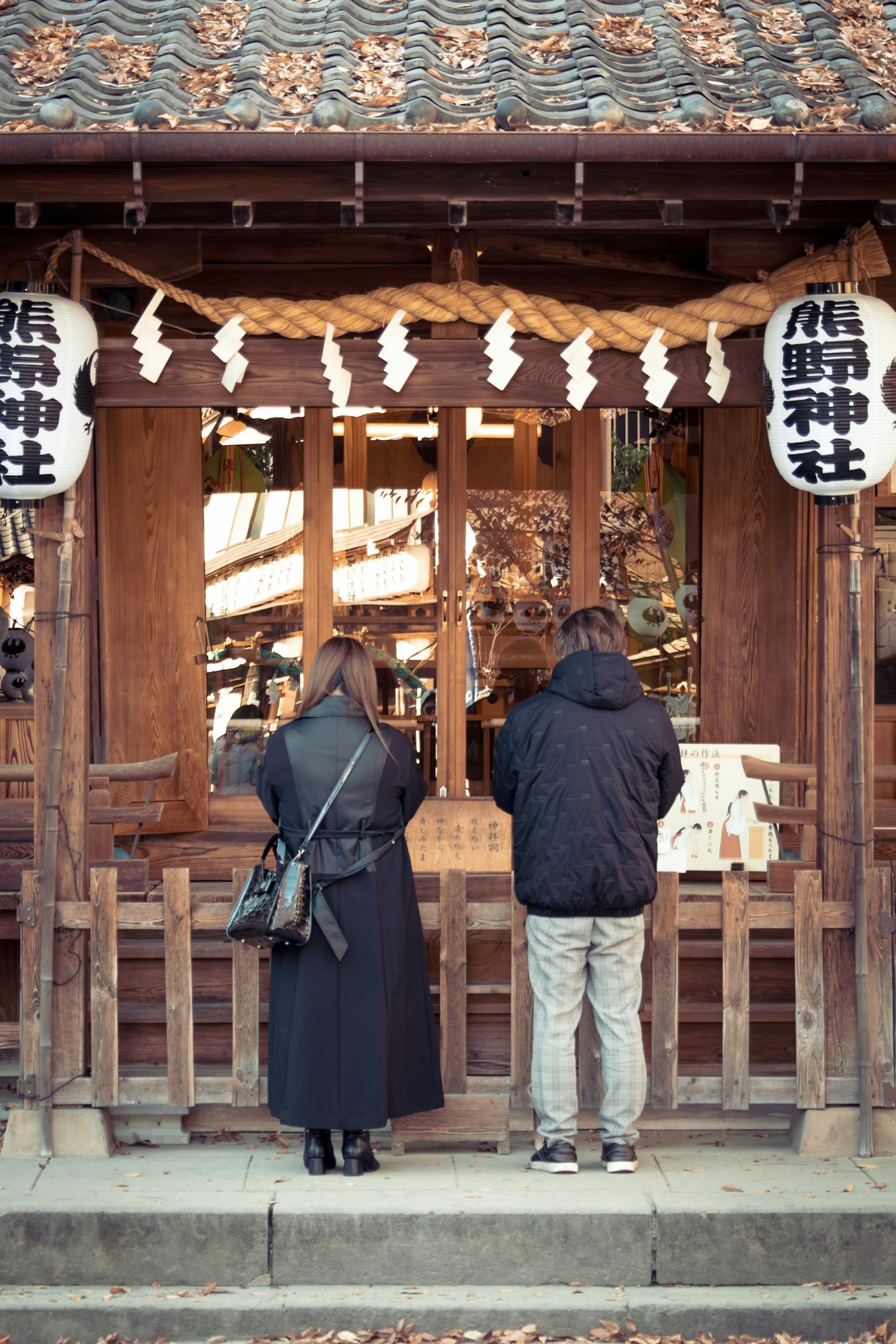
At Shintō shrines, too, Anna observed pilgrims whispering prayers or standing silently before the altar. The sound of a coin dropping into the offertory box or the soft clap of hands carried immense weight precisely because the surrounding space was hushed.
Here, lowering one’s voice was not just about courtesy—it was about aligning oneself with the sacred.
The Psychology of Quiet Spaces
What do these environments—trains, cafés, offices, temples—have in common? They cultivate psychological safety through sound restraint.
- On a crowded train, a soft voice ensures others’ mental comfort in the absence of physical comfort.
- In a café, it allows concentration and relaxation to coexist.
- In offices, it signals professionalism and respect.
- In sacred spaces, it amplifies reverence and mindfulness.
By lowering one’s voice, people demonstrate that they are aware of their impact on others, and they choose to minimize disturbance. This shared responsibility builds trust, even among strangers.
Travelers Learning to Adapt
For foreigners, these spaces of quiet consideration can be both disorienting and enlightening. Anna recalled her first weeks in Japan, when she spoke on the phone while waiting for a train—only to receive subtle glances from those nearby. No one said anything, but she immediately sensed that her voice disrupted the shared quiet.
She began lowering her voice in such situations, at first out of self-consciousness, but later out of genuine appreciation. She realized that by softening her tone, she wasn’t losing her identity—she was joining a collective rhythm.
This shift transformed her travels. The train rides became peaceful interludes. Cafés became sanctuaries for thought. Even the office, with its soft-spoken interactions, taught her the value of respecting invisible boundaries.
Quiet as a Cultural Aesthetic
Japan’s emphasis on lowering one’s voice is not accidental—it aligns with broader cultural aesthetics. From the muted colors of traditional architecture to the minimalism of Zen gardens, Japan often values restraint over excess. Sound, too, follows this principle.
A quiet café hum, a whispered conversation on a train, the silence of a temple—they are not just practical behaviors but expressions of a deeper aesthetic of beauty in stillness.
Anna began to see that in Japan, quiet is not the absence of sound, but the presence of consideration.
Psychological and Emotional Dimensions
After several weeks in Japan, Anna noticed that the experience of lowering one’s voice went far beyond etiquette or social norms. It seemed to have a direct impact on how people felt—both individually and collectively. The quietness she encountered was not merely external; it created an internal sense of calm and psychological safety.
Voice as a Conduit of Emotion
Across cultures, voice conveys emotion—enthusiasm, anger, excitement, or distress. In Japan, however, controlling volume is a conscious emotional act. Raising one’s voice is reserved for moments of strong necessity, while lowering it is a way of managing and communicating emotional states carefully.
Anna remembered sitting in a small izakaya with a colleague. Her Japanese friend whispered a story about a personal struggle, the tone soft and careful, almost fragile. In that quiet delivery, Anna could feel the trust and intimacy being offered. The lowered voice magnified the emotion, lending weight to words that might otherwise have been lost in a louder conversation.
Lesson: Soft speech is not weak—it amplifies emotional sincerity by demanding focused attention from the listener.
Silence as a Comforting Presence
Japanese people often allow silence to accompany speech, creating a sense of shared space for reflection. Unlike many Western contexts where silence can feel awkward or tense, in Japan, it conveys understanding and patience.
Anna experienced this during a visit to a Tokyo shrine. Standing next to a local worshipper, she quietly recited her prayer. The absence of speech around her, the deliberate softness of voices nearby, gave her a profound sense of inclusion and reassurance. The silence itself felt like a gentle companion, a psychological buffer against overstimulation.
In crowded public spaces, lowering one’s voice reduces the mental load of others. This is why Japanese trains, cafés, and offices feel emotionally lighter than their Western counterparts. The subdued volume creates collective mindfulness, an emotional environment where stress is minimized.
Trust and Intimacy Through Quiet Speech
Lowering the voice also serves as a signal of trust. When someone speaks softly to a friend or colleague, it communicates that the message is intended to be private, considered, and meaningful.
Anna observed this during a team meeting in a Japanese office. A senior employee leaned closer to a junior colleague and whispered instructions, the low volume signaling both respect and confidence. The junior colleague responded in the same tone, creating an invisible bond through mutual emotional calibration.
In informal settings, whispering secrets or lowering one’s voice around close friends conveys intimacy. Unlike overt displays of affection or flamboyant gestures, quietness nurtures connection subtly but powerfully.
Emotional Regulation Through Sound
Lowering one’s voice is also a form of self-regulation. By consciously speaking softly, individuals manage their own emotional output, cultivating calm and composure.
Anna reflected on how this contrasted with her experiences in more boisterous environments back home. Loud speech often heightened tension and escalated emotions, whereas quiet speech in Japan encouraged thoughtful reflection before reacting.
In restaurants, train cars, and office spaces, people inhale, measure, and then release words softly, creating a rhythm of emotional control that contributes to overall social stability.
Sound as a Medium of Psychological Safety
By lowering their voices, Japanese people provide psychological comfort to those around them. This subtle behavior reduces the perception of threat and communicates consideration, empathy, and awareness of the collective emotional state.
Anna noticed that in cafés, even strangers subconsciously adapted their tone, lowering it when others nearby were engaged in reading or study. In offices, casual conversations were muted so as not to disrupt focus. Even in bustling streets, a lowered tone in greetings or brief exchanges signaled politeness and a non-intrusive presence.
This continuous, almost imperceptible attention to sound fosters an environment where people feel respected, safe, and emotionally at ease.
Soft Voice as a Tool for Reflection
Soft speech also allows for slower, more deliberate communication, giving both speaker and listener time to process feelings and thoughts.
During a quiet walk through a temple garden, Anna’s guide shared personal memories of growing up in Kyoto. His voice was low and measured, and Anna realized that every pause and soft syllable invited contemplation, turning a simple story into a shared emotional experience.
This deliberate pacing reduces emotional misinterpretation and encourages mindful engagement, transforming ordinary interactions into moments of reflection and empathy.
Practical Implications for Daily Life
Anna began experimenting with her own voice in Japan. She found that lowering her tone while interacting with strangers, colleagues, or friends did more than convey politeness—it affected her internal state, making her calmer and more present.
She also realized that soft speech could strengthen relationships, especially with people who valued restraint and consideration. By aligning her volume with the cultural expectations of careful speech, she experienced deeper connections and smoother interactions.
Lowering one’s voice, she concluded, is a psychological and emotional tool, not merely a social convention. It fosters reflection, trust, and empathy, while creating a personal sense of calm that can be carried into any environment.
Reflection: Psychological and Emotional Dimensions
In Japan, a soft voice is never a sign of weakness. Rather, it is an instrument of emotional intelligence, a conscious choice to preserve psychological comfort, communicate intimacy, and cultivate trust.
For travelers like Anna, this practice initially seemed foreign, even restrictive. Yet, over time, she recognized its profound benefits—not just in public manners but in shaping emotional landscapes where people feel seen, safe, and respected.
Takeaway: Lowering one’s voice is a form of psychological generosity, a subtle but potent expression of thoughtfulness that resonates beyond words.
Lessons for Daily Life
After spending months observing and participating in Japanese culture, Anna realized that the practice of lowering one’s voice was not merely a social rule but a practical tool for cultivating thoughtfulness, connection, and emotional balance. She began to see how these lessons could translate into everyday life, both in Japan and back home.
The Art of Mindful Listening
Lowering one’s voice naturally encourages mindful listening. When speaking softly, the listener must pay closer attention, creating a two-way attentiveness. Anna noticed this dynamic in cafés, offices, and temples: when one person lowered their tone, others instinctively tuned in with greater focus and empathy.
Application: In daily life, whether at work or at home, consciously softening your voice can cultivate deeper listening. It invites the other person to engage attentively, transforming ordinary conversations into moments of genuine connection.
Practicing Patience Through Volume Control
Speaking softly requires patience and self-awareness. One must slow down, choose words carefully, and allow for pauses—especially in busy or noisy environments. This practice nurtures a deliberate and reflective approach to communication.
Anna began applying this at home when discussing sensitive topics with family or friends. Instead of rushing through points in a loud, hurried tone, she softened her voice, which reduced tension and encouraged thoughtful responses.
Lesson: Lowering your voice is a form of patience—both with yourself and with others. It signals that you value the interaction enough to approach it with care.
Soft Speech as Emotional Regulation
Soft speech helps regulate emotions. Anna discovered that when she intentionally spoke quietly, her own anxiety, frustration, or excitement naturally diminished. She also observed that others responded more calmly, creating a feedback loop of emotional balance.
Application: In stressful situations—meetings, disagreements, or crowded public spaces—softening your tone can diffuse tension and promote clarity of thought. It’s a simple yet powerful tool for emotional self-management.
Enhancing Intimacy and Trust
Japanese people often lower their voices in private or semi-private settings to indicate trust and intimacy. Anna found that mirroring this practice with friends and colleagues strengthened bonds, as soft speech signals respect, confidentiality, and consideration.
Practical Tip: When sharing personal experiences or sensitive information, try lowering your voice. It naturally conveys sincerity and encourages others to reciprocate with openness.
Adapting to Contexts
One of the key lessons Anna learned was the importance of contextual awareness. In Japan, lowering one’s voice is situational: it’s expected in trains, offices, temples, and cafés, but not in lively festivals or casual street interactions.
Application: Similarly, in daily life abroad, adapting your volume to the environment demonstrates empathy and situational intelligence. Soft speech can be a tool of courtesy in public spaces, while allowing more expressive volume in informal or celebratory contexts.
Cultivating a Quiet Presence
Soft speech fosters a quiet, attentive presence. Anna realized that people respond not just to what you say, but how you inhabit the space around them. Lowering one’s voice conveys calmness, patience, and consideration, creating an aura of reassurance and trust.
Daily Practice: Even small adjustments—such as lowering your tone during hallway greetings, group discussions, or phone calls—can cultivate a more harmonious atmosphere. This presence often matters as much as the content of your words.
Integrating Soft Speech into Work and Home
Anna experimented with applying these lessons across her daily routines:
- At Work: Softening tone during presentations or discussions encouraged colleagues to listen more carefully and respond thoughtfully.
- At Home: Conversing quietly with family reduced misunderstandings and promoted calmer interactions.
- Public Spaces: Lowering her voice in cafés, elevators, and public transport created mutual respect and minimized stress for herself and others.
Through consistent practice, she observed improved relationships, increased focus, and enhanced emotional well-being—demonstrating that this simple cultural practice has universal relevance.
Practical Tips for Developing Soft Speech
- Start Small: Begin with one conversation a day where you consciously lower your voice.
- Observe Others: Notice how people around you adjust their tone based on context and interaction.
- Pause and Breathe: Use natural pauses to slow speech and allow words to resonate.
- Match Volume to Content: Sensitive or emotional topics benefit from softer tones.
- Reflect on Effects: Pay attention to how lowering your voice affects your own emotions and others’ responses.
By approaching speech as a tool of thoughtfulness rather than a mere means of conveying information, one can transform routine interactions into acts of care.
Reflection: Lessons for Daily Life
The Japanese practice of lowering one’s voice is more than a cultural norm; it is a practical philosophy for living thoughtfully. Anna realized that in a world filled with noise—literal and metaphorical—choosing when to speak softly allows us to:
- Promote harmony and mutual respect
- Encourage attentive listening
- Manage emotional energy
- Strengthen intimacy and trust
Incorporating this practice into daily life, regardless of culture, elevates ordinary communication into meaningful connection.
Closing Reflection: The Gentle Power of a Soft Voice
After weeks of immersion in Japanese daily life, Anna came to understand a truth that transcends language and culture: lowering one’s voice is not the absence of strength, but the presence of thoughtfulness. In every softly spoken word, she witnessed a careful consideration of others, a deliberate slowing of pace, and a quiet expression of care.
Strength in Restraint
Soft speech is often misunderstood in Western contexts as weakness or passivity. Yet in Japan, Anna observed that the ability to moderate one’s own voice requires self-awareness, discipline, and empathy. It is an act of strength that conveys:
- Respect for the listener
- Patience in communication
- Confidence without aggression
By choosing silence or softness over loudness, one demonstrates a powerful presence that is grounded in thoughtfulness rather than domination.
Voice as a Medium of Care
In a crowded train or bustling café, a low voice signals care and attentiveness. Anna realized that speech is not merely about transmitting information; it is a medium through which we honor others’ comfort, emotional state, and space. The softer the voice, the greater the attentiveness, and the more room there is for genuine connection.
Cultivating Quiet Awareness
Lowering one’s voice encourages both self-reflection and social awareness. Anna found that the act of speaking softly requires tuning into one’s own emotions, the mood of the environment, and the needs of others. This quiet mindfulness fosters empathy, patience, and relational depth, transforming everyday conversations into meaningful exchanges.
Lessons Beyond Japan
While rooted in Japanese culture, the philosophy of soft speech has universal relevance. Anywhere in the world, slowing down, lowering volume, and choosing words thoughtfully can:
- Reduce tension in high-stress situations
- Enhance intimacy in personal relationships
- Encourage attentive listening
- Promote harmony in group settings
Anna began sharing these insights with friends and colleagues abroad, showing that the gentle power of a soft voice transcends borders.
QuietTether Philosophy
QuietTether encapsulates this insight beautifully:
“Lowering one’s voice is not the absence of strength, but the presence of thoughtfulness. In the quiet tone of speech, we find a gentler way to honor others and ourselves.”
This statement captures the essence of what Anna learned: soft speech is an intentional practice of care, connection, and respect—a subtle yet transformative way to live with awareness and empathy.
Final Reflection
The journey through Japan’s culture of thoughtful quiet left Anna profoundly changed. She recognized that in a world that often prizes volume, speed, and dominance, softness is revolutionary. Lowering one’s voice is not a concession—it is a choice to honor others, to reflect internally, and to foster harmony.
By embracing the lessons of quiet consideration, one can transform ordinary words into acts of emotional generosity and create connections that are resilient, deep, and lasting.
In the end, Anna understood that the power of a soft voice lies not in being heard louder than others, but in being truly present, truly attentive, and truly considerate—a lesson that is as timeless as it is gentle.