Opening Story: A Martial Arts Lesson Beyond Power
When Daniel, a young traveler from Canada, first set foot in Japan, he carried with him a very specific expectation about martial arts. Having grown up watching Hollywood action films filled with high-flying kicks, dramatic throws, and intense physical combat, he imagined Japanese dojos to be arenas of raw strength. He pictured stern-faced fighters testing their limits in an atmosphere thick with sweat, noise, and aggressive energy.
So when a local friend invited him to observe a judo practice in a quiet neighborhood dojo, Daniel’s excitement surged. This, he thought, would be his chance to see the “real deal”—the birthplace of martial arts, the ground zero of legendary strength. He walked into the dojo expecting to be impressed by power.
But what he encountered instead left him bewildered.
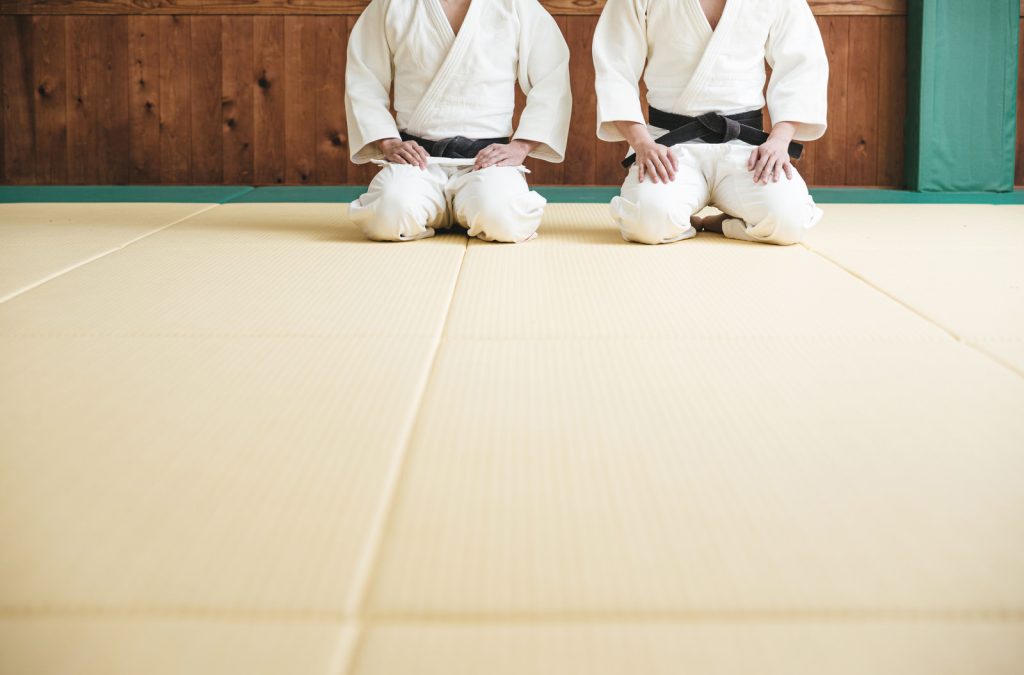
The dojo was small and unadorned, its wooden floors polished smooth, its tatami mats neatly arranged. Children in crisp white judogi bowed politely before stepping onto the mat. There was no shouting, no chest-beating, no display of ego. Even the senior students, much larger and older than the children, moved with a quiet precision, their gestures calm and deliberate.
The training session began with bows—to the dojo itself, to the instructor, and to each other. Daniel was puzzled. Where was the adrenaline? Where was the ferocity? Instead of clashing violently, the practitioners engaged in soft grips, controlled movements, and deliberate throws that often ended with one person lying gently on the mat, unhurt, sometimes even smiling.
The most surprising moment came when two adult students began sparring. Daniel leaned forward, expecting to see forceful takedowns. But what he noticed was how each seemed to yield to the other. Rather than resisting every move with brute strength, they flowed like water around each other’s motions, redirecting energy instead of meeting it head-on. A large man attempted to push his smaller partner, but within seconds the smaller judoka had guided that energy aside and gently set his partner down on the tatami with almost graceful ease.
Daniel blinked, confused. This was not the dominance of strength he was expecting. It looked almost… polite.
After practice, Daniel gathered his courage and approached the sensei, an older man with kind eyes and a calm voice. He asked, somewhat awkwardly, “Excuse me… but why does everyone seem to hold back? In the West, martial arts are often about strength, about overpowering the opponent. Here, it feels… different.”
The sensei smiled gently, as if he had been asked this question many times before.
“You see,” he began, “true martial arts are not about crushing the other person. They are about balance, respect, and self-control. If I am strong but reckless, I can hurt my partner. That is not strength. True strength is when I have the ability to harm, but I choose not to. True strength carries gentleness. Without gentleness, strength is only danger.”
Daniel was silent for a moment, letting the words sink in. The sensei continued:
“In judo, we say ‘Jū yoku gō wo seisu 柔よく剛を制す’—‘Gentleness controls strength.’ It means that even the weakest-looking technique, if applied with softness and precision, can overcome the strongest attack. But beyond the physical, it also means that the heart must remain gentle. If you cannot respect your partner, if you cannot restrain your power, then you are not practicing judo—you are only fighting.”
Daniel felt something shift within him. Back home, gentleness had often been framed as weakness. The strong athlete was the one who dominated the field, the one who stood tallest, the one who shouted loudest. But here, in this quiet dojo, the strongest were not those who imposed themselves but those who blended seamlessly, who controlled their energy with subtlety, who treated their partners with care.
As the students bowed to end the session, Daniel realized that what he had witnessed was not a lack of strength but its highest form: strength refined into gentleness, power mastered into compassion.
That night, walking back through the narrow lantern-lit streets, he carried with him a new perspective. He understood, perhaps for the first time, that in Japan, gentleness is not the opposite of strength—it is the ultimate expression of it.
The Cultural Philosophy of Gentleness
To understand why gentleness holds such an elevated place in Japanese society, one must first look beneath the surface of everyday behavior and into the deep cultural philosophies that have shaped the nation for centuries. What Daniel experienced in the Dojo 道場 was not an isolated teaching unique to Judo 柔道; it was a reflection of a broader worldview that permeates Japanese culture: the conviction that softness can surpass hardness, and gentleness can embody a deeper kind of strength.
The Principle of Jū yoku gō wo seisu – “Gentleness Overcomes Strength”
The phrase 柔よく剛を制す (Jū yoku gō wo seisu) lies at the heart of Japanese martial philosophy. While it is most famously associated with judo, the idea predates the art itself, drawing from older currents of East Asian thought. The principle teaches that rigidity, while seemingly powerful, is vulnerable; it can be broken, shattered, or worn down. Gentleness, by contrast, has flexibility. It adapts, flows, and absorbs. Just as water, soft and yielding, can eventually carve stone, so too can gentleness overcome brute force.
This idea challenges the Western dichotomy where gentleness is often seen as weakness and strength as dominance. In Japan, the fusion of the two is what creates true mastery. A person who knows only strength is dangerous, but a person who possesses strength tempered by gentleness inspires trust, respect, and admiration.
The Buddhist Influence – Compassion as True Power
Buddhism, which arrived in Japan from China and Korea in the 6th century, deeply influenced how the Japanese perceive power and morality. At the core of Buddhist teaching lies karuṇā—compassion. Power, in this worldview, is not measured by how much one can dominate but by how much one can alleviate suffering.
A strong person who uses their abilities to harm is spiritually impoverished, whereas one who can wield power with restraint and compassion is seen as having achieved higher wisdom. The Bodhisattva ideal—choosing not to pursue personal liberation until all beings are free of suffering—reflects this philosophy. Gentleness, then, becomes not merely a behavioral choice but a moral responsibility.
This is why the martial arts sensei told Daniel, “True strength carries gentleness.” It echoes centuries of Buddhist teaching that gentleness is not an absence of power but the correct channeling of it.
Confucian Values – Harmony, Restraint, and Respect
Another major current that shaped Japanese views of gentleness is Confucianism. Brought from China, Confucian values emphasized proper relationships, social harmony, and the avoidance of conflict. A virtuous person was not one who shouted the loudest or imposed his will, but one who could maintain dignity, humility, and composure while respecting the roles of others.
Gentleness, in this sense, is linked to self-restraint (Enryo in Japanese). To be gentle is to avoid unnecessary confrontation, to prioritize the group’s harmony over one’s individual assertion. This does not mean suppressing one’s self entirely but understanding the appropriate context in which to express strength.
The Japanese Aesthetic of Shibui and Subtle Beauty
Beyond philosophy, Japanese aesthetics also reinforce the cultural respect for gentleness. The concept of shibui refers to an understated, quiet elegance—a beauty that is not flamboyant but subtle and refined. A gentle gesture, a soft tone of voice, a modest presence—these are valued more highly than loud or forceful expressions.
Even in art forms such as tea ceremony (Sado or Chanoyu) and flower arrangement (Ikebana 生け花), the emphasis is on balance, restraint, and the beauty of what is not overbearing. The host in a tea ceremony demonstrates strength of spirit not by dazzling guests with extravagance but by creating a calm, harmonious space where every detail whispers care and thoughtfulness.
Gentleness as Maturity, Not Weakness
At the heart of all this lies a central conviction: gentleness is not weakness. Rather, it is the evidence of maturity. A child may lash out in anger or use force thoughtlessly, but an adult who has mastered themselves does not need to flaunt strength. By choosing gentleness, they demonstrate control over their impulses and awareness of others.
This explains why the sensei in Daniel’s story insisted that martial arts without gentleness is mere fighting. True martial arts—and true strength—demand discipline, humility, and compassion.
For Japanese society, gentleness is not a passive retreat but an active strength: the ability to yield when necessary, to support rather than dominate, and to embody resilience without aggression. It is strength refined into wisdom.
Everyday Expressions of Gentle Strength
While the philosophical roots of gentleness lie deep within Japanese history, religion, and aesthetics, its most vivid expressions appear in the everyday behaviors of ordinary people. For a foreign visitor, these moments can feel small, even invisible at first glance, yet they hold immense cultural meaning. Gentleness in Japan is not an abstract virtue reserved for spiritual texts or martial arts masters; it is a lived practice, woven into the rhythm of daily life.
Politeness in Public Spaces – The Quiet Power of Consideration
One of the first places where travelers notice gentleness is in public transportation. Subways in Tokyo or trains in Osaka, despite being filled with thousands of people during rush hours, maintain a remarkable sense of order. There are no shouting matches over seats, no aggressive shoving, no raised tempers. Instead, passengers stand in neat lines, silently waiting their turn. Seats are offered to the elderly, to parents with children, and to those who appear fatigued.
This is not a display of weakness but of collective strength: a shared commitment to maintaining dignity and respect in environments that could easily descend into chaos. The gentle act of yielding a seat is a small sacrifice, but in Japan, it signals maturity, empathy, and reliability.
Conversational Gentleness – The Art of Soft Words
Another everyday manifestation of gentleness can be found in the Japanese language itself. Communication often avoids bluntness. Instead of saying, “You are wrong,” one might hear, “That may be difficult” or “Perhaps another way could be considered.” Rather than raising voices to win an argument, speakers lean into subtle hints, pauses, and indirect expressions that preserve harmony.
This conversational style can bewilder visitors used to more direct speech. Some foreigners may initially interpret it as evasive or indecisive. Yet within Japanese society, such gentleness in speech is not weakness but respect. It is the strength of choosing not to wound another person’s dignity. To speak softly, to cushion criticism, to acknowledge the feelings of others—these are acts of cultural maturity that prioritize relationship over ego.
Everyday Etiquette – Bowing, Apologizing, Acknowledging Others
Gentleness is also embedded in gestures. Bowing, for example, is not simply a formality. It is a non-verbal communication of humility and recognition of the other’s humanity. Whether a slight nod between colleagues or a deep bow of apology, the act embodies restraint and respect.
Apologies in Japan also reveal the power of gentleness. Saying “Sumimasen” or “Gomen nasai” often goes beyond accepting fault; it acknowledges the other person’s inconvenience, even in situations where no mistake was made. When a train is delayed by only a few minutes, an announcement is made apologizing to passengers. To outsiders, this may seem unnecessary, but within Japanese culture, it reflects the gentle recognition that time and comfort matter deeply to others.
The Value of Silence – Gentleness in What Is Not Said
In many Western contexts, silence in conversation may be interpreted as awkwardness or lack of confidence. In Japan, however, silence can be a form of gentleness. By not rushing to fill every gap with words, space is left for others to process, to reflect, or simply to exist without pressure.
Silence can also prevent conflict. When someone refrains from pushing their opinion in a heated discussion, their quietness is not passivity but gentleness—a way to preserve group harmony. It communicates: “I value our relationship more than my need to be right.”
Respect for the Invisible and the Unseen
Gentleness in Japan extends even toward spaces and objects. Shoes are removed at the entrance to homes, not only for cleanliness but as a gesture of respect toward the shared living environment. Trash is meticulously separated and recycled, reflecting a gentle consideration for the community and future generations. Even the act of wrapping gifts with care, often more beautifully than the gift itself, embodies gentleness—the recognition that the way something is presented carries emotional weight for the receiver.
Admiration for “The Supporter” – Invisible Strength in the Workplace
In professional life, gentleness takes on the form of reliability and quiet contribution. The most respected worker is not always the most outspoken or dominant but often the one who quietly ensures that tasks are completed smoothly, that colleagues feel supported, and that no one is left struggling alone. The Japanese phrase “縁の下の力持ち” (En no shita no chikara mochi), meaning “the power beneath the floorboards,” refers to someone whose unseen efforts uphold the entire structure.
This figure embodies gentleness—not through flashy displays of authority but through a steady presence that fosters trust. To be dependable, considerate, and unselfish in the workplace is not weakness. It is the kind of strength that allows teams to function cohesively.
Gentleness as Admiration in Relationships
Finally, in personal relationships, Japanese admiration often gravitates toward gentleness. A partner who listens patiently, a friend who anticipates needs without being asked, a parent who guides with calm reassurance rather than harsh discipline—these are admired as figures of strength. For Japanese society, gentleness does not diminish authority. Instead, it enhances it by grounding relationships in trust and security.
Gentleness in Japan is thus not something rare or extraordinary. It is an everyday strength, expressed in small acts that seem ordinary but collectively sustain a culture of trust and respect. To see it only as “softness” is to miss the quiet discipline and intentionality behind it. What appears as yielding is, in fact, a different kind of power—one that holds society together not by force but by choice.

Martial Arts as a Metaphor
When many foreigners hear the words “Japanese martial arts,” their first mental image is one of brute force—two fighters colliding with explosive energy, trying to overpower one another with physical might. Yet when they step into a real dojo in Japan, they encounter something very different. The air is quiet. The practitioners bow deeply before entering the mat. Movements are fluid, almost graceful, and victories are marked not by domination but by mutual recognition.
The dojo becomes a stage where the deeper Japanese philosophy of gentleness reveals itself. Here, strength is not dismissed, but it is carefully reshaped, softened, and disciplined. Martial arts in Japan embody the paradoxical truth that true strength is found in gentleness.
Judo – “Gentleness Overcomes Hardness”
The very name Judo carries the essence of this philosophy. Ju (柔) means “gentle, flexible,” and do (道) means “the way” or “path.” Together, judo is “the gentle way.” It is not about crushing an opponent with sheer power. Instead, it teaches practitioners to redirect force, to yield rather than resist, to turn the opponent’s energy back upon them.
When a judoka throws an opponent, it is not an act of brutality but of skillful redirection. The fall is controlled, guided so the opponent is not injured. The act of bowing before and after each match reminds both sides that respect and safety come before victory. The martial artist’s goal is not destruction but harmony.
For a foreign visitor expecting a clash of titans, this can be surprising—even confusing. Yet it embodies the cultural principle of 柔よく剛を制す (Jū yoku gō wo seisu): “Gentleness overcomes strength.” The stronger one does not need to crush. The stronger one can guide, control, and protect.
Aikido – The Art of Harmonizing Energy
If judo emphasizes redirection, Aikido 合気道 brings the philosophy of gentleness to an even higher level. Often described as the “art of peace,” Aikido is not about defeating an opponent but about blending with their movement.
When someone attacks, the Aikido practitioner does not resist head-on. Instead, they move with the flow, guiding the opponent off balance with subtle circular motions. Strikes and counters are designed to neutralize without harm, to restore balance rather than inflict injury. The founder of Aikido, Morihei Ueshiba, taught that aikido was not a method of fighting but a way to reconcile the world: “To control aggression without inflicting injury is the art of peace.”
Aikido demonstrates that gentleness is not passive avoidance but active, skillful compassion. To neutralize without destroying requires more mastery than simply overpowering an adversary.
Kendo – The Polished Spirit Behind the Sword
Kendo 剣道, the modern form of samurai sword training, might seem farthest from gentleness. After all, it involves strikes with bamboo swords and loud shouts of Kiai 気合 (spirit calls). Yet even here, gentleness pervades.
The true essence of kendo is not in cutting down opponents but in cultivating one’s spirit. Matches are fought with formality, and points are only awarded when strikes are made with proper posture, intention, and spirit. Reckless aggression is not rewarded. Instead, discipline, control, and respect are paramount.
The saying “Kendo begins and ends with courtesy” reflects that even in a practice built around the sword, gentleness defines the highest form of mastery. A swordsman who cannot control their own aggression is not respected, no matter how fast or powerful their strikes may be.
Martial Arts as Training for the Heart
In Japan, martial arts are not merely sports. They are methods of cultivating the human spirit. Dojos emphasize Rei (礼, courtesy), Shin (心, heart), and Wa (和, harmony) alongside physical skill. The bow, the silence, the precise rituals—all are reminders that martial training is not about domination but self-mastery.
A young practitioner learns quickly that brute strength is not enough. A smaller, calmer opponent can prevail through technique, composure, and patience. The Dojo teaches that gentleness—expressed in control, respect, and restraint—is what transforms raw power into true strength.
The Foreign Visitor’s Realization
For the foreign traveler in the opening story, the dojo becomes a turning point of cultural understanding. Expecting to see contests of strength, they instead witness contests of spirit. Watching the bowing, the guiding motions, the mutual respect, they begin to grasp that in Japan, gentleness is not weakness. It is a higher form of strength—a strength that is trusted, admired, and worthy of respect.
The martial arts are thus not only training in combat. They are metaphors for life itself: real strength is proven not in how much force one can exert, but in how much gentleness one can embody in the face of conflict.
Gentleness in martial arts is not about erasing strength but about disciplining it, refining it, and redirecting it toward harmony. In this way, the dojo becomes a mirror of Japanese society, where the highest respect is reserved not for those who dominate but for those who control their strength in service of others.
Historical and Literary Roots
To understand why gentleness is admired more deeply than strength in Japan, one must look beyond the dojo and into the pages of its history and literature. The Japanese imagination, cultivated over centuries, has long cherished quietness, restraint, and elegance. Far from being mere cultural ornaments, these values shaped the very foundation of what it means to live with dignity in Japan.
The Heike Monogatari – The Sound of Impermanence
The medieval epic Heike Monogatari 平家物語 begins with one of the most famous lines in Japanese literature:
“The sound of the Gion Shōja bells echoes the impermanence of all things…”
From its very first sentence, the tale introduces a worldview steeped in fragility and transience. The story chronicles the rise and fall of the mighty Taira clan, yet its lasting message is not one of conquest or military glory. Instead, it is a meditation on the fleeting nature of power.
The warriors of the Taira are remembered less for their battlefield triumphs and more for the elegance of their courtly manners, their sensitivity to poetry, and their tragic beauty in defeat. The admiration is not directed at sheer force, but at the dignity with which they faced impermanence.
In this way, The Heike Monogatari taught generations of Japanese that gentleness—expressed as graceful acceptance of life’s fragility—was the true mark of strength.
The Tale of Genji – The Power of Refinement
Long before the samurai era, The Tale of Genji 源氏物語, written by Murasaki Shikibu 紫式部 in the 11th century, painted a portrait of a world where refinement and sensitivity carried greater weight than might or wealth. The protagonist, Hikaru Genji 光源氏, is admired not because he dominates others, but because of his poetic skill, his gentleness in relationships, and his aesthetic sensibility.
In this aristocratic world, the ability to appreciate the sound of the wind through pines or to respond to a poem with subtlety was a form of power. What endured in cultural memory was not strength in battle, but the capacity for empathy, grace, and delicate expression.
Even today, Japanese readers turn to Genji not for tales of conquest, but for lessons in how gentleness—emotional, aesthetic, and spiritual—defines the highest form of human maturity.
Edo Aesthetics – Iki and Shibui
Centuries later, during the Edo period, when peace under the Tokugawa shogunate lasted for more than 250 years, the cultural focus shifted further away from raw power. In a society where wars were absent, new aesthetic ideals blossomed—iki 粋 and Shibumi 渋み.
- Iki described refined stylishness—effortless composure, modesty, and self-restraint in manner and dress. A person who was iki did not boast of strength or wealth but demonstrated quiet elegance.
- Shibumi described subtle beauty—an understated taste that avoided excess. The Shibui 渋い tea bowl, with muted glaze and natural imperfections, carried more dignity than a gaudy, over-decorated one.
These ideals reveal how deeply gentleness became woven into daily life. Strength, loudness, or extravagance were seen as vulgar. Quiet refinement was the path to respect.
Bushidō – Strength Balanced with Benevolence
Even within the warrior code of the samurai, Bushidō 武士道, gentleness was essential. While martial valor (Buyū 武勇) was valued, it was never separated from compassion (Jin 仁) and justice (Gi 義). A samurai who was fearless but cruel was not admired. A samurai who combined courage with benevolence embodied the true spirit of the warrior.
Historical anecdotes tell of generals who treated defeated enemies with mercy, or who spared civilians in conquered towns. Such actions were remembered and praised, while stories of cruelty left stains on reputations. In this way, even in the most martial culture of Japan’s past, gentleness remained a vital measure of greatness.
The Aesthetic of Mono no Aware
Running through Japanese literature and art is the aesthetic of Mono no aware—the poignant awareness of life’s impermanence. From cherry blossoms that fall at their peak of beauty, to autumn leaves that glow before fading, Japanese art treasures the fragile, the fleeting, and the soft.
This sensibility nurtures gentleness in human relationships. To recognize that life is brief is to treat others with care. To know that beauty fades is to treasure subtlety over force. Mono no aware teaches that the strongest heart is not the one that clings or dominates, but the one that embraces transience with tenderness.
Art as a Reflection of Gentle Strength
In painting, poetry, and gardens, Japanese culture has consistently elevated restraint above boldness.
- A Haiku does not shout—it whispers three short lines, inviting silence to carry the meaning.
- A Zen garden does not overwhelm—it arranges stones and raked sand to suggest vast landscapes in quiet simplicity.
- A tea ceremony does not impress with luxury—it moves slowly, humbly, offering warmth in the smallest of gestures.
These traditions remind us that gentleness is not the absence of expression. It is the refinement of expression, honed to its most essential and considerate form.
A Heritage of Gentleness
Across history, from the tragic beauty of the Heike, to the refined emotions of Genji, to the understated aesthetics of Edo, Japan cultivated a heritage where gentleness was not weakness but the very highest form of cultural strength.
The past whispers into the present: to dominate is easy, to be gentle is difficult; to be gentle, and yet respected—that is the true victory.
Cross-Cultural Contrasts
When we step outside Japan and look across the globe, the way gentleness and strength are perceived reveals striking differences. What is considered maturity and dignity in Japan may be misunderstood as weakness elsewhere, while what is celebrated as strength in one society may be seen as disruptive or immature in Japan. To understand the Japanese reverence for gentleness, it is essential to place it within this cross-cultural conversation.
Western Perspectives: Strength as Admiration
In much of the Western world, particularly in Europe and North America, strength is equated with leadership, charisma, and success. From childhood, people are encouraged to “stand up for yourself,” “speak your mind,” and “make your voice heard.” In classrooms, the child who raises their hand most often is praised for confidence. In workplaces, the employee who asserts bold ideas gains recognition.
Gentleness, by contrast, is often conflated with timidity or lack of initiative. Someone who refrains from pushing forward may be labeled “too soft” or “not leadership material.” Western narratives—from epic tales of heroes to Hollywood blockbusters—tend to emphasize triumph through conquest, force, or dramatic assertion.
Thus, when Western visitors encounter Japan’s admiration for quietness, patience, and non-confrontation, they often struggle to reconcile it with their own cultural instincts. To them, strength without loudness seems invisible, and gentleness appears as passivity. But in Japan, what is invisible can be the most powerful.
Japan’s Counterbalance: Gentleness as Maturity
In Japan, strength without gentleness is considered dangerous—like a sharp blade with no sheath. True maturity is measured not by how forcefully one asserts themselves, but by how well one harmonizes with others. A person who listens more than they speak, who avoids unnecessary conflict, and who restrains their power is not seen as weak. They are seen as wise.
This perspective is embedded in countless Japanese sayings and practices:
- “The nail that sticks out gets hammered down.” A reminder that harmony is preferred over boldness.
- “Jū yoku gō o seisu” (柔よく剛を制す) — “Gentleness overcomes strength.”
- Everyday politeness, where even disagreements are phrased indirectly to protect relationships.
In this sense, Japanese culture has redefined what it means to be powerful: the strongest person is the one who does not need to display strength at all.
China and Korea: Shared Roots, Divergent Expressions
Japan is not the only culture shaped by Confucian and Buddhist values. Its East Asian neighbors, China and Korea, also emphasize harmony, respect for others, and filial duty. Yet the ways these ideals manifest differ.
- China:
Historically, Chinese Confucianism stressed hierarchy, filial piety, and ritual propriety. Strength was often legitimized through order and authority. A ruler’s benevolence was important, but strength in governance was equally prized. Modern Chinese society continues to value harmony, but public discourse can be more direct than in Japan. Gentleness is admired, but not at the expense of bold action. - Korea:
In Korea, influenced by both Confucian hierarchy and a turbulent history of resilience, respect for authority and seniority remains strong. At the same time, expressions of emotion and assertiveness are more socially acceptable than in Japan. Gentleness is valued, but it often coexists with passionate displays of feeling.
By contrast, Japan pushed the Confucian emphasis on harmony to an extreme refinement, blending it with Buddhist compassion and aesthetic restraint. The result is a unique cultural expectation where gentleness itself becomes a form of strength, rather than a balance between strength and kindness.
Western Individualism vs. Japanese Collectivism
The contrasts also reflect broader cultural orientations:
- Western individualism celebrates the individual hero who rises above the group. To stand apart is admirable.
- Japanese collectivism celebrates the individual who strengthens the group by blending into it. To not stand apart is admirable.
In this light, gentleness in Japan is not only a personal trait but a social glue. It allows the group to function without friction. Whereas Western societies may equate leadership with dominance, Japanese leadership often lies in quiet coordination, humility, and care.
Travel Encounters: Misunderstandings and Realizations
Foreign travelers often encounter moments of surprise.
- A European visitor might apologize for not being “strong enough” in negotiations, only to be reassured by Japanese colleagues that their patience and politeness were highly respected.
- An American might worry that a gentle presentation lacked impact, only to be told that its balance and modesty were what made it effective.
- A Chinese visitor may expect more open debate in meetings, only to find that Japanese consensus-building unfolds through subtle cues and silence.
Over time, many foreigners come to realize that Japan demonstrates a different kind of strength: one that does not need to conquer, but to include; one that does not impose, but invites.
A Universal Lesson: Gentleness Reconsidered
Comparing these cultures reveals that no single perspective is absolute. Strength in one society may be seen as recklessness in another; gentleness in one may be misinterpreted as weakness elsewhere. Yet through cross-cultural encounters, travelers and learners discover that gentleness is not the opposite of strength—it is another form of it.
In an increasingly interconnected world, the Japanese lesson resonates: gentleness may be the quality most needed to bridge divides, foster trust, and create communities that endure.

Emotional Impact of Valuing Gentleness
If we pause to consider not only the philosophical but also the emotional consequences of Japan’s deep respect for gentleness, we discover something profound: gentleness is not simply a cultural aesthetic. It is a force that shapes how people feel, how they relate to one another, and how trust and safety are cultivated within the community. Gentleness, in the Japanese context, has a ripple effect that goes far beyond individual behavior—it creates a climate of 安心感 (Anshinkan, a sense of security) and 信頼 (Shinrai, trust) that permeates everyday life.
A Society Built on Emotional Safety
One of the most immediate impacts of valuing gentleness is the atmosphere of safety it fosters. In public spaces, the absence of aggressive confrontation contributes to an underlying calm. Even in crowded trains, busy markets, or bustling festivals, the collective practice of restraint and consideration reassures individuals that they are unlikely to face open hostility.
For foreigners arriving from more assertive cultures, this sense of quiet emotional safety can be striking. Many visitors notice how rare it is to hear people shouting in anger on the street, or to see public altercations. This is not because tension never exists, but because gentleness provides a social cushion—a shared expectation that anger should be tempered, words should be softened, and actions should avoid unnecessary harm.
Family Life: Nurturing Through Kindness
In Japanese families, gentleness is not just encouraged but deliberately cultivated as a lifelong value. From early childhood, children are taught to use polite language, to share toys, to avoid causing meiwaku (trouble) for others, and to notice the feelings of those around them.
Parents often praise not only achievements but also small acts of consideration, such as helping a sibling, waiting patiently, or speaking softly. In this way, emotional intelligence is tied to moral development. A child who grows into a gentle person is not seen as less ambitious; rather, they are seen as someone trustworthy, dependable, and prepared to be a contributor to society.
This nurturing environment builds children’s internal sense of stability. They grow up learning that relationships are preserved not by force, but by kindness, and that emotional harmony is as important as personal success.
Education: Cultivating Harmony in Classrooms
Gentleness also defines the emotional environment in Japanese schools. Teachers emphasize group projects, collective responsibility, and the value of being considerate. Classrooms are not just spaces for academic learning but also laboratories for practicing social gentleness: cleaning the classroom together, taking turns leading activities, and resolving conflicts through calm dialogue.
Students who exhibit patience, humility, or the ability to blend into the group are praised. A child who refrains from shouting answers or dominating discussions may actually be seen as embodying maturity. In this context, the emotional tone of the school becomes one of 安心 (Anshin, comfort) and 協力 (Kyoryoku, cooperation) rather than constant competition.
For many foreign students, this environment is initially puzzling. They may expect to be rewarded for bold participation, only to discover that the teacher values quiet encouragement and subtle contributions just as much. Over time, they recognize that such an approach produces classrooms where students feel supported rather than pressured to perform.
Workplaces: Gentle Leadership and Trust
In professional settings, gentleness plays a central role in establishing trust among colleagues. Japanese workplaces often function less as arenas of individual competition and more as tightly woven networks of collaboration. Leaders are respected not when they dominate meetings with forceful rhetoric, but when they listen attentively, encourage participation, and avoid humiliating others in public.
This “gentle leadership” produces a profound emotional impact: workers feel safe to contribute without fear of ridicule or hostility. Even criticism, when expressed, is usually wrapped in indirect or softened language, ensuring that relationships remain intact.
Foreign employees sometimes misinterpret this restraint as indecisiveness. Yet, they eventually realize that it is precisely this commitment to gentleness that sustains long-term trust, reduces stress, and keeps teams cohesive in the face of challenges.
Gentleness as a Source of Communal Healing
Beyond family, school, and workplace, gentleness acts as a quiet form of collective healing in Japanese society. After natural disasters, for instance, foreign journalists have often remarked on the remarkable patience, order, and mutual aid shown by affected communities. Rather than descending into chaos, people wait their turn for supplies, share scarce resources, and support strangers.
This behavior is not merely logistical efficiency—it is the emotional inheritance of a culture that equates gentleness with resilience. The shared practice of caring consideration allows communities to endure hardship with dignity.
Travelers’ Emotional Awakening
For many foreign travelers, witnessing these small acts of everyday gentleness becomes an emotional turning point. A stranger guiding them kindly in the subway, a shopkeeper packaging their items with care, or a colleague speaking softly to avoid embarrassment—all these gestures convey a depth of respect that feels rare in their own societies.
Gradually, they come to understand that gentleness is not a weakness but a subtle strength that transforms relationships. It lowers barriers, reduces tension, and nurtures a quiet sense of belonging. Travelers often leave Japan with a renewed appreciation for how small acts of gentleness can change the entire tone of human interaction.
The Psychological Legacy of Gentleness
Ultimately, the emotional impact of valuing gentleness can be summarized in three enduring effects:
- 安心感 (Security): People feel safe in spaces where aggression is minimized.
- 信頼 (Trust): Gentle interactions foster confidence that others will not exploit vulnerability.
- 絆 (Kizuna, Bonds): Gentleness strengthens relationships by prioritizing harmony over personal gain.
These three elements combine to create a society where emotional well-being is prioritized alongside material prosperity. In such a culture, gentleness becomes a form of social infrastructure, invisible but indispensable.
Lessons for Daily Life
Gentleness in Japan is not just an abstract cultural principle; it is a living practice, woven into daily interactions, social systems, and interpersonal expectations. For those outside of Japan, the challenge is not simply to admire this cultural trait from a distance, but to ask: how can we bring elements of this gentleness into our own daily lives, families, workplaces, and communities?
Reframing Gentleness: From Weakness to Strength
The first lesson is to reconsider what “gentleness” actually means. In many Western contexts, gentleness has long been equated with softness, timidity, or lack of assertiveness. Yet, the Japanese perspective reveals that gentleness is not the absence of strength—it is the discipline of strength.
To remain calm when provoked, to yield without losing dignity, to choose listening over shouting—these require immense self-control. They are not the signs of weakness but of maturity and mastery. Bringing this reframing into our daily life allows us to approach challenges without defaulting to confrontation, recognizing that restraint is sometimes the highest form of courage.
Practicing Gentleness in Everyday Situations
Gentleness can be practiced in the smallest of moments:
- On public transport: offering a seat, lowering one’s voice, or avoiding unnecessary crowding.
- In conversation: choosing words that soften rather than sharpen, giving others space to speak, and listening without rushing to assert one’s opinion.
- In conflict: pausing before reacting, considering the other person’s feelings, and responding in ways that preserve dignity for both sides.
- In family life: praising children not only for accomplishments but for kindness, patience, and sharing.
When such behaviors accumulate, they create an emotional climate of safety that mirrors what many travelers feel in Japan—a society where gentleness permeates the ordinary.
Gentle Leadership in a Globalized World
Another lesson is the role of gentleness in leadership. Modern global challenges—climate crises, migration, economic inequality—require not only bold vision but also gentle negotiation and careful listening. Leaders who dominate or intimidate may secure short-term victories, but they often fail to build lasting coalitions.
Japanese cultural models of leadership suggest a different path: the leader as the calm center of the storm, who speaks last, who listens most, who nurtures trust quietly. In the workplace, this translates into managers who build loyalty not by issuing orders but by protecting their teams, encouraging collaboration, and modeling humility.
This concept of “Gentle Leadership” is increasingly relevant in global contexts where cooperation across differences is essential. The Japanese lesson here is that gentleness can be a strategy—not just a virtue—for achieving resilience and long-term success.
The Balance Between Assertion and Gentleness
Of course, adopting gentleness does not mean eliminating self-expression or ambition. The Japanese example shows that balance is key: knowing when to step forward with assertiveness and when to step back with gentleness.
This is particularly crucial in multicultural environments. A person who learns to modulate their style—sometimes bold, sometimes gentle—demonstrates not only cultural intelligence but also emotional intelligence. By embodying both qualities, one can become more effective in communication, conflict resolution, and relationship-building.
Gentleness as a Universal Language
Perhaps the greatest lesson is that gentleness transcends linguistic and cultural barriers. A smile, a pause to let another pass, a lowered tone, a gesture of patience—these acts communicate care across borders. Travelers to Japan often report that, even without speaking the language, they felt welcomed and respected simply through the subtle gentleness of everyday encounters.
This suggests that gentleness is not uniquely Japanese, but rather a human capacity that Japan has refined into an art form. By adopting similar practices in our own societies, we participate in a shared language of respect, one that needs no translation.
QuietTether’s Perspective
QuietTether often reminds us that true strength is found not in dominating others, but in serving them with patience and kindness. This philosophy echoes what Japan teaches about gentleness:
“Gentleness is not the absence of power, but the mastery of it in service of others.”
This is not only a cultural observation but also a personal challenge. Each of us can ask: How am I using my strength? Am I wielding it to overwhelm, or am I refining it into gentleness that uplifts?
A Gentle Revolution in Daily Life
If we carry these lessons into our routines, the impact can be transformative. Imagine workplaces where employees feel safe, families where children are praised for kindness, cities where strangers show patience in crowded spaces, and global politics where gentleness is seen not as weakness but as wisdom.
Such a shift does not require dramatic change. It begins in the micro-moments of life—choosing to wait, to listen, to soften, to yield. Over time, these micro-acts accumulate into a gentle revolution, one that reshapes not only our behavior but also the emotional landscapes of our communities.
Closing Transition
Having explored the Opening Story, the cultural roots, everyday practices, historical and literary foundations, cross-cultural contrasts, emotional impact, and now the lessons for life, we arrive at the natural conclusion:
Gentleness, as honored in Japan, is not weakness. It is the most enduring form of strength—quiet, steady, and deeply human.
Closing Reflection: The Silent Strength of Gentleness
When we step back from the stories, the philosophies, and the daily practices explored throughout this article, one truth shines through: gentleness is not the opposite of strength—it is its quiet perfection.
In many cultures, strength is measured by noise, by visibility, by the ability to overpower. Yet, Japan invites us to consider another paradigm: the strength that needs no display, the authority that does not demand attention, the power that safeguards rather than crushes.
Gentleness as Japan’s Enduring Wisdom
Across centuries, from the epics of The Tale of Genji to the codes of Bushidō, from the silence of Zen gardens to the rituals of martial arts, Japan has consistently elevated gentleness to the level of cultural philosophy. Even in practices associated with combat—judo, aikido, kendo—the message remains the same: the highest mastery lies not in defeating others, but in controlling oneself so fully that one need not harm.
This wisdom suggests that gentleness is not a lack but a surplus of strength, one so abundant that it can be restrained, redirected, and softened for the sake of harmony.
A Universal Human Aspiration
What Japan models through gentleness is not meant to be confined to its own shores. Travelers who encounter this value often describe feeling disarmed, comforted, and changed by it. The lesson they carry home is profound: gentleness is a strength available to all of us, regardless of culture.
Whether in a crowded city, a tense workplace, or an intimate relationship, gentleness has the capacity to dissolve barriers, ease conflict, and deepen trust. It is a strength that does not exhaust but replenishes, not only the one who gives it but also the one who receives it.
Two Faces of Strength: West and East
We have seen how Western traditions often honor boldness, assertiveness, and individual triumph, while Japanese traditions prize harmony, humility, and quiet dignity. Both contain truths; both can inspire. But when placed side by side, Japan’s emphasis on gentleness highlights a critical balance missing in many parts of the modern world: the courage to care as much as to conquer.
Perhaps the future of humanity lies not in choosing one model over the other, but in learning to integrate them—assertive when needed, gentle when possible.
QuietTether’s Closing Philosophy
QuietTether has always held that gentleness is not an ornament but a foundation, not something extra to practice when convenient, but the very ground upon which real strength stands.
As we conclude this reflection, let us return to the heart of QuietTether’s philosophy:
“True power does not dominate. It listens, it yields, it embraces. In gentleness, we find the strength that binds hearts together.”
Final Thought
The Japanese lesson on gentleness is not only cultural—it is universal. It asks us to trust in a form of strength that does not need to shout, that does not leave scars, that creates instead of destroys. In this quiet power, there is a brilliance brighter than any force of domination: the brilliance of hearts held together by respect, patience, and kindness.
To embody gentleness is not to step away from strength. It is to rise above it, into a form of strength that is infinite, sustainable, and profoundly human.