Opening Story: Experiencing the First Tea Ceremony in Kyoto
Kyoto, in the early morning, holds a quiet charm unlike any other city in the world. Mist drifts gently across the cobblestone streets, and the distant toll of a temple bell punctuates the serene atmosphere. For many visitors, the city is synonymous with history, culture, and tradition, but for me, on that day, Kyoto was about to reveal a subtler, more intimate secret—the art of the Japanese tea ceremony, or Sado (Chanoyu).
I had always been curious about tea culture in Japan, imagining it as a ritual of calm and elegance, yet I did not anticipate the profound effect it would have on my perception of time, attention, and presence. The invitation to a tea ceremony came through a small Kyoto workshop tucked behind a row of traditional Machiya houses. The entrance was unassuming, a simple wooden gate leading to a courtyard where moss-covered stones hinted at centuries of careful care.
As I stepped into the courtyard, the noise of the city faded, replaced by the soft rustling of bamboo leaves and the occasional chirp of birds. The host, dressed in a subdued kimono, greeted me with a deep bow. There was a deliberate slowness in every gesture, a measured grace that immediately commanded my attention and subtly reminded me to slow down. Here, I realized, time was not measured in minutes but in moments—each one carefully acknowledged, each one cherished.
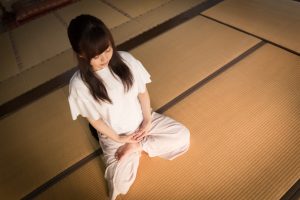
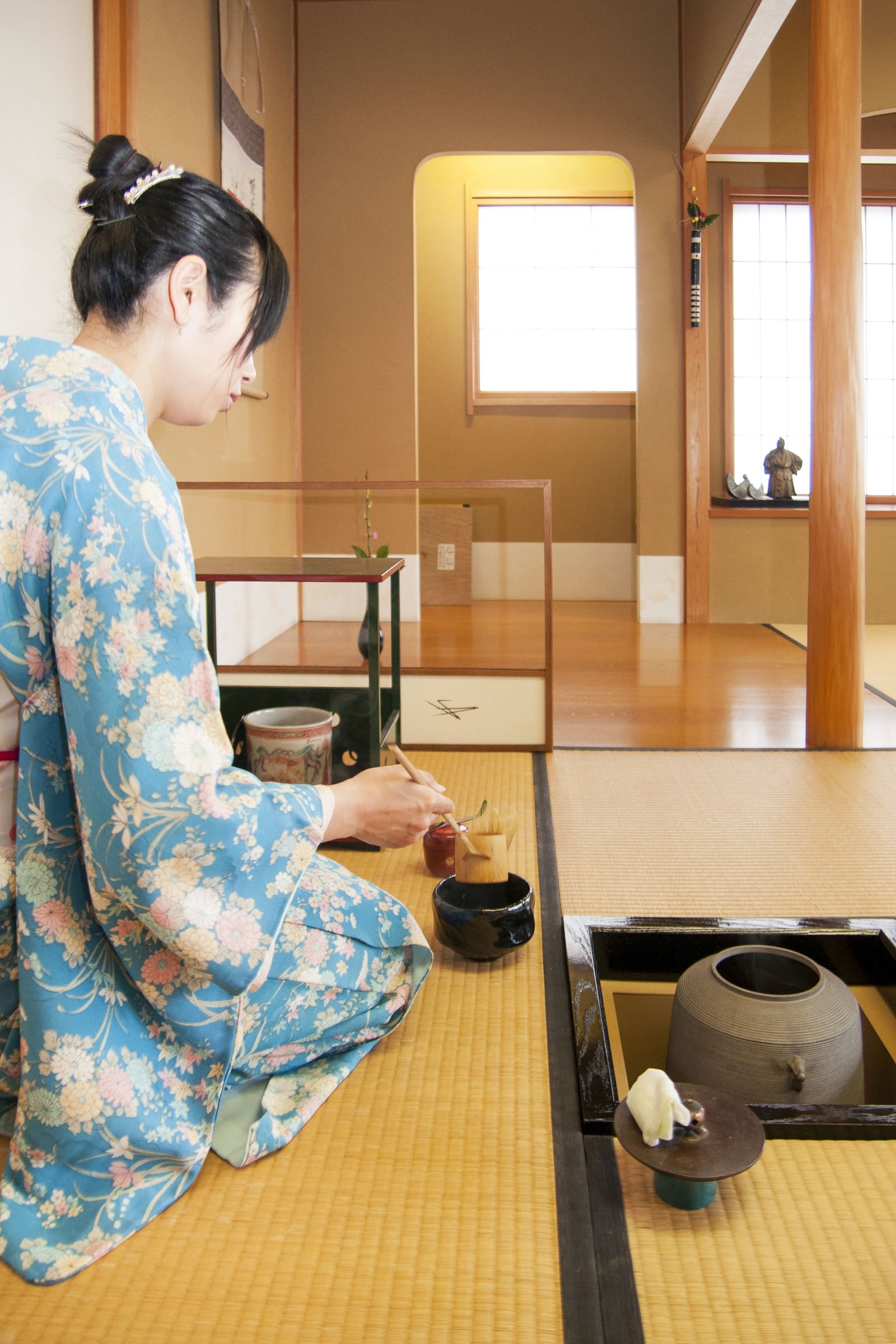
The tea room itself was minimal, almost austere. Tatami mats covered the floor, and the walls were adorned with a simple scroll, its calligraphy inviting contemplation, and a small flower arrangement placed deliberately to harmonize with the space. There were no distractions, no ornate decorations—only what was necessary, each object holding purpose and meaning. I took a deep breath, absorbing the quietness that seemed almost tangible, and sat down, feeling the warmth and texture of the tatami beneath me.
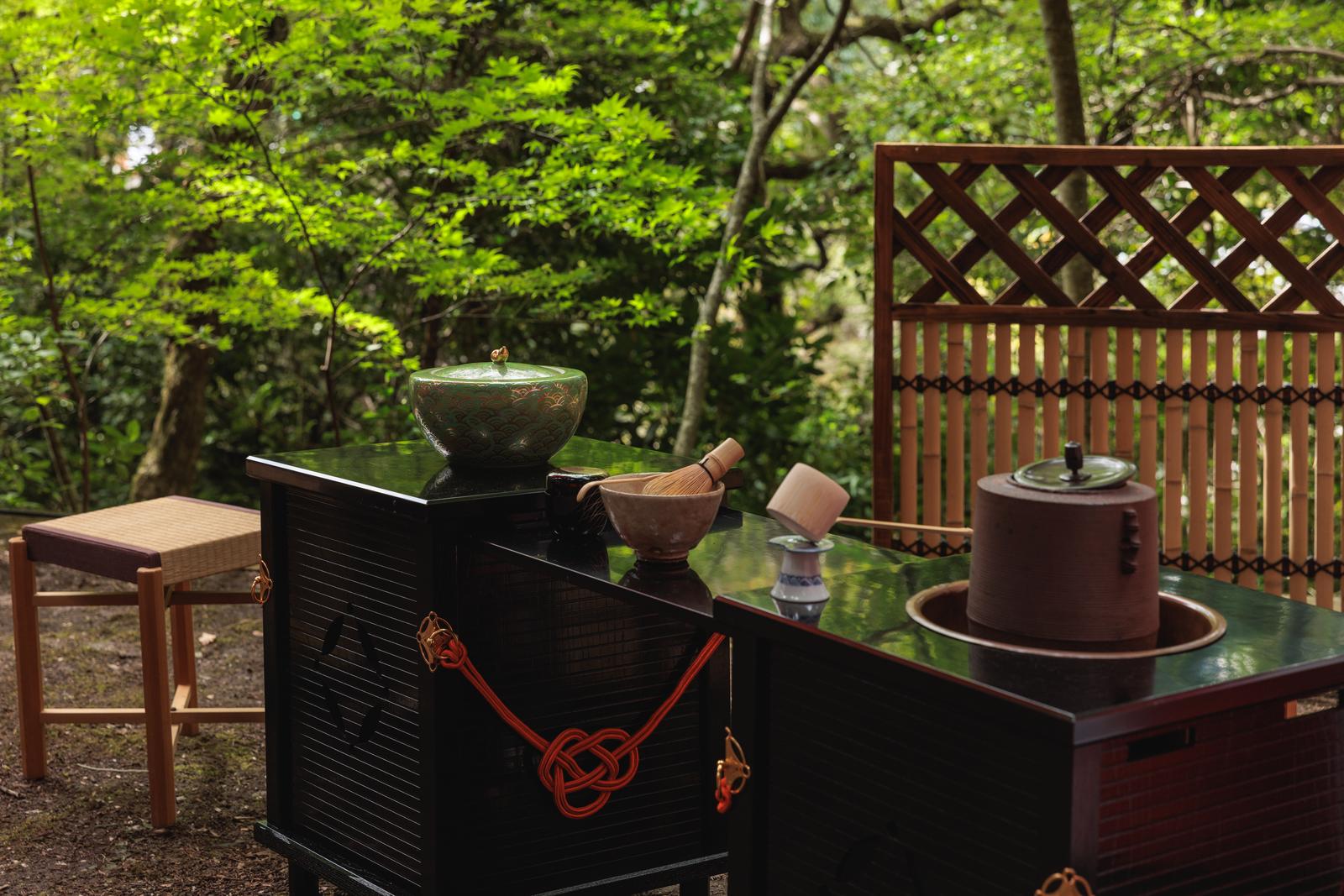
The ceremony began with the host’s movements. He approached the small hearth with deliberate steps, each footfall seeming to echo a centuries-old rhythm. He prepared the utensils with meticulous care—washing them, placing them precisely, and handling each item with a reverence that immediately drew me into his focus. When he lifted the tea whisk, or chasen, to froth the powdered matcha, it was as if the entire room held its breath in synchrony. I watched, fascinated, as he scooped the vibrant green tea powder, added the hot water, and whisked with gentle, rhythmic strokes, each movement purposeful and intentional.
The aroma of the tea was subtle yet enveloping, carrying with it a warmth and earthiness that seemed to awaken my senses. When the tea was finally presented to me in a simple, rustic bowl, I felt the weight of the moment. I held the bowl with both hands, noticing the texture of the ceramic, the slight imperfections that spoke of human touch, and the warmth that radiated through my fingers. I understood, then, that the Japanese concept of wabi-sabi—the beauty of imperfection—was not just an abstract idea but a tangible presence in this handcrafted object.
As I lifted the bowl to my lips, I took a deliberate sip, allowing the bitterness of the matcha to linger and then fade, accompanied by the subtle sweetness that emerged after each swallow. The taste was more than flavor; it was an experience in mindfulness. Each moment of sensation—touch, smell, taste—was heightened, and my mind, which often raced with thoughts of schedules and deadlines, finally felt still.
The host’s slow, purposeful movements continued throughout the ceremony. There was no rush, no urgency, only a deep, abiding attentiveness to each gesture, each sound, each pause. I became aware of the subtle rhythm of our shared space—the whisper of the bamboo whisk in the bowl, the soft inhalation of the host as he focused, the quiet exhale of my own breath. For the first time, I experienced what it meant to truly “taste time,” to allow it to unfold with intention rather than merely pass.
As the ceremony concluded, the host placed each utensil back in its designated spot with the same careful reverence, bowing deeply to signify completion. I mirrored the bow, feeling a profound sense of gratitude—not just for the tea, but for the presence, care, and attention that had been woven into every movement. Stepping out of the tea room and into the courtyard, I was struck by the contrast between the hushed, deliberate world inside and the bustling streets beyond. Yet, somehow, the calmness of the tea room had seeped into me. The noise of the city no longer seemed overwhelming; it was softened, tempered by a new awareness of presence and intention.
Walking through Kyoto that morning, I felt a renewed connection with myself and the world around me. The simple act of sitting, observing, and participating in the tea ceremony had taught me a lesson that words could barely convey: the value of slowing down, of fully inhabiting each moment, and of approaching life with mindfulness and care. It was a lesson that extended far beyond the tea room, touching every subsequent step, conversation, and encounter.
In that quiet Kyoto tea room, surrounded by centuries of tradition and the serene attention of the host, I discovered something timeless. I realized that mindfulness is not an abstract practice but a lived experience, one that can be embodied through simple acts of care, attention, and presence. To this day, whenever I encounter a moment of stillness—holding a cup of tea, watching the sunlight filter through leaves, or simply pausing in a busy street—I return to that first experience, reminded that time, when embraced carefully, can be the gentlest companion.
The Essence of the Japanese Tea Ceremony
The Japanese tea ceremony, or chanoyu, is far more than the simple act of preparing and drinking tea. It is a living expression of Japanese culture, philosophy, and aesthetics, meticulously cultivated over centuries. To understand the essence of the tea ceremony is to glimpse into the careful weaving of mindfulness, respect, and the artful shaping of time itself.
At the heart of tea practice lies the principle of Wa-kei-sei-jaku (和敬清寂), often translated as harmony, respect, purity, and tranquility. These four guiding values inform every movement, every choice of utensil, and every pause within a tea gathering. Harmony (Wa) is the sense of balance between host, guest, and environment. Respect (Kei) acknowledges the presence of each individual and the history embedded in the objects and space. Purity (Sei) goes beyond physical cleanliness, extending to clarity of mind and intention. Tranquility (Jaku) is the serene state that arises naturally when the other three principles are embraced, a quiet confidence that permeates the tea room.
The tea room, or chashitsu, embodies these principles through its architecture, scale, and atmosphere. Traditionally small and enclosed, with low ceilings and tatami flooring, the tea room encourages humility and attentiveness. Each element is chosen deliberately: the subtle pattern of the tatami mats, the placement of a hanging scroll (Kakemono 掛物), and the careful arrangement of flowers in the Chabana 茶花 style—all are visual cues that cultivate mindfulness. The minimalism of the space is not emptiness but a framework that highlights the significance of every gesture, the weight of every moment.
The utensils used in a tea ceremony—the tea bowl (Chawan 茶碗), tea whisk (Chasen 茶筅), tea scoop (Chashaku 茶杓), and water container (Mizusashi 水指 or 水差)—are treated with reverence. Each object carries its own history, a lineage of hands that have handled it before. A bowl may bear the fingerprint of its creator, the subtle unevenness of hand-thrown clay, the warmth of glaze that has been carefully fired. When the host picks up a bowl, the motion is deliberate and respectful, reflecting a dialogue between human hands, material, and time. This attention is not mere ritual; it is a conscious recognition of the story each object holds.
The gestures of the host are equally significant. Every movement, from folding the cloth (Fukusa 袱紗) to whisking the matcha, is executed with precision and awareness. In a tea ceremony, a simple action like adding hot water is transformed into an act of meditation. The host’s movements are slow yet confident, rhythmic yet varied, each designed to draw attention inward and outward simultaneously. Observing these gestures as a participant is an immersive lesson in presence: to watch, to anticipate, and to synchronize one’s awareness with the flow of the ceremony.
Historically, tea was introduced to Japan from China during the 9th and 12th centuries, but the ritualized tea culture as we know it today was refined during the 15th and 16th centuries by figures like Murata Jukō 村田珠光 and Sen no Rikyū 千利休. These innovators emphasized simplicity, naturalness, and the spiritual dimensions of tea. Rikyū, in particular, is credited with embedding the Wabi-sabi aesthetic into tea practice—the appreciation of imperfection, impermanence, and understated beauty. In his vision, the humble, irregular bowl, the uneven mat, and the quiet corners of the tea room were not flaws but invitations to deeper contemplation.
In the tea ceremony, time itself is treated as a tangible medium, almost sculpted by human intention. Unlike the modern world, where minutes and seconds dominate consciousness, chanoyu encourages the slowing down of perception. A pause between gestures, the subtle tilt of a tea bowl, or the deliberate inhalation of aroma—all are carefully measured moments that create a rhythm distinct from ordinary life. Here, participants learn that to rush is to miss the profound interplay between human attention and the environment.
Equally important is the social dimension of tea. Each gathering, or Chakai 茶会, fosters a unique connection between host and guest. While the ceremony may appear formal, it is, at its core, an exercise in empathy and mutual respect. The host anticipates the needs of the guest, while the guest, in turn, honors the host’s effort by observing etiquette and attentively engaging in the experience. This reciprocal mindfulness reinforces the core values of harmony and respect, transforming the tea room into a microcosm of ideal social interaction.
The symbolism embedded in the tea ceremony extends to subtle philosophical reflections. For instance, the empty spaces in the room and the silence between movements are not voids but invitations to awareness, a Japanese concept known as Ma. Ma emphasizes the significance of interval, absence, and pause, highlighting that meaning often resides in what is not said or done. The quiet moments in a tea ceremony allow participants to inhabit time differently, to experience depth rather than quantity, and to cultivate presence rather than distraction.
As a foreign visitor encountering the ceremony for the first time, these subtleties are revelatory. At first, the deliberate slowness of gestures may seem excessive or unfamiliar. Yet, as one immerses in the environment, the initial perception of awkwardness transforms into appreciation. Every sense becomes attuned: the soft texture of tatami underfoot, the delicate aroma of whisked matcha, the gentle clink of a ceramic bowl, and the fleeting glance of a hanging scroll. One begins to understand that the tea ceremony is not simply about drinking tea but about cultivating a holistic sensory awareness that grounds both body and mind.
Furthermore, Chanoyu serves as a living classroom for patience and attentiveness. The precision of movement teaches that even the smallest action carries significance, that mindfulness is not reserved for meditation cushions alone but can be expressed in ordinary gestures. By observing and participating, one absorbs a lesson that resonates far beyond the tea room: that care, attention, and reverence can transform mundane activities into profound acts of presence.
In essence, the Japanese tea ceremony is an art form where every element—space, utensil, gesture, and silence—intertwines to create a living meditation. It embodies principles of harmony, respect, purity, and tranquility, encourages mindfulness through careful attention, and shapes a unique perception of time as both fluid and deliberate. To experience tea in this way is to step into a world where presence is cultivated, sensory awareness is heightened, and the simple act of being becomes a profound statement.
For the first-time observer, the ceremony is both an aesthetic and spiritual experience. One may enter expecting to drink tea, but one leaves with an understanding of time, attention, and the subtle art of careful living. Each movement, each pause, each glance becomes a lesson, illustrating that mindfulness is not a distant ideal but a practice woven into everyday life. The tea ceremony, in its gentle rhythm and attentive design, invites participants to inhabit the present fully and to recognize the profound beauty in simplicity, imperfection, and the shared human experience of care.
Mindfulness Through Every Gesture
If the essence of the Japanese tea ceremony is to cultivate harmony and tranquility, then its practice is made tangible through the smallest of gestures. Every motion within the ceremony—whether it is the lifting of a tea scoop, the whisking of powdered matcha, or the careful turning of a bowl—carries weight. These actions may appear simple, almost mundane, yet they hold extraordinary psychological and spiritual depth. To watch or participate is to discover that gestures can be more than mechanical routines; they can become living meditations, portals into mindfulness.
The Power of Deliberate Movement
In everyday life, most gestures are unconscious. We pour water without thinking, stir without noticing, and lift objects with haste. The tea ceremony overturns this norm. Here, movement is intentional, measured, and infused with awareness. When the host lifts the Chashaku (tea scoop), they do not simply grab it; they approach it with reverence, as if acknowledging its history and role. The scoop is held with care, its slender bamboo frame balanced delicately between fingers. This attention transforms an ordinary act into one of mindfulness, a practice of presence.
Psychologists often speak of embodied cognition—the idea that the body influences the mind. In the tea ceremony, this principle comes to life. By slowing down movements, by introducing precision and rhythm, the body guides the mind into a calmer state. The deliberate gesture is not merely symbolic; it alters the participant’s mental landscape. What begins as “going through the motions” becomes a process of reorienting perception toward the present.
Whisking as Meditation
Perhaps the most iconic movement of the tea ceremony is the whisking of matcha with the Chasen. The host pours hot water into the tea bowl, then takes the bamboo whisk and begins to move it in a rhythmic pattern. At first glance, this seems like a simple method to dissolve powder into liquid. Yet, the host’s gestures embody subtle mindfulness. The whisk moves swiftly yet gracefully, with a tempo that is neither rushed nor sluggish. The sound of the whisk brushing against ceramic creates a soft hum, almost like a mantra.
For the guest, observing this act is mesmerizing. The repetition of the movement, the sound of frothing water, and the gradual emergence of a vibrant green foam invite a meditative state. For the host, the whisking itself becomes a practice in concentration: hand, wrist, breath, and attention all align in rhythm. In this moment, the tea ceremony demonstrates how repetition can anchor the mind, how motion can generate stillness within.
Foreign visitors often remark that they feel hypnotized when watching whisking for the first time. The act reminds them of meditation techniques involving breath counting or mantra repetition. But here, the mantra is movement itself, written in water and foam. The whisk becomes not just a utensil but a conductor of awareness, guiding both host and guest into a shared rhythm of mindfulness.
Breathing with Each Gesture
An often-overlooked element of the tea ceremony is the role of breath. Every gesture is accompanied by subtle inhalations and exhalations, consciously or unconsciously synchronized with motion. When folding the Fukusa (the silk cloth used for purification), the host exhales softly, aligning breath with the smoothing of fabric. When lifting the tea bowl, an inhale steadies the hands, followed by an exhale that releases tension as the bowl is presented.
In this way, the tea ceremony acts as an extended breathing exercise. Just as Yoga or meditation emphasizes awareness of breath, Chanoyu embeds this principle within daily action. Guests often find themselves adjusting their own breathing patterns in response. They slow down, inhaling as the host moves, exhaling as silence fills the space. Without instruction, they fall into rhythm, discovering that mindfulness is contagious, transferred from host to guest through breath and movement.
Concentration Through Simplicity
Each gesture in the tea ceremony is stripped down to its essence. There is no wasted motion, no flourish added for decoration. This simplicity cultivates concentration. Because there are fewer actions, each one gains significance. When the host sets down the water ladle, for example, the action becomes a focal point, inviting the guest to notice details: the sound of wood meeting ceramic, the reflection of light on water, the slight tremor of the host’s hand.
Such attentiveness has psychological consequences. Studies in mindfulness research suggest that focusing on small, concrete actions can reduce anxiety and enhance a sense of grounding. The tea ceremony exemplifies this principle centuries before modern science articulated it. By reducing the world to a sequence of simple gestures, participants are given a respite from the complexity of daily life. Simplicity becomes a gateway to depth.
The Guest’s Role in Observing
Mindfulness in the tea ceremony is not reserved for the host. The guest also participates, not by performing gestures but by observing them. Watching attentively is itself a practice of presence. When the guest receives a bowl of tea, they turn it carefully before drinking, ensuring respect for the object and the host. This small ritual teaches patience and intentionality, reminding the guest that even receiving is an active gesture of mindfulness.
For foreign travelers, this role reversal—where observing is as significant as doing—can be revelatory. In many cultures, passivity is equated with inactivity. But in the tea ceremony, to observe attentively is to engage fully. Guests often discover that their minds quiet as they focus on the unfolding gestures, noticing details they might otherwise overlook: the subtle angle of the tea scoop, the rhythm of water pouring, or the glint of steam rising into still air. Observation becomes meditation, and stillness becomes participation.
Discovering the Meditation of Motion
Foreign visitors frequently describe their first tea ceremony as a paradoxical experience: nothing seems to “happen,” yet everything feels significant. The simple gestures surprise them with their depth. One traveler remarked that watching the folding of the Fukusa felt like watching time itself being folded, each crease a boundary between past and present. Another noted that receiving the tea bowl felt like holding not just a drink but the weight of centuries of tradition and care.
These impressions underscore the ceremony’s psychological impact. By slowing gestures, imbuing them with meaning, and engaging both host and guest in mindfulness, the tea ceremony demonstrates that movement itself can be meditative. It teaches that mindfulness is not limited to stillness but can emerge in the fluidity of action. The guest leaves with the realization that even daily gestures—pouring tea at home, stirring a cup, setting down a plate—can become opportunities for presence if approached with intention.
Lessons Beyond the Tea Room
The mindfulness embedded in tea gestures extends naturally into everyday life. Once a person has experienced the deliberate slowness of whisking tea, they may find themselves more attentive when preparing breakfast or washing dishes. The folding of the Fukusa can inspire mindfulness in folding laundry; the careful handling of a tea bowl may influence how one holds a phone or book. These gestures remind us that the body is constantly teaching the mind, that the way we move shapes the way we think and feel.
In a world dominated by haste and distraction, the tea ceremony offers a countercultural lesson: that gestures matter. They can be performed unconsciously, reinforcing busyness and disconnection, or they can be approached with awareness, becoming acts of mindfulness. The difference lies not in the complexity of the action but in the quality of attention.
Conclusion to Mindfulness Through Every Gesture
The Japanese tea ceremony reveals that mindfulness is not abstract but embodied. Every gesture—lifting, whisking, folding, offering—becomes a meditation when performed with care. Breath aligns with movement, observation becomes participation, and simplicity sharpens attention. For the foreign visitor, these gestures are eye-opening, showing that even the smallest motions can connect body, mind, and spirit.
In this way, the tea ceremony teaches that mindfulness need not be confined to formal meditation practice. It is accessible in every action, hidden in the ordinary, waiting to be discovered in the way we move through life. Through gestures, we learn that presence is not something we must chase—it is something we can embody, one movement at a time.
The Art of Careful Time
When most people first enter a Japanese tea room, they expect to find beauty in objects—the tea bowl, the bamboo whisk, the hanging scroll. What often surprises them more profoundly is not what they see, but what they feel: a new rhythm of time. Unlike the hurried pace of city streets, unlike the endless push of schedules and deadlines, the tea ceremony unfolds in a tempo that is deliberate, careful, and deeply intentional. It is not just an art of tea, but an art of time itself.
Time as a Designed Experience
In the tea ceremony, time is not accidental. It is designed. The host prepares not only the tools and the room but also the very flow of minutes and moments. From the welcoming bow at the entrance to the final gesture of gratitude at the end, every phase of the ceremony is arranged with temporal awareness. The pauses between actions, the sequence of steps, even the silences—these are not gaps to be filled, but essential elements of the experience.
This designed flow of time is sometimes compared to a piece of music. Just as music requires both sound and silence to create rhythm, the tea ceremony requires both action and pause. Each gesture is a note, each pause a rest, and together they form a composition of presence. For the guest, to sit in this carefully orchestrated rhythm is to step into a world where time feels textured, meaningful, and alive.
The Value of “Not Rushing”
One of the most radical aspects of the tea ceremony is its refusal to rush. In a modern culture where speed is equated with efficiency, and efficiency with success, the tea ceremony asserts a different truth: that slowness can enrich life. To move slowly in preparing tea is not to waste time, but to deepen it.
Foreign visitors often notice this difference immediately. At first, they may feel impatient—why does the host fold the cloth so carefully, why take so long to pour water? But as the ceremony unfolds, impatience gives way to recognition: the slowness is the point. In slowing down, one becomes aware of sensations that would otherwise vanish—the sound of water trickling into a bowl, the fragrance of fresh tatami, the play of light on lacquered wood. Slowness reveals richness.
This lesson has psychological depth. Studies in cognitive science show that when people slow down, their perception sharpens; they notice more, remember more, and feel more grounded. The tea ceremony embodies this principle, reminding us that time is not only about quantity but also about quality. A hurried hour can feel empty; a careful minute can feel full.
The Aesthetic of “Ma” – The Power of Pause
Central to the tea ceremony’s handling of time is the Japanese concept of Ma. Often translated as “interval” or “space,” Ma refers to the silence between sounds, the pause between actions, the stillness that gives meaning to motion. In the tea ceremony, Ma is cultivated intentionally. When the host finishes whisking tea, they do not immediately hand the bowl to the guest; they pause, letting silence settle like dust in sunlight. When the guest bows in gratitude, they pause before lifting the bowl, allowing reverence to be felt before action continues.
For those unaccustomed to ma, the pauses can feel uncomfortable, like blank spaces that demand filling. But gradually, the guest learns that these pauses are not empty—they are full. They are full of awareness, of presence, of unspoken connection between host and guest. The pause is not absence but presence intensified.
Foreign travelers often remark that the most memorable part of the tea ceremony was not the tea itself, but the silence in which it was offered. That silence lingered with them long after the ceremony ended, teaching that time need not always be filled; sometimes, it is the unfilled space that nourishes most.
Time as Relationship
The tea ceremony also reveals that time is relational. It is not only about the self but about connection with others. Each pause is shared, each moment of waiting is mutual. When the host waits before offering the bowl, they are not only composing a rhythm for themselves but creating a shared rhythm with the guest. The ceremony, in this sense, is a dialogue of time.
This aspect resonates deeply with visitors from cultures where efficiency dominates relationships. In such contexts, waiting for others can feel like a burden. But in the tea ceremony, waiting is a form of respect. To allow another person’s pace, to synchronize one’s rhythm with theirs, is to honor their presence. Time here is not a commodity to be consumed but a gift to be shared.
Learning to Handle Daily Time with Care
The philosophy of careful time does not remain confined to the tearoom. Guests often leave with a transformed sense of daily rhythm. They begin to wonder: what if breakfast could be eaten without haste? What if walking to the station could be experienced as a rhythm rather than a race? What if conversations could include pauses long enough for words to truly settle?
The tea ceremony offers practical lessons:
- Introduce pauses: Allow a breath before answering a question, a silence before starting a new task.
- Value slowness: Choose one daily action to perform more slowly—brewing coffee, washing dishes, or tying shoelaces—and notice how awareness deepens.
- Treat time as shared: In conversation, listen without rushing to respond, creating a rhythm of mutual presence.
These small practices translate the philosophy of the tea ceremony into everyday mindfulness. They remind us that time is not merely something that passes but something we can shape, honor, and experience with care.
A Foreign Traveler’s Reflection
One traveler described leaving a tea room in Kyoto with tears in her eyes. She said it was not because the tea was extraordinary—though it was delicious—but because she felt as though, for the first time in years, she had “tasted time itself.” The pauses, the slowness, the careful rhythm had shown her that life did not need to be rushed to be meaningful. She realized that her constant sense of running out of time was not inevitable but a choice of pace. In that quiet tatami room, she discovered another way of living with time—gentle, attentive, and profoundly human.
Conclusion to The Art of Careful Time
The tea ceremony teaches that time is not only measured by clocks but by attention. Its art lies in designing rhythms, valuing slowness, honoring pauses, and sharing moments with care. For those who experience it, the lesson is transformative: that life is not made richer by adding more, but by inhabiting each moment fully.
In the careful unfolding of the tea ceremony, we learn that time is not an enemy to fight or a resource to exhaust. It is a companion to be welcomed, a rhythm to be embraced, and a space in which peace can quietly reside.
Objects and Their Stories
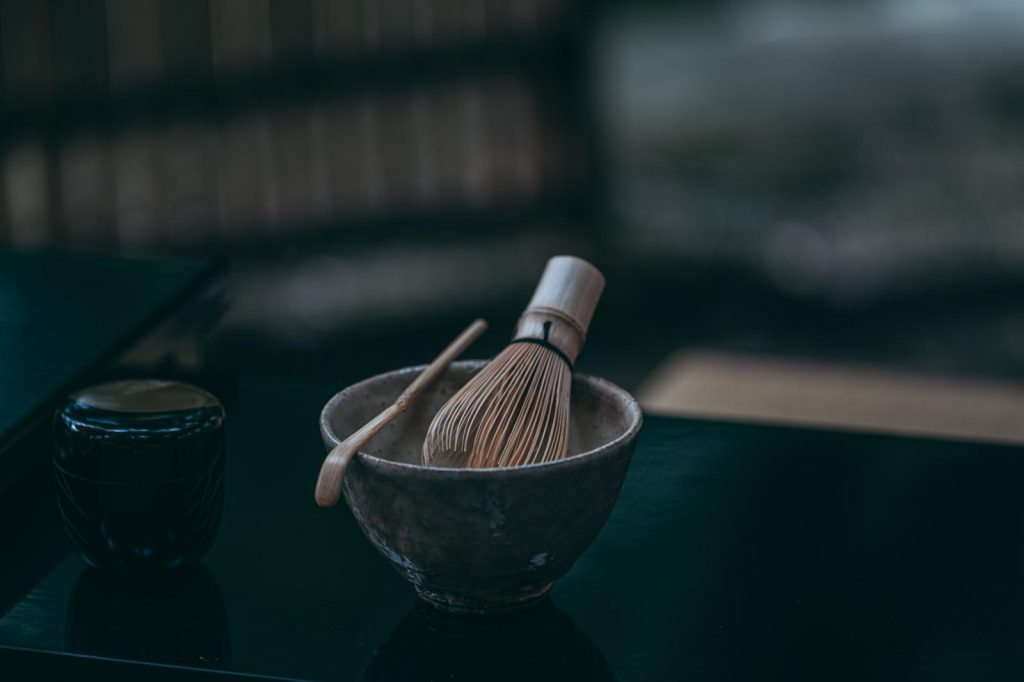
When one steps into a Japanese tea room, the eye is immediately drawn to the objects. A tea bowl resting on a wooden tray. A bamboo whisk standing upright, its delicate tines curved like sunrays. A slender scoop carved from a single piece of bamboo, its surface polished by years of touch. A hanging scroll on the wall, perhaps brushed with a phrase of calligraphy. A single flower in a simple vase. Each object seems modest, almost understated. And yet, as the tea ceremony unfolds, these objects reveal themselves not merely as tools, but as carriers of history, philosophy, and spirit.
In the world of tea, objects are never inert. They are participants in the ceremony, each one holding a story that connects the present moment with centuries of tradition. To touch them, to use them, is to enter into dialogue with those who crafted them, with those who used them before, and with the culture that shaped their form.
The Tea Bowl: A Vessel of Presence
Among all the objects, the tea bowl (Chawan) occupies the central place. It is the vessel into which the whisked tea is poured, and from which the guest drinks. But its importance is not only practical—it is symbolic. The tea bowl is the meeting point between host and guest, between intention and reception, between offering and acceptance.
Each tea bowl carries a personality. Some are rustic, with rough textures and asymmetrical shapes, embodying the aesthetic of wabi-sabi—the beauty of imperfection and impermanence. Others are elegant and refined, with smooth glazes and subtle colors. Some are centuries old, treasured heirlooms passed down through generations; others are newly made by contemporary potters continuing the tradition.
When a guest receives a tea bowl, they do not simply grasp it and drink. They turn it carefully, admiring its form, acknowledging the potter’s hand, and aligning the bowl so as not to drink from its front. This ritual reveals an attitude of reverence. The bowl is not just a container—it is a presence to be honored.
For foreign visitors, this often becomes a moment of revelation. In many cultures, drinking vessels are invisible: a glass of water or a coffee mug is rarely noticed. But in the tea ceremony, the vessel is as significant as the drink. One traveler remarked, “When I held the bowl, I felt I was holding more than clay. I was holding time.”
The Tea Scoop: Bamboo as Memory
The tea scoop (Chashaku) is another deceptively simple tool. Carved from a single piece of bamboo, it is used to measure powdered tea into the bowl. Its form is minimal—a curved handle with a slightly bent tip—but in that simplicity lies meaning.
The bamboo is cut and shaped by hand, and over years of use, its surface becomes polished by human touch. Each time the host dips it into the container of tea powder, the scoop remembers. It becomes, in a sense, a record of countless ceremonies. Some scoops are even named, with titles bestowed by tea masters, linking them to particular lineages and stories.
To a guest unfamiliar with tea culture, the scoop might appear ordinary. But as they watch the host handle it with care, bowing slightly before and after its use, they begin to perceive its significance. It is not merely bamboo—it is memory materialized. The scoop reminds us that even the smallest, most utilitarian object can carry dignity when treated with respect.
The Whisk: A Dance of Fibers
The tea whisk (Chasen) is perhaps the most visually striking of the utensils. Crafted from a single stalk of bamboo, split into dozens of fine tines, it resembles a crown or a burst of sunlight. The whisk is used to blend powdered tea with hot water, creating the frothy green surface of matcha.
What fascinates many visitors is that each whisk is hand-carved by artisans in Nara, Japan, where families have specialized in whisk-making for centuries. The process requires precision and patience: splitting the bamboo, shaving the tines, bending them outward, and binding them with thread. No machine can replicate the delicacy of this work.
The whisk is also ephemeral. Unlike the tea bowl, which can last for generations, a whisk wears out after repeated use. Its fibers fray, its shape loosens, and eventually it must be replaced. In this sense, the whisk embodies impermanence. It is beautiful not because it lasts forever, but because it fulfills its purpose gracefully and then bows out.
This quality resonates with the transient nature of life itself. As one guest observed after using a whisk for the first time: “I realized the whisk gives itself completely to the moment of tea, knowing it will not last. That felt like a lesson about living.”
The Scroll and the Flower: Silent Teachers
Every tea room has an alcove (Tokonoma 床の間), where a hanging scroll and a flower arrangement are placed. These are not mere decorations; they are teachings.
The scroll, often bearing calligraphy, sets the theme for the gathering. It might contain a Zen phrase such as “Ichigo ichie 一期一会” (one encounter, one opportunity) or “Wa-kei-sei-jaku” (harmony, respect, purity, tranquility). For guests who cannot read Japanese, the calligraphy may appear abstract, but the brushstrokes themselves carry energy. One visitor remarked that even without knowing the words, they could feel the rhythm of the hand that wrote them.
Beside the scroll, a single flower in a simple vase offers a seasonal greeting. Unlike elaborate Western bouquets, the tea flower (Chabana) is intentionally plain. A single camellia, a sprig of wild grass, a branch of plum. The message is humility: beauty lies in what is near, simple, and transient.
Together, scroll and flower remind guests that the tea ceremony is not isolated from the world. It is connected to nature, to seasons, to words of wisdom passed down through time.
The Respect for Tools
What unites all these objects is the attitude of respect with which they are handled. In the tea ceremony, tools are never used carelessly. They are purified before and after use, placed deliberately, and returned to their places with attention. This respect transforms tools into teachers.
Foreign guests often notice how their own relationship with objects changes after experiencing a tea ceremony. One traveler confessed: “Back home, I toss my coffee cup in the sink without thinking. After seeing how a tea bowl is treated, I felt ashamed. I realized that objects deserve gratitude too.”
This shift in perspective has profound implications. To respect objects is to acknowledge the labor that created them, the materials of nature that compose them, and the role they play in daily life. It cultivates gratitude and mindfulness, not only toward tools of tea but toward everything we touch.
Encountering Depth as a Foreigner
For the first-time traveler, the experience of engaging with these objects can feel like stepping into a hidden layer of reality. At first, they may seem ordinary—bamboo, clay, paper. But under the guidance of the ceremony, they become extraordinary. Each object reveals a story of craft, of time, of human presence.
The surprise lies not in their luxury—most are humble and handmade—but in the depth they contain. Visitors often leave with the realization that meaning does not require extravagance. It requires attention.
As one guest reflected: “I came to the tea ceremony expecting to taste a famous drink. What I discovered instead was that every object I touched had a soul. I never knew that was possible.”
Conclusion to Objects and Their Stories
Objects in the tea ceremony are not accessories. They are storytellers. They carry the memory of hands that shaped them, the spirit of traditions that honor them, and the quiet dignity of being treated with care. Through them, guests encounter a philosophy of life: that even the simplest things can embody profound meaning when approached with respect.
For foreigners, this discovery is often transformative. It shifts the way they see not only Japanese culture but their own daily lives. A tea bowl teaches presence, a scoop teaches memory, a whisk teaches impermanence, and a flower teaches humility. Together, they reveal that to live well is to live attentively—with objects, with people, and with time itself.
Experiencing Connection and Presence
When the tea ceremony is described, people often imagine the objects, the movements, and the taste of matcha. Yet, at its heart, tea is about people. The ritual unfolds not in isolation, but in relationship—between host and guest, between guest and guest, between individuals and the shared atmosphere of the room. Objects, gestures, and time are important, but they are all directed toward cultivating a moment of human connection.
For a first-time visitor, this can be a revelation. In a world where interactions are often rushed, superficial, or mediated by screens, the tea room offers a space where presence is felt deeply. Every action is a form of communication. Every pause is an opening for awareness. To participate in tea is to experience not only a beverage but also a way of being with others.
The Host and Guest Relationship
The relationship between host (Teishu 亭主) and guest (Kyaku 客) is central to the tea ceremony. The host is not a performer but a caretaker. Their task is to create an environment of comfort, respect, and attentiveness for the guest. The guest, in turn, receives with gratitude, acknowledging the host’s effort.
This relationship is expressed through gestures. The host bows when entering, when presenting objects, when serving tea. The guest bows when accepting the bowl, when admiring the utensils, when drinking. These bows are not empty forms—they are physical embodiments of mutual respect.
For foreigners, this reciprocity can feel surprising. Many social interactions in modern life are transactional: one gives, the other takes. But in the tea room, giving and receiving are simultaneous acts of respect. The host’s offering is not complete until the guest receives with sincerity. The guest’s gratitude, in turn, affirms the host’s intention. It is a cycle of care.
One traveler described the sensation as “a conversation without words.” They noted that even though they could not speak Japanese fluently, the bows, the eye contact, and the shared silences communicated more than language.
Awareness of the Other
A distinctive feature of the tea ceremony is the cultivation of awareness of the other person. When the host prepares the tea, they are not performing mechanically—they are attentive to the guest’s breathing, posture, and presence. If the guest appears nervous, the host may adjust their pace to ease them. If the guest seems absorbed in the objects, the host allows more time for observation.
The guest, too, is attentive. They notice how the host moves, how they handle each utensil, how they breathe between gestures. They are aware not only of receiving tea but of participating in a shared atmosphere.
This mutual awareness generates a quality of presence rarely encountered elsewhere. It is not about dominating attention, as in a performance, nor about losing oneself, as in entertainment. It is about coexisting fully, moment by moment.
The Concept of Ichigo Ichie
Underlying this presence is the famous concept of Ichigo ichie, often translated as “one time, one meeting.” The phrase reminds participants that every encounter is unique and will never be repeated in the same way. The weather, the season, the people, the state of mind—everything combines to make the moment singular.
When the host serves tea, they do so with the awareness that this gathering, in this form, will happen only once. When the guest drinks, they do so with the same awareness. The result is a heightened sense of appreciation. The ordinary becomes extraordinary simply because it is recognized as fleeting.
For many foreign visitors, this idea resonates deeply. In societies where efficiency and repetition dominate—fast food, automated services, standardized interactions—the idea that every meeting is unrepeatable feels liberating. It reframes daily life: if even a single cup of tea can be a once-in-a-lifetime experience, then every moment holds potential significance.
The Dissolving of Tension
Another powerful experience for guests is the gradual dissolving of tension. Entering a tea room for the first time, especially as a foreigner, can be intimidating. The unfamiliar rituals, the silence, the formality—all can create nervousness.
But as the ceremony unfolds, something changes. The rhythm of the host’s movements, the calm of the room, the attentiveness of the exchange—all work together to ease the guest’s anxiety. The bows, the shared glances, the pauses allow space for the guest to settle into presence.
One traveler recalled: “At first I felt clumsy, afraid of making a mistake. But then I realized the host wasn’t judging me. They were caring for me. That realization allowed me to relax. By the end, I felt like I had known them for years, even though we barely spoke.”
This softening of tension is not accidental—it is the essence of the practice. Tea creates a space where people can meet each other not as roles or identities but as human beings sharing time.
Presence as Shared Silence
In many cultures, silence between people can feel awkward, as if it must be filled with conversation. But in the tea ceremony, silence is not absence—it is presence.
When the host prepares tea, guests watch quietly. When the guest admires the tea bowl, the host waits patiently. When the tea is sipped, no chatter interrupts the experience. These silences are not empty—they are alive with attention.
Foreigners often remark on how surprising this feels. One guest said: “In my country, silence makes people nervous. But in the tea room, the silence felt comforting, as if we were all breathing together. It was the first time I felt silence as connection.”
This shift in perception reveals a profound lesson: connection does not always require words. Sometimes, presence itself is enough.
Beyond the Ceremony: Human Connection in Daily Life
What participants often carry away from the tea ceremony is not only appreciation for objects or movements, but a renewed sense of human connection. They realize that respect, attentiveness, and presence can transform any interaction.
To greet someone with awareness, to listen without distraction, to acknowledge their presence fully—these are extensions of the tea spirit. In a digital world where attention is fragmented, such practices feel radical.
Foreign travelers frequently note that after experiencing tea, they approach daily encounters differently. They pause before speaking. They notice the other person’s presence. They treat moments as unrepeatable. As one visitor reflected: “Tea taught me that meeting another person is itself sacred. Even buying bread from a shop can be ichigo ichie if I approach it with awareness.”
Conclusion to Experiencing Connection and Presence
The tea ceremony reveals that connection is not created by grand gestures or eloquent words, but by presence. The relationship between host and guest demonstrates mutual respect. The concept of ichigo ichie teaches the preciousness of every encounter. The silences dissolve tension and allow authentic being.
For foreigners, this often becomes one of the most transformative aspects of the tea experience. Beyond the beauty of objects or the taste of matcha, they discover the beauty of being present with another human being.
In this way, the tea ceremony becomes a microcosm of life itself: a reminder that we are always encountering one another in unrepeatable moments, and that to honor those moments with awareness is to honor life itself.
Lessons for Daily Mindfulness
The tea ceremony is not confined to the walls of the tea room. Its principles—respect, attentiveness, and presence—are not limited to formal gatherings or special occasions. They are lessons that can be carried into the flow of everyday life, quietly transforming how one relates to time, objects, and people.
For many foreigners who experience tea in Kyoto, the most profound realization comes after leaving the tea room. They discover that the ceremony is not only about matcha or rituals, but about a way of being in the world. Once understood, the spirit of tea can be practiced anywhere: in a busy kitchen, at a work desk, during a walk, or in the smallest moments of daily living.
Bringing Mindfulness into the Ordinary
At its heart, tea teaches us to be fully present with the ordinary. A bowl, a scoop, a whisk—none of these are inherently extraordinary. Yet when handled with care, they become luminous. This shift in perception reveals a powerful lesson: the sacred is not separate from the mundane; it is hidden within it, waiting for attention to bring it forth.
One traveler described how, after attending a tea ceremony, they began to wash dishes differently. Instead of rushing through the task, they slowed down, noticing the sound of water, the temperature, the smoothness of the ceramic. What had once been a chore became an opportunity to connect with the moment. They realized that the spirit of tea was not confined to the tea bowl—it could live in the sink, the kitchen, the everyday flow of life.
The Practice of Preparing a Cup of Tea
A simple yet profound way to bring tea spirit into daily life is to prepare a cup of tea with intention. It does not have to be matcha; any tea, even a teabag, can serve as a vessel for mindfulness if approached with care.
The process can unfold slowly:
- Choosing the cup intentionally, appreciating its shape and texture.
- Boiling the water, noticing the gradual build of sound.
- Pouring the water, watching steam rise and swirl.
- Holding the cup, feeling its warmth against the hands.
- Taking the first sip, tasting not only the tea but also the effort of preparation.
By focusing on each stage, the act of drinking tea transforms from automatic consumption into a miniature ceremony. Time stretches, awareness deepens, and what might have been unnoticed becomes alive with presence.
Awareness of Movement
Another lesson from tea is the awareness of movement. Every gesture in the ceremony is deliberate, graceful, and economical. The host does not rush but allows each action to unfold at its own pace. This attentiveness can be practiced in daily movements—walking, cooking, writing, even opening a door.
Foreigners often remark how, after tea, they notice the clumsiness of their usual gestures: the hurried way they open packages, the careless way they type, the distracted way they eat. By bringing consciousness to these movements, they discover a surprising calm.
For example, walking can become a form of meditation: noticing the contact of the foot with the ground, the rhythm of steps, the coordination of breath. Even typing on a keyboard can shift from mindless tapping to intentional action, each keystroke made with awareness.
Creating Spaces of Silence
Tea also teaches the value of silence. In a culture where constant noise—digital notifications, music, conversation—permeates daily life, silence is often rare. Yet silence is essential for mindfulness. It creates a container where awareness can expand.
A simple practice inspired by tea is to create small islands of silence during the day. This could mean turning off the phone for ten minutes, sitting with a cup of tea without distractions, or pausing before responding in conversation.
One traveler recalled: “After the tea ceremony, I started making time in the evening to just sit with a candle and no music. At first, it felt strange, even uncomfortable. But soon, I began to look forward to it. The silence gave me a sense of peace I didn’t know I needed.”
Practicing Ichigo ichie in Daily Encounters
Perhaps the most transformative lesson from tea is the philosophy of Ichigo ichie—the awareness that each encounter is unique and unrepeatable. In daily life, this can mean treating every meeting, however small, as precious.
When speaking to a friend, one can remember: this conversation will never happen again in exactly this way. When buying something from a shop, one can remember: this interaction with the cashier is a singular event. When sitting with family, one can remember: this moment of togetherness will never return in the same form.
Practicing Ichigo ichie brings depth to relationships. It encourages listening fully, appreciating presence, and valuing people not for what they provide but for who they are in that moment.
Foreigners often find this idea liberating. One traveler said: “I realized that I had been rushing through conversations, always half-distracted. After tea, I began to look at people’s faces, listen to their voices, and really be with them. It changed how I connect.”
Integrating Mindfulness into Work and Digital Life
Modern life is dominated by speed and technology. Messages arrive instantly, tasks pile up, attention is fragmented. The tea ceremony offers an antidote: slow time, careful gestures, focused presence.
Bringing this spirit into work can mean starting the day with a few deep breaths before opening the computer. It can mean focusing on one task fully rather than multitasking. It can mean setting aside moments to step away from the screen and reconnect with the body.
Digital mindfulness can also take the form of intentional breaks: putting the phone aside during meals, turning off notifications for an hour, or setting boundaries for digital communication. Just as the tea room creates a protected space for presence, one can create digital-free zones in daily life to cultivate the same awareness.
Respecting Objects and Environments
Tea also teaches reverence for objects. Utensils are handled with care, admired, and placed thoughtfully. This attitude can extend to daily environments.
Instead of treating objects as disposable, one can appreciate their presence. The mug used every morning can be noticed for its design, weight, and texture. The desk can be kept orderly as a gesture of respect for work. Even clothing can be folded with attention, acknowledging the effort of those who made it.
This respect fosters gratitude. It transforms the way one relates to material life, shifting from careless consumption to mindful stewardship. In an age of excess and waste, this lesson feels particularly urgent.
Small Practices for Everyday Life
Here are simple, practical ways to bring the tea spirit into daily living:
- Morning Ritual: Begin the day with a slow, attentive action—pouring water, lighting incense, or stretching with awareness.
- Mindful Tea or Coffee: Choose one drink each day to prepare and consume with full attention, treating it as a personal ceremony.
- Silent Pause: Create a two-minute silence before meals or after work to reset awareness.
- Respectful Gestures: Handle everyday objects—cups, pens, phones—with intention, as if they were tea utensils.
- Attentive Encounters: In conversation, give undivided attention, practicing ichigo ichie.
- Digital Boundaries: Set aside one part of the day free from screens, as if entering a tea room of silence.
- Gratitude for the Ordinary: Before sleep, recall one simple thing—a sound, a taste, an object—that brought quiet joy.
Each of these practices echoes the tea ceremony without requiring a tea room. They invite careful time into ordinary life.
Closing the Circle
Ultimately, the lesson of the tea ceremony is not about tea itself but about life. It teaches that mindfulness is not separate from daily existence; it is woven into how we move, how we touch, how we relate. By practicing attentiveness, respect, and presence, every day becomes a kind of ceremony—an opportunity to live with depth and care.
Foreign travelers often leave the tea room with a sense that something inside has shifted. They return to ordinary life, but with a new rhythm. They carry with them the memory of careful time, the experience of shared silence, and the conviction that mindfulness is always available.
The tea ceremony whispers: life is fleeting, but within its fleetingness lies profound beauty. If we treat each moment as precious, each gesture as intentional, and each encounter as unrepeatable, then daily life becomes not a rush toward the future but a dwelling in the present.
In this way, the tea ceremony continues long after the matcha is finished. It continues in the way we breathe, move, touch, and live—one mindful moment at a time.
Closing Reflection: Time as a Gentle Companion
When the sliding door of the tea room closes, the world outside does not disappear. The city continues its rhythm—buses pass, phones ring, conversations hum. Yet something has shifted inside the one who sat for tea. The ceremony leaves behind a lingering awareness, as if time itself has become less of a tyrant and more of a gentle companion.
For many foreigners, this realization arrives slowly, after they return to their hotel or continue their journey. They notice that their breath feels lighter, their pace slower. Even when walking through the crowded streets of Kyoto, they carry with them a residue of stillness. The tea ceremony is not just an event to remember; it is a way of inhabiting time differently.
Time Beyond the Clock
In the modern world, time is often reduced to measurement—minutes, hours, deadlines, schedules. We are taught to conquer it, to save it, to use it efficiently. But the tea ceremony presents a radical alternative: time not as a resource, but as an atmosphere.
Within the tea room, the ticking of the clock disappears. What remains is kairos—the qualitative experience of time, thick with meaning. The slow turning of a wrist, the pause before sipping, the silence between words—all remind us that time’s true richness lies not in its length, but in its depth.
To embrace careful time, as tea teaches, is to recognize that a single moment, if fully lived, can hold more life than an entire day spent in distraction.
The Rhythm of Breathing with the World
One traveler once described the tea ceremony as “breathing with the world.” What they meant was that the ceremony restored a natural rhythm, one that had been drowned out by noise and speed. In the tea room, one breathes not against time, but with it—like waves aligning with the tide.
This rhythm is subtle. It does not demand productivity or achievement. Instead, it invites presence. Just as a host waits for the guest’s readiness before proceeding, time itself can be approached as a partner rather than an obstacle.
When life is lived in this rhythm, even ordinary activities take on a ceremonial quality. Walking to the train becomes a quiet procession. Cooking dinner becomes a dialogue with flame, water, and ingredients. Writing an email becomes an act of clarity, not a rushed obligation.
The Beauty of Spaces We Overlook
Tea also teaches us that peace exists in spaces we often overlook—the pauses, the silences, the intervals between actions. In Japanese aesthetics, this is known as ma, the art of empty space. Without it, the world is cluttered; with it, the world breathes.
In daily life, ma may appear as the silence after laughter, the stillness before a reply, the blankness of a page before writing begins. These are not voids to be filled but gifts to be noticed. They remind us that meaning grows not only from action but from restraint, not only from sound but from silence.
When foreigners encounter ma through tea, many are surprised at first. The long pauses feel unfamiliar, even uncomfortable. Yet in those pauses, they discover calmness. They realize that life does not always need to be filled; sometimes, it needs to be allowed to rest.
The Gentle Strength of Slowness
Slowness is often misunderstood as weakness or inefficiency. But in tea, slowness is strength—it holds the power to anchor awareness, to create depth, to bring people into genuine connection.
When the host slowly lifts the tea bowl, it is not hesitation but intention. When the guest takes time to admire the bowl before sipping, it is not delay but gratitude. Every gesture affirms that life’s most important moments are not the ones we rush through, but the ones we linger in.
In carrying this lesson forward, foreigners often find themselves resisting the compulsion to hurry. They begin to notice that when they slow down, conversations deepen, meals taste richer, walks become more vivid. They realize that careful time is not about doing less—it is about living more fully.
Living with Gentle Time in the Modern World
Of course, modern life demands speed. Deadlines must be met, trains must be caught, responsibilities must be fulfilled. The tea ceremony does not deny this. Instead, it offers balance. It reminds us that alongside the swift flow of obligations, there can be pockets of gentleness, moments where time stretches and breathes.
The lesson is not to abandon modern life but to weave tea’s wisdom into it. A mindful sip of coffee in the office, a deliberate pause before replying to a message, a deep breath before entering a meeting—all become acts of quiet resistance against the tyranny of haste.
This way of living does not require radical change. It requires only remembrance—that time can be embraced as a companion, not fought as an enemy.
The Philosophy of QuietTether
The journey of the tea ceremony aligns with the heart of QuietTether. It teaches that mindfulness is not about detaching from life but about tethering gently to its flow. To live carefully is not to slow everything down artificially but to move in rhythm with what is already present.
The QuietTether philosophy can be expressed simply:
“To embrace careful time is not to slow down life, but to enter its rhythm fully, to let each moment breathe, and to discover that peace exists in the spaces we often overlook.”
This is not merely an idea for the tea room—it is a vision for living.
Returning to the World with New Eyes
At the end of the tea ceremony, when the guest steps back into the world, nothing external has changed. The streets are still busy, the air still filled with noise, the tasks of life still waiting. But the guest has changed. Their eyes notice more, their breath carries calmness, their hands move with awareness.
This transformation is subtle, invisible to others perhaps, but profound. It is as if they now walk accompanied by time itself—not as a pressure, but as a friend.
Such is the gift of tea: it does not remove us from life but returns us to it more fully. It shows us that mindful moments are not escapes but entries—doorways into living with greater depth, gentleness, and presence.
Final Reflection
The tea ceremony, in its quiet simplicity, reveals that life is not something to conquer but something to dwell in. Each gesture teaches us to honor the present, each silence teaches us to trust stillness, each shared moment teaches us to value connection.
When we carry these lessons into daily life, time ceases to be an enemy to outrun. It becomes a gentle companion, walking beside us, reminding us to breathe, to notice, to be.
And perhaps that is the greatest wisdom tea has to offer: that the richness of life is not found in the future we chase, but in the moment we hold—delicately, reverently, as one might hold a fragile tea bowl.