Opening Story: The First Sip, Held with Reverence
The foreign traveler had not expected silence to feel so loud.
Stepping into the tearoom in Kyoto, he was immediately struck by the absence of the noises that had accompanied every other part of his journey. Outside, the streets of the city pulsed with bicycles, footsteps, shopkeepers calling, and the occasional hum of a train in the distance. Here, within the soft boundaries of the tea house, the world seemed to hush itself into invisibility. Tatami mats stretched beneath him with their woven texture faintly releasing the scent of straw. The shoji doors diffused the daylight so that every corner glowed, not with brightness, but with an enveloping softness.
He sat, not quite certain how to hold his body, feeling the slight awkwardness that comes when one is invited into a ritual that is both foreign and deeply intimate. Across from him, the host—dressed in a subdued kimono—moved with gestures that seemed to both slow down and expand time. The clink of bamboo against ceramic, the whisk stirring the froth of matcha, the slight bow before each transition: all of it spoke of patience, and of a respect too subtle for words.
Then came the moment.
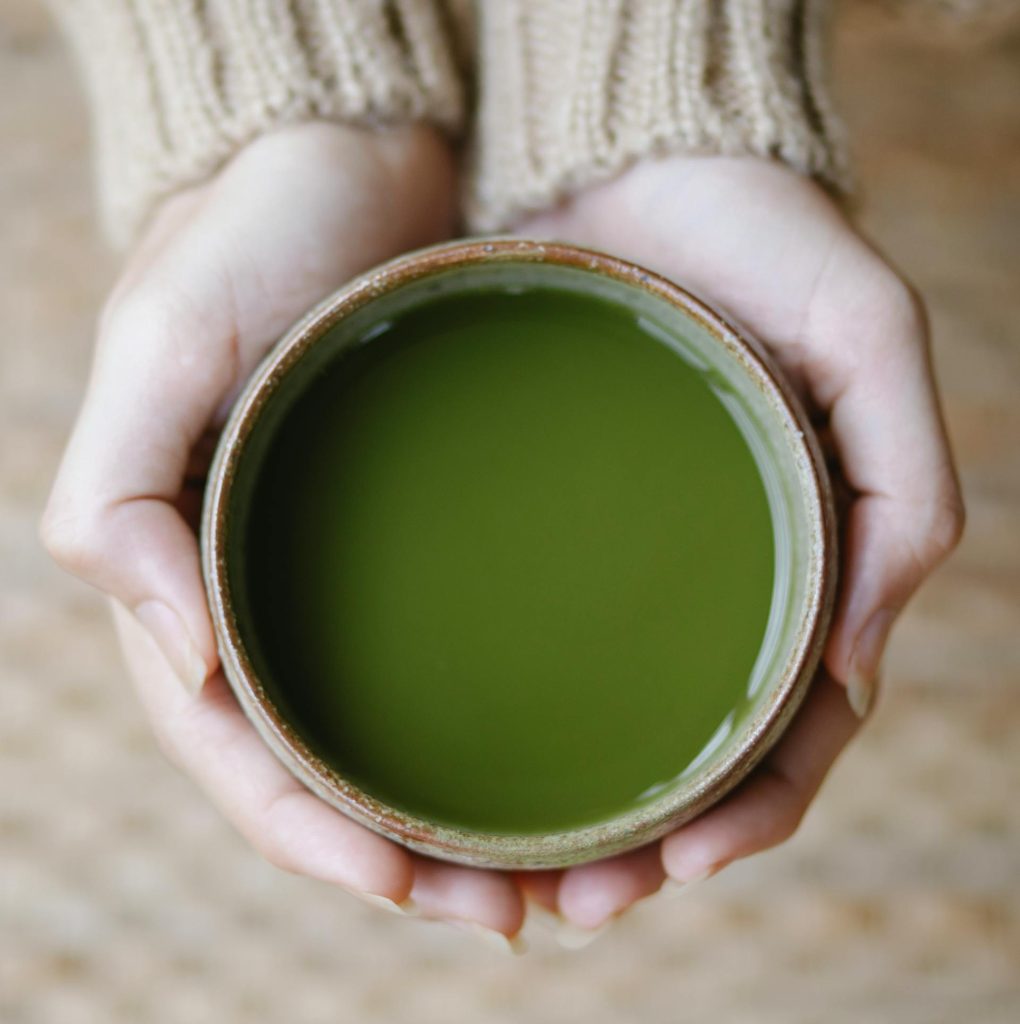
The host placed a tea bowl before him. It was not a delicate porcelain teacup such as he might have expected from his own culture, but a bowl—heavier, earthy, its surface rough in some places, smooth in others. The glaze revealed faint cracks, as if time itself had left whispers across the surface. He was instructed gently, without hurry: receive the bowl with both hands.
It felt strange at first. He was accustomed to holding his morning coffee cup casually with one hand, sometimes even barely balancing it as his other hand scrolled through his phone. To involve both hands seemed unnecessary, even ceremonious. Yet, as he placed his left hand beneath the bowl and steadied it with his right, something shifted. His spine lengthened without his willing it. His shoulders relaxed. The weight of the bowl demanded his attention; its warmth spread across his palms as though he were holding a living presence.
For the first time in many years, he felt himself drink with his whole body.
The aroma of matcha rose into him before the liquid even touched his lips. The slightly bitter, vegetal flavor expanded across his tongue. The froth left a delicate ring around the rim that his gaze lingered on before he took another sip. He was not simply drinking; he was participating in a dialogue—with the host, with the bowl, with the centuries of tradition that had taught people to pause and notice.
When he finally placed the bowl back onto the tatami, again using both hands as instructed, he noticed that his heart had slowed. His mind, usually buzzing with itineraries, messages, and comparisons, had become still. It astonished him: could something as small as the way one held a cup alter the entire quality of an experience?
Walking out of the tea house later that day, shoes clicking softly against the stones, he carried with him more than the memory of green tea. He carried a discovery: that even the simplest act—holding, sipping, setting down—could become a gateway to reverence. That to hold a teacup with both hands was not only about manners, but about returning to the present, about finding a fragment of stillness in a restless world.
And in that fragment, he felt, perhaps for the first time in years, like himself again.
The Gesture of Both Hands
At first glance, the act seems almost too simple to deserve attention: one places a bowl or cup in both hands, lifts it carefully, and drinks. Yet simplicity is deceptive. Beneath its surface lies an entire world of meaning, much like the layers of flavor in the matcha itself—slightly bitter at first taste, then increasingly complex as the palate adjusts.
In Japanese culture, the gesture of holding with both hands is not merely a matter of etiquette; it is an expression of presence, respect, and gratitude. Each element of the act—the placement of the left hand beneath the vessel, the right hand steadying its side, the deliberate slowness of lifting the bowl toward the lips—becomes a meditation in motion. It is not about efficiency. It is about attention.
Reverence Embodied in Gesture
When a guest accepts a tea bowl with both hands, they are acknowledging more than the physical object. They are acknowledging the host who prepared the tea, the craftsman who shaped the bowl, the farmer who cultivated the tea leaves, and even the season that gives flavor to the moment. Both hands extend beyond mere functionality; they serve as vessels of gratitude.
In contrast, the casual grip of a single hand often reflects a culture that values independence and convenience. A mug held with one hand while multitasking is an emblem of modern speed. It allows the other hand to type, scroll, or gesture. Both-hands drinking, however, suspends such divided attention. With both hands engaged, there is no option but to stop everything else. The bowl monopolizes the body’s focus, and therefore, the mind’s.
Touch as Mindfulness
Our hands are among the most sensitive parts of the body. Every ridge of a ceramic glaze, every subtle warmth radiating from liquid, every vibration when the bowl touches the tatami—all of these are registered by thousands of nerve endings. To use both hands is to amplify this tactile dialogue.
In this sense, holding a teacup with both hands transforms into a form of “tactile meditation.” The fingertips do not merely perceive; they listen. The palms do not merely carry weight; they cradle it as though cradling a fragile life. When both hands are employed, the experience shifts from utilitarian handling to mindful participation.
One begins to notice: the roughness of unglazed clay against the thumb, the smooth coolness of lacquer, the faint residue of warmth lingering even after the bowl is set down. The vessel becomes more than a container—it becomes a teacher of attentiveness.
The Entrance to the Body-Mind Connection
Though the movement is small, its effect reverberates through the whole body. The act of lifting with both hands subtly engages the spine, straightens the shoulders, and grounds the breath. The body aligns itself almost unconsciously, as if preparing to honor what is held.
In this way, the gesture becomes an entrance into embodied mindfulness. Unlike abstract meditation practices that require stillness of thought, the act of holding a teacup with both hands is concrete. It gives the body something to do, and through the body, the mind is calmed.
This is why seasoned practitioners often say: every gesture in tea is meditation. It is not about sitting with eyes closed, but about engaging the ordinary with extraordinary care.
A Cross-Cultural Contrast
For a traveler unfamiliar with these traditions, the first experience of using both hands can feel foreign—perhaps even exaggerated. In the West, a single hand often signifies ease, control, or casual comfort. Drinking with both hands might even appear childish, something one associates with a child grasping a cup of hot cocoa.
But in Japan, the two-handed gesture speaks of maturity rather than immaturity. It reveals an awareness that one is receiving, not just taking. To use both hands is to acknowledge that the moment deserves formality, even if the formality is quiet and unspoken.
When examined closely, this difference points to divergent cultural values. In cultures shaped by efficiency, the priority is often minimizing effort. In cultures shaped by mindfulness and relationality, the priority becomes maximizing presence. One hand frees the other; two hands free the mind.
The Subtle Weight of Meaning
Consider how often in daily life we employ both hands for what matters most: carrying a newborn child, presenting a gift, receiving a sacred object, or holding the hands of another person. In these moments, one hand alone feels insufficient. Instinctively, we use both. Why? Because we sense the weight of meaning, and our bodies respond accordingly.
The teacup, in the Japanese tea ceremony, is treated with the same gravity. Not because it is physically heavy, but because it carries symbolic weight: the gathering of people, the presence of the season, the fleeting uniqueness of the occasion. Holding it with both hands affirms that this is no ordinary sip. It is an act worthy of reverence.
Historical and Cultural Roots
When we ask why the Japanese tea ceremony prescribes holding the bowl with both hands, the answer does not lie in arbitrary custom. It lies in centuries of cultural shaping, in layers of religious philosophy, and in the ethos of respect for objects and relationships that permeates Japanese life.
From Everyday Practice to Ritual Precision
Long before tea was formalized into Sado or Chanoyu (the Way of Tea), everyday gestures in Japanese culture reflected an instinct toward using both hands when something mattered. To receive an object with both hands—whether it was a scroll, a piece of food, or even a gift—signaled that the receiver took the exchange seriously. One hand was casual; two hands were reverent.
When tea drinking first arrived from China in the late Heian and Kamakura periods, it was consumed mainly among monks and the elite. Monastic practice, shaped by Zen, placed deep emphasis on attentiveness to action. Every movement in daily life—washing, sweeping, eating—was viewed as part of practice. Holding a vessel with both hands became a natural extension of this mindfulness.
By the time tea was ritualized in the 16th century by masters such as Sen no Rikyū, the gesture had crystallized into deliberate choreography. Every step of the host and guest was infused with meaning, and both-hands etiquette was no longer just polite—it was philosophical.
“Respect for the Vessel”
Japanese culture has long been animated by the idea that objects are not inert. The Shinto worldview perceives spirits (Kami) as present in natural phenomena, while Zen Buddhism emphasizes the interdependence of all things. Together, these streams of thought created a culture where tools and vessels are treated with extraordinary respect.
To hold a tea bowl with both hands is to affirm this respect. The bowl is not simply a container. It is an artifact with its own dignity, crafted by an artisan whose hands imbued it with subtle irregularities—perhaps a glaze that dripped unevenly, a texture that feels slightly coarse. These imperfections are not flaws but expressions of wabi-sabi, the Japanese aesthetic that values the incomplete, the weathered, the modest.
Cradling the bowl carefully with both hands acknowledges its life. It prevents the casualness that might reduce it to “just a cup.” Instead, it elevates it to a companion in the ceremony.
Zen Influence: Tools as Living Teachers
Zen training often emphasizes that enlightenment is not found in lofty abstractions but in the simplest of daily tasks. The story is told of Zen masters who scolded students for being careless with chopsticks or leaving a broom lying askew. The principle was clear: every tool is part of the path. To treat an object carelessly is to treat the present moment carelessly.
Within this framework, holding a tea bowl with both hands is more than etiquette. It is Zen in action. The warmth of the ceramic against the palm is not trivial sensation—it is a reminder of impermanence, of interconnection, of gratitude.
The Zen saying ichigo ichie—“one time, one meeting”—applies not only to human encounters but also to the encounter with objects. The exact feel of this bowl in this moment will never repeat. Two hands secure it so that the moment can be fully received.
Parallel Practices in Japanese Tradition
The two-handed gesture is not unique to tea. In traditional Japanese dining, bowls of rice or soup are lifted with both hands. In religious rituals at Shinto shrines or Buddhist temples, offerings are presented with both hands. Even when giving or receiving a business card today, the Japanese still instinctively extend both hands, a practice that carries the same undertones of respect and attentiveness.
The tea ceremony thus reflects a broader cultural pattern: two hands symbolize acknowledgment of value. They mark the threshold between the ordinary and the meaningful.
A Counterpoint to Western Gestures
The contrast becomes clearer when one considers Western drinking customs. A single hand wrapped around a mug, perhaps while the other flips through a newspaper, exemplifies a pragmatic approach. The vessel is a means to an end: delivering liquid.
In Japan, however, both-hands drinking expresses something different. It does not deny function, but it insists that function and meaning must coexist. The vessel does not merely deliver tea; it delivers awareness. And awareness requires both hands.
A Living Heritage
What is remarkable is not just that this gesture has survived for centuries, but that it continues to resonate even in contemporary Japan, where speed and efficiency dominate daily life as much as they do elsewhere. Entering a tearoom today is like stepping into a space where time itself slows, where gestures carry the weight of history.
For a foreign visitor, the moment of instinctively lifting the tea bowl with both hands is more than cultural mimicry. It is participation in a lineage. Without words, one becomes part of a centuries-old dialogue between host, guest, and object.
In that gesture, one holds not only a bowl but also the accumulated wisdom of generations who believed that how we hold a thing shapes how we live.
The Psychology of Holding with Care
At first glance, holding a teacup with both hands may seem like a small and almost trivial action. Yet when we look closer—through the lens of psychology, embodiment, and human emotional needs—it becomes clear that this simple gesture has profound effects on the mind. What the tea ceremony codified long ago, modern research in psychology and neuroscience now confirms: the way we use our hands changes the way we feel, think, and connect.
The Immediate Calm of Two Hands
When we lift a bowl or cup with one hand, the other is free, restless, often distracted. But when both hands are engaged, something subtle happens. The body naturally straightens. The shoulders relax. The focus narrows toward the object being held. Psychologists would call this an embodied anchor: a physical act that grounds attention.
By using both hands, the nervous system receives tactile information from multiple points—the palms, the fingers, even the slight tension of the wrists. This multisensory feedback signals stability and creates a feeling of containment. The tea drinker often reports feeling calmer, more centered, simply because both hands are occupied in unison.
Symbol of Surrender and Safety
There is also a psychological symbolism in the act. To use one hand is to remain partly detached; to use both hands is to commit fully. In this sense, the gesture resembles surrender, but not in a negative way. It is the surrender of distraction, of half-presence.
Human beings are wired to associate two-handed gestures with protection and care. Think of how we cradle an infant: never with one hand dangling, but with both arms firmly holding the fragile body. Think of how we cup water in our hands: always with both palms curved together. To hold with two hands is to signal to the brain, this is precious, and I am safe enough to give it my full attention.
In trauma psychology, therapists often guide patients toward grounding exercises that involve touching objects with both hands, because the bilateral stimulation restores a sense of balance in the nervous system. The tea ceremony, without ever intending to be therapy, intuited the same principle centuries ago.
The Tactile Meditation
Warmth radiates from the ceramic bowl into the palms. The slight roughness of the glaze invites the fingertips to linger. The weight rests evenly across both hands, reminding the body of gravity’s steady pull. Each of these sensations draws the mind back from its wandering into the immediacy of now.
Modern mindfulness training often includes exercises such as “hold a cup of tea and notice its temperature, its texture.” The tea ceremony, however, magnifies this into ritual: the entire act of holding with both hands is the meditation. It is not preparation for mindfulness; it is mindfulness embodied.
For the foreign visitor experiencing this for the first time, the realization can be startling. They find themselves noticing details they normally ignore: the exact curvature of the bowl, the balance between their left and right palm, the way the warmth seeps in. In that noticing, they encounter stillness.
Stability Through Symmetry
Another psychological dimension lies in symmetry. Two hands working together provide balance not only physically but also emotionally. Neuroscience suggests that symmetrical gestures activate both hemispheres of the brain in ways that foster integration.
When both hands hold the teacup, the left hemisphere’s tendency toward analysis and the right hemisphere’s affinity for holistic perception come into harmony. This bilateral coordination creates a felt sense of equilibrium, a microcosm of inner balance enacted through a bodily posture.
Restoring the Sense of Being Held
One more layer deserves mention: the paradoxical feeling of being held while holding. Many people report that when they cradle a warm cup with both hands, they themselves feel cradled. The warmth against the palms activates deep-seated associations of comfort—memories of being held as a child, of being safe in another’s arms.
This phenomenon is linked to what psychologists call interpersonal warmth. Studies show that physical warmth can enhance feelings of trust, empathy, and social connection. By holding the teacup warmly with both hands, the drinker not only feels steadied but also subtly more open to the presence of others in the room.
A Gesture That Changes the Inner State
It is easy to underestimate the significance of such a gesture. After all, we live in a culture that prizes efficiency: one hand on the mug while the other types, scrolls, or writes. But this efficiency comes at a cost—the gesture never fully engages us, never fully calms us.
The Japanese tea ceremony reminds us that gestures are not neutral. They are gateways into particular states of mind. To hold with both hands is to choose calm over haste, reverence over casualness, presence over distraction.
And in choosing that, even for a few minutes, the drinker reorients not just their posture but their entire way of being.
Hands as Extensions of Presence
Human beings live through their hands. Our hands are not simply tools for grasping objects—they are extensions of thought, intention, and presence itself. When we hold a teacup with both hands, what we are offering is not only physical support but also an expression of the whole self. This is why such a seemingly small gesture carries such resonance in Japanese tea culture: it is the embodiment of presence.
Hands as the Second Heart
In many traditions, hands are described as “the second heart.” They radiate warmth, they communicate emotions, they carry our invisible inner state outward. Even without words, hands reveal whether we are tense, hurried, open, or gentle.
Consider a handshake: a firm grasp communicates confidence, a limp one communicates reluctance. Consider also the tender hands of someone feeding another, or the protective hands shielding a flame from wind. Each hand gesture transmits the condition of the mind more immediately than speech can.
When a guest in a Japanese tea ceremony brings both hands to the bowl, it is as if the heart itself leans forward. The host recognizes not only the physical act but the emotional willingness to meet the moment fully.
The Conversation Between Hands and the Bowl
Every teacup tells a story: its glaze holds the fire of the kiln, its clay remembers the soil of the earth, its imperfections reveal the touch of the potter. When two hands cradle such a vessel, a dialogue begins.
The bowl, through its texture, speaks of craftsmanship, tradition, and fragility. The hands, in return, answer with attentiveness, reverence, and care. The meeting is silent but deeply intimate.
This tactile dialogue is what turns a drink into a mindful act. Instead of a hurried sip, the drinker pauses, feels, listens through the skin. The hands become receptors of meaning, interpreting the story embedded in the ceramic.
The Whole Body in the Hands
Psychologists studying embodied cognition note that the body is not separate from thought but actively shapes it. When we move our hands in certain ways, we alter the brain’s perception and emotional state.
Holding a bowl with both hands subtly shifts posture: the elbows draw inward, the spine straightens, the breath slows. This cascade of changes influences the entire nervous system. What begins with the hands extends throughout the body, creating coherence between action and mind.
Thus, the hands are not merely supporting the cup—they are orchestrating a state of presence that involves the whole being.
Symbol of Offering the Self
In many cultures, to use both hands is to signify sincerity. To give or receive with one hand can seem casual or careless, but to extend both hands communicates respect: “I am offering this with all of me.”
The tea ceremony magnifies this meaning. When the guest lifts the bowl with both hands, they are not simply holding an object; they are presenting themselves—vulnerable, attentive, unguarded. It is a ritualized way of saying: I am here, fully, without reservation.
This is why the moment feels strangely intimate even between strangers. Hands reveal presence in a way that bypasses social masks.
Hands Shaping the Mind
There is an old Japanese expression: Te ga kokoro o tsukuru 手が心を作る—“the hands shape the heart.” What we do with our hands molds our inner condition. If we clench them often, tension becomes habitual. If we gesture openly, generosity follows. If we use them carelessly, the mind grows scattered.
To hold carefully with both hands is to practice a kind of psychological training. Each time the hands move with deliberation, the mind learns to follow: to soften, to slow, to pay attention. Over time, this cultivates a habit of mindfulness that extends beyond the tearoom into daily life.
A Universal Language Beyond Words
One of the remarkable things about the gesture of both hands is its universality. Even visitors unfamiliar with Japanese customs often sense immediately that something sacred is taking place. Without needing explanation, they instinctively slow down, straighten their posture, and cradle the bowl carefully.
Hands speak a language older than speech. Across cultures, to use both hands conveys seriousness, sincerity, and depth of presence. The tea ceremony simply refines this natural human understanding into a ritual of mindfulness.
Presence Crystallized in the Hands
In the end, hands are more than appendages. They are living instruments through which presence is crystallized into form. When they meet the teacup, they do not merely carry it—they carry the mind, the heart, the moment.
The traveler who once sipped coffee from a paper cup while checking their phone suddenly discovers a new reality: that to hold something carefully, with both hands, is to live carefully. It is to remember that presence is not an abstract concept, but something enacted through the smallest of gestures.
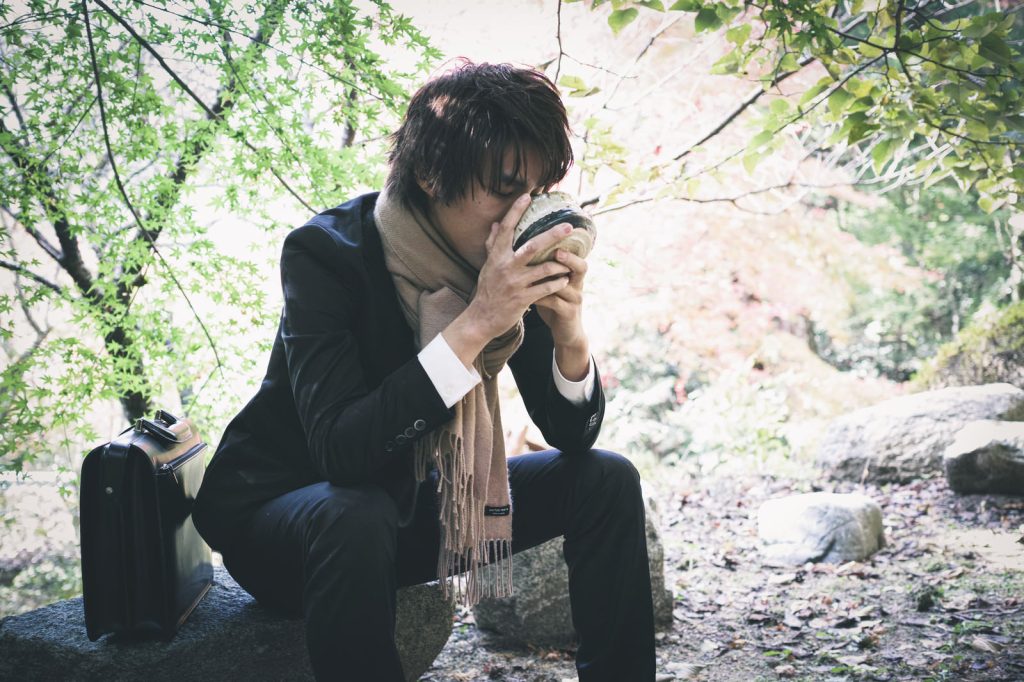
Foreigners’ Encounters with Both Hands
For many foreign visitors, the moment of being handed a teacup in Japan is unexpectedly profound. They enter the tea room expecting to witness an exotic ritual, perhaps to taste a slightly bitter powdered tea, but not to confront their own habits of living. And yet, in the simple act of being invited to hold the bowl with both hands, they find themselves pausing, straightening their posture, and sensing a shift that is both cultural and personal.
The Surprise of a Small Gesture
In much of the Western world, drinks are consumed casually, often with one hand while multitasking. A coffee mug might be held while scrolling through a phone, a paper cup clutched while walking briskly down the street. The hand is simply a functional extension of the body—its purpose is to carry fuel to the mouth while life continues at full speed.
So when a traveler in Kyoto sits down, is handed a tea bowl, and is gently instructed to lift it with both hands, there is a moment of surprise. The weight feels unfamiliar. The second hand, placed deliberately beneath the bowl, changes the entire experience. Suddenly, the act is not about efficiency but about care. The traveler realizes that they cannot hold a phone, flip a page, or gesture wildly while drinking. Both hands are occupied. Both hands are committed.
Encounter with Cultural Values
This act becomes a mirror. It reflects the differences between cultural orientations: one that prizes efficiency, independence, and speed, and another that values attentiveness, respect, and presence.
For the foreign guest, holding the teacup with both hands is not only about etiquette—it is about entering into a worldview where even the smallest gesture carries symbolic weight. They begin to understand that in Japan, the body is a language of respect, and every motion communicates relationship.
The contrast is powerful. They realize how often in their own culture, the body is treated as a mere instrument of productivity. Here, by contrast, the body itself is part of the ritual of acknowledgment.
Stories of Realization
Travelers often recount how that moment of two-handed holding became unforgettable.
One visitor from France described how, when she first held the warm bowl with both palms, she instinctively inhaled deeply, as if her body needed to reset. “I thought I came for tea,” she said, “but I received silence.”
An American traveler shared how awkward he first felt, worrying if he was doing it correctly. But as the tea touched his lips, he realized the nervousness had transformed into a kind of reverence. “It wasn’t about the taste—it was about the pause,” he reflected.
A visitor from India explained that the act reminded him of offering water to a guest back home, always with both hands as a sign of respect. In that moment, he felt a bridge between cultures—different traditions, but the same essence of reverence.
From Efficiency to Presence
The most striking lesson for many foreigners is how a simple gesture interrupts the unconscious rush of modern life. The very structure of holding with both hands removes the possibility of multitasking. One cannot drink tea and type an email at the same time; one cannot cradle the bowl and gesture emphatically in conversation.
Instead, the drinker is gently forced into presence. The hands declare: for now, this is all I am doing.
This is a revelation for many, who realize how fragmented their attention normally is. The tea ceremony does not preach about mindfulness—it simply arranges the body in such a way that mindfulness arises naturally.
A Bridge of Understanding
Perhaps the most beautiful part of this encounter is that no words are necessary. The host does not need to lecture about philosophy. The guest does not need to fully understand Japanese aesthetics. The bowl itself, placed into two hands, becomes the teacher.
In this way, a gesture transcends cultural barriers. Even those who know nothing of Japan’s history or Zen thought can feel, in their palms, the spirit of reverence and attention.
The foreigner realizes that culture is not only something to be observed but something to be embodied. By holding the bowl with both hands, they are no longer outsiders watching—they are participants, however briefly, in a different way of being.
Small Gestures, Profound Lessons
What astonishes many is that such depth can come from such a small action. It is not a grand temple visit or a philosophical text that delivers the lesson, but a simple act of touch. This humility—finding meaning in the smallest details—is itself a revelation.
Foreigners often leave with a sense that they have learned something about life itself: that respect, presence, and connection need not be taught in words. They can be felt through the hands.
Everyday Lessons from the Teacup
The tea ceremony does not ask us to live permanently inside a tatami room, nor to abandon the pace of our daily responsibilities. Its wisdom is more subtle: it offers gestures—small, repeatable, adaptable—that we can carry into ordinary life. Among them, the act of holding a teacup with both hands may be the most accessible and transformative.
Bringing Reverence to the Everyday Mug
One does not need a hand-crafted raku bowl to practice this awareness. A simple morning mug of coffee or tea can become a quiet ceremony when lifted with both hands. By doing so, the drinker communicates gratitude—to the warmth, to the drink itself, to the moment of pause before the day accelerates.
Western mugs are often designed for efficiency, with large handles for one-handed grip. But even here, placing the second hand gently against the side of the cup changes the relationship. The object is no longer a tool but a companion, one that deserves stillness and acknowledgment.
Reading with Both Hands
Books, too, can become part of this practice. In a digital era where scrolling often replaces reading, holding a physical book with both hands requires presence. The weight of the paper, the texture of the pages, the rhythm of turning them—these tactile sensations ground the reader in the present moment. It is as though the book, like the teacup, asks to be treated not as content to consume but as an encounter to honor.
The Gift of Empty Hands
Another lesson from the teacup is the importance of making space by emptying the hands. When both hands are occupied, multitasking becomes impossible. This is not a limitation but a liberation.
In our technology-saturated world, the smartphone often interrupts presence. By setting it aside—even for the duration of a cup of tea—we reclaim the possibility of unbroken attention. Empty hands are an invitation to presence. They allow us to engage fully with the object, the person, or the activity before us.
Psychological Benefits of Using Both Hands
Psychologists note that bilateral movements—using both hands together—can enhance feelings of stability and calm. The gesture signals to the nervous system that we are safe, centered, and attentive. It reduces scatteredness. When practiced regularly, these small moments of groundedness accumulate into resilience against stress.
In this way, the teacup becomes not only a cultural artifact but a therapeutic tool. To cradle an object with both hands is to cradle one’s own mind.
Rituals of Slowness
Everyday objects can be used as opportunities to slow down. A glass of water held with both hands, a bowl of soup lifted carefully, even the act of receiving a gift with two palms open—all of these echo the spirit of the tea ceremony.
Slowness does not mean inefficiency. Rather, it means investing the moment with quality. It means choosing to live with care instead of haste.
Relearning the Body’s Language
In modern life, hands are often reduced to instruments of speed: typing, swiping, tapping, gripping. The tea ceremony reminds us that hands are also capable of reverence, of gentleness, of connection.
By practicing small two-handed gestures daily, we retrain the body to express not only function but presence. The language of the body, once reawakened, transforms the language of the mind.
A Counterbalance to Digital Culture
In a world that celebrates efficiency, multitasking, and constant stimulation, these simple two-handed practices act as counterweights. They restore balance by reintroducing slowness, intentionality, and respect.
The lesson is not to reject technology but to balance it with moments of embodied presence. When we hold a cup with both hands, we remind ourselves that life is not only about acceleration. It is also about depth.
Section Summary
From a simple teacup, entire practices for daily mindfulness emerge. We learn to:
- Hold drinks with both hands, infusing them with gratitude.
- Treat books and other objects as companions, not just tools.
- Empty our hands to reclaim attention from digital distractions.
- Use bilateral gestures to calm the mind and stabilize emotions.
- Embrace slowness as a quality, not a flaw.
These lessons show that the wisdom of the tea ceremony is not confined to the tearoom. It belongs in kitchens, offices, living rooms—anywhere that presence is needed.
Closing Reflection: Holding Life Gently
To hold a teacup with both hands may appear simple, even trivial. Yet within this gesture lies a philosophy of life. It reminds us that presence is not achieved through grand actions, but through the smallest of choices—how we touch, how we pause, how we honor the moment before us.
When the foreign traveler in Kyoto first lifted the teacup with both hands, they were not only following etiquette. They were unconsciously stepping into a different relationship with the world: one of reverence, one of gratitude, one of attentiveness. The warmth of the bowl was not merely physical; it became the warmth of connection.
This is what the tea ceremony teaches us: that everyday actions can be transformed into art when performed with mindfulness. The teacup becomes a mirror for how we approach life itself. Do we grasp it hastily with one hand, distracted and half-present? Or do we cradle it gently with both hands, fully aware of its weight, its warmth, its fleeting presence?
In the tea room, silence, breath, and touch converge. Outside, in the world of deadlines and devices, the same wisdom can be carried forward. By holding objects, people, and even time itself with both hands, we choose to live not in haste but in depth. We choose to embody care instead of consumption.
The lesson is clear: gentleness is not weakness. To hold life gently is to recognize its fragility, its impermanence, its preciousness. It is to treat each sip, each encounter, each day as something worthy of reverence.
At QuietTether, we believe such gestures are not minor details but the very threads that weave meaning into existence.
“To hold a teacup with both hands is to cradle more than tea.
It is to cradle presence, gratitude, and the gentle weight of life itself.”
And in that cradling, we rediscover what it means to live slowly, fully, and awake.