Opening Story: A Question Without Resolution
The late afternoon sun slanted across the wooden pillars of a quiet Zen temple in Kyoto. The air carried a faint trace of pine resin and incense, mingling in a way that felt timeless, as if the present moment had been stretched into infinity. A traveler from abroad—tired, curious, and somewhat restless—stepped carefully onto the temple’s veranda. His journey through Japan had been filled with breathtaking sights and kind encounters, but somewhere beneath the surface, he carried a question that had followed him across oceans.
“What is the meaning of life?”
He had rehearsed the words silently many times. In his own country, such a question often led to debates, lectures, or philosophical arguments. People reached for answers like tools—sharp, logical, conclusive. Yet as he looked at the robed monk sweeping the stones in the temple garden, he wondered whether asking here, in this place of stillness, might yield something different.
When the monk finished his sweeping, the traveler approached. He bowed awkwardly, then spoke in slow English, unsure if the monk would understand:
“May I ask… what is the meaning of life?”
The monk’s eyes lifted, calm and steady, as if the question itself was not strange at all. He did not speak immediately. Instead, he turned and gestured toward the garden—a wide expanse of raked white gravel, where patterns of concentric circles spread around carefully placed stones. The monk pointed to one stone in the center, then to the ripples of sand flowing outward like waves frozen in time.
The traveler waited, expecting words of explanation. None came. The silence stretched, but it did not feel empty. It felt full—of presence, of breath, of something just beyond comprehension.
At first, the traveler grew uneasy. He wanted a phrase to carry home, a neat answer to hold onto. But as the minutes passed, watching the sunlight move across the stones, he felt something shift inside. The absence of a direct answer was not a refusal—it was an invitation. The patterns in the sand were not explanations, but mirrors of life itself: ordered, yet open; precise, yet endlessly interpretable.
For the first time, he sensed that perhaps the meaning of life was not something to be solved like a puzzle, but something to be lived into—like the garden before him, beautiful precisely because it left space for the imagination to wander.
The monk finally looked at him, nodded once, and returned to his sweeping. The traveler did not feel dismissed. Instead, he felt lighter, as if the burden of needing an answer had quietly dissolved into the gravel paths.
Walking away, he realized something unexpected: the comfort he sought came not from resolution, but from the gentle discovery that not knowing could also be a form of peace.
The Western Urge for Answers
In the West, the impulse to search for definitive answers runs deep—woven into the very fabric of its intellectual and cultural history. From the time of the ancient Greeks, knowledge was pursued as a series of logical propositions. Socrates challenged his students with relentless questioning, Aristotle sought categories for all things, and later, Descartes declared, “I think, therefore I am.” Each step reinforced the idea that clarity was not only desirable, but necessary for truth.
To ask a question in Western tradition is often to demand resolution. A question feels incomplete until it is wrapped in an answer—like a circle closed, a line tied off. There is comfort in the finality of a conclusion, in the ability to say: This is true, and that is false.
This cultural inclination can be seen in many domains of Western life:
- Education: Students are trained to provide correct answers on tests. Success is measured not by lingering with questions, but by arriving at precise conclusions. Ambiguity, often, is penalized.
- Science and Rationalism: The Western scientific revolution thrived on hypothesis, proof, and resolution. To leave something undefined was seen as failure, or at best, an interim step before certainty was established.
- Debate and Discourse: Public discussions, whether in politics or philosophy, often seek to prove one side right and the other wrong. The search is not for coexistence of multiple interpretations, but for victory of the “correct” interpretation.
This urgency for answers is not inherently negative. It has fueled remarkable advancements—medicine, technology, human rights frameworks—all born from the conviction that questions can and should yield answers. The Western world has been shaped by this drive, and humanity has benefited immensely.
Yet, as many modern thinkers note, the same urge can also generate anxiety. The absence of clear answers often feels intolerable. In everyday life, uncertainty is treated almost like a flaw to be eliminated. Consider the restlessness one feels when a message is left unanswered, when a plan remains unconfirmed, or when an internet search yields no definitive explanation.
This discomfort is deeply cultural. In the Western mindset, “not knowing” often translates into weakness or vulnerability. A professional who says, “I don’t know,” risks credibility. A leader who hesitates, who admits uncertainty, risks being seen as incompetent. The societal expectation is that certainty equals strength, and ambiguity equals fragility.
This explains why, when a Western traveler stands in front of a Zen monk and receives not an explanation but a gesture, the experience can feel unsettling, even frustrating. It is a confrontation with a radically different approach to questions—an approach where the value lies not in the answer, but in the act of questioning itself.
The Western urge for answers, then, reveals both the brilliance and the limitations of a cultural worldview. It equips people to solve, to build, to advance. But it also leaves them ill-prepared for those vast territories of life—love, death, meaning—where no answer can be final, and where resolution may never arrive.
In that gap between question and certainty, Japan offers a very different perspective: one that does not rush to close the circle, but instead finds beauty in leaving it open.
Japanese Comfort with Uncertainty
If the Western tradition is a quest for certainty, Japan’s cultural fabric often celebrates its absence. Where one worldview longs for closure, the other lingers in openness, finding richness not in the resolution of a question, but in the spaces left unresolved.
This comfort with uncertainty is not accidental; it is cultivated through centuries of philosophy, aesthetics, and daily practice.
The Zen Legacy: Embracing the Unanswered
At the heart of Japanese spirituality lies Zen, a tradition that deliberately resists definitive answers. Zen masters pose koans—paradoxical riddles such as “What is the sound of one hand clapping?”—not so students can solve them, but so they can learn to sit inside the tension of the unsolvable. The point is not to resolve, but to awaken.
To a Westerner, this may feel like a puzzle without a solution. To a Zen practitioner, it is liberation from the compulsion to solve. The beauty lies in recognizing that truth is not something to be nailed down, but something to be touched in fleeting, wordless glimpses.
The Art of the Unsaid: Haiku, Noh, and Tea
Japanese aesthetics extend this philosophy into art forms that thrive on ambiguity:
- Haiku distills a moment into seventeen syllables, but never explains it. A frog jumps, a sound of water, and the rest is silence. What it “means” is left for the reader to hold, not to answer.
- Noh theater is slow, restrained, filled with pauses and gestures that hover on the edge of meaning. Audiences are not spoon-fed a resolution; they are invited to breathe inside the mystery.
- The tea ceremony finds beauty in the ritual of silence, in the delicate gestures that say far more than words. A host does not explain hospitality—they embody it in subtle, almost imperceptible movements.
In each case, what is withheld is as important as what is given. The Japanese tradition teaches that meaning often resides not in the explicit, but in the suggestive—what is known in Japanese aesthetics as “yohaku no bi” (the beauty of empty space).
Everyday Expressions of Ambiguity
This comfort with uncertainty is not confined to art or religion—it filters into daily life. Japanese language itself thrives on vagueness. A “yes” may mean “I hear you,” not necessarily agreement. A refusal may be phrased indirectly, leaving space for the listener to intuit the meaning. Silence in conversation is not awkward, but respectful.
For foreigners, this can be bewildering. But for those who grow within the culture, ambiguity is not confusion—it is kindness. It allows relationships to continue without the harshness of confrontation, and it honors the unspoken feelings that words can sometimes crush.
Uncertainty as Beauty, Not Flaw
Underlying this is a worldview profoundly different from the Western impulse: the belief that impermanence, incompletion, and uncertainty are not flaws to be corrected, but qualities to be cherished.
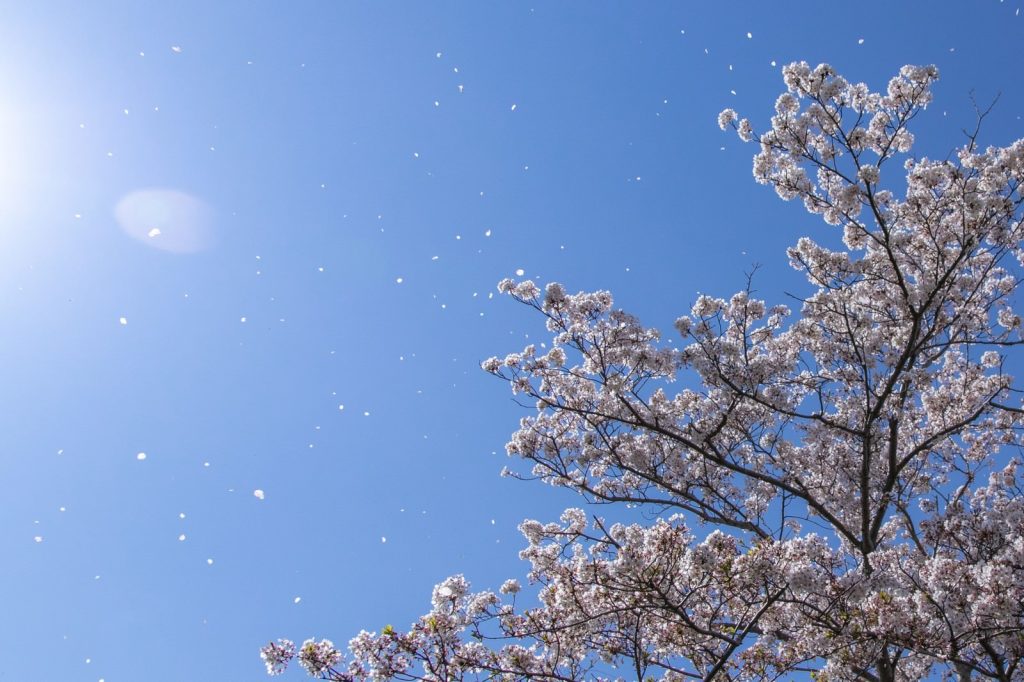
Cherry blossoms are celebrated precisely because they fall so quickly. A weathered tea bowl, cracked and imperfect, is treasured in Wabi-sabi aesthetics because it carries the beauty of imperfection. A question left unanswered is not a failure of thought, but an invitation to experience life without grasping for control.
To live in such a way is to accept that the world itself is shifting, fragile, incomplete. Rather than resisting this reality, Japanese culture often chooses to bow to it, even celebrate it.
For the foreign traveler in the Zen temple garden, the monk’s gesture toward stone and sand is not a refusal to answer, but a quiet teaching: that the answer is not to be found in words, but in the stillness of being.
The Role of Silence and Ambiguity
In many cultures, silence is something to be filled. It is seen as a void, an absence, a failure to communicate. But in Japan, silence carries weight. It is not emptiness—it is presence. It speaks in ways words cannot, and in its ambiguity lies a depth of meaning that can be felt more than explained.
Silence as Communication
Japanese interactions often rest upon the subtle power of silence. A pause in conversation is not awkward but meaningful. It allows words to settle, emotions to surface, and unspoken thoughts to be honored. Silence is not a lack of response; it is a form of response, one that trusts the listener to perceive what cannot be said aloud.
This can be difficult for foreigners accustomed to the constant rhythm of words. In the West, to pause too long is to risk misunderstanding or discomfort. In Japan, to pause is to respect the depth of the moment. Silence is not an interruption—it is the frame that gives shape to speech.
The Philosophy of Ma (間)
The Japanese concept of Ma—often translated as “interval” or “space”—captures this idea. Ma is the space between notes in music, the pause between movements in theater, the empty room in architecture that invites breath and imagination.
In communication, ma is the silence between words, the ambiguity between meanings. It allows conversation to expand beyond the literal, to include intuition, atmosphere, and feeling. In this way, ma transforms absence into presence, ambiguity into richness.
Ambiguity as an Ethical Choice
Ambiguity is not only aesthetic; it is also ethical. In a culture where harmony (wa) is highly valued, ambiguity softens conflict. A refusal can be expressed indirectly, sparing the other party shame. A disagreement can be left unspoken, allowing relationships to continue without rupture.
The Japanese phrase “chotto…” (“a little…”) is often used as a polite way to decline without directly saying no. What remains unsaid is as important as what is said, and the listener is trusted to interpret with sensitivity.
This indirectness is not evasiveness. It is a way of caring for the social fabric, of preserving dignity for both speaker and listener. Ambiguity becomes a form of compassion.
Silence in Arts and Rituals
The cultural reverence for silence and ambiguity is most visible in Japanese arts:
- In haiku, what is left out often carries more weight than what is written. The seventeen syllables gesture toward a world beyond words.
- In Noh theater, the long pauses and minimal movement invite the audience into a space of contemplation, where silence becomes part of the drama.
- In the tea ceremony, silence accompanies each gesture—the placement of the tea bowl, the pouring of water. It is not emptiness but fullness, a shared quiet that communicates respect and mindfulness.
Sharing the Question, Not the Answer
At its heart, silence and ambiguity teach us to sit with questions rather than rush toward answers. A friend may share a worry, and the response is not advice, but attentive silence. The presence itself is the answer.
In this way, Japanese culture offers an alternative mode of being: one in which communication is not the exchange of information, but the cultivation of resonance. The unspoken becomes a form of connection, and ambiguity becomes the ground where empathy grows.
For the Traveler
For a traveler from a culture of words, this can at first feel perplexing—even frustrating. But over time, it can also feel deeply liberating. To sit in silence with another person, to share a moment where nothing is explained and yet everything is understood, is to experience a kind of intimacy rarely found in more word-bound cultures.
In silence, one learns that the absence of words is not the absence of meaning. In ambiguity, one discovers that clarity is not always the highest form of truth.
Lessons from Zen and Daily Life
Zen does not offer solutions in the conventional sense. It does not hand down definitive answers to life’s most difficult questions. Instead, it invites us to stay with the question itself, to experience it fully, without rushing to resolve it.
The Practice of Shikantaza — Just Sitting
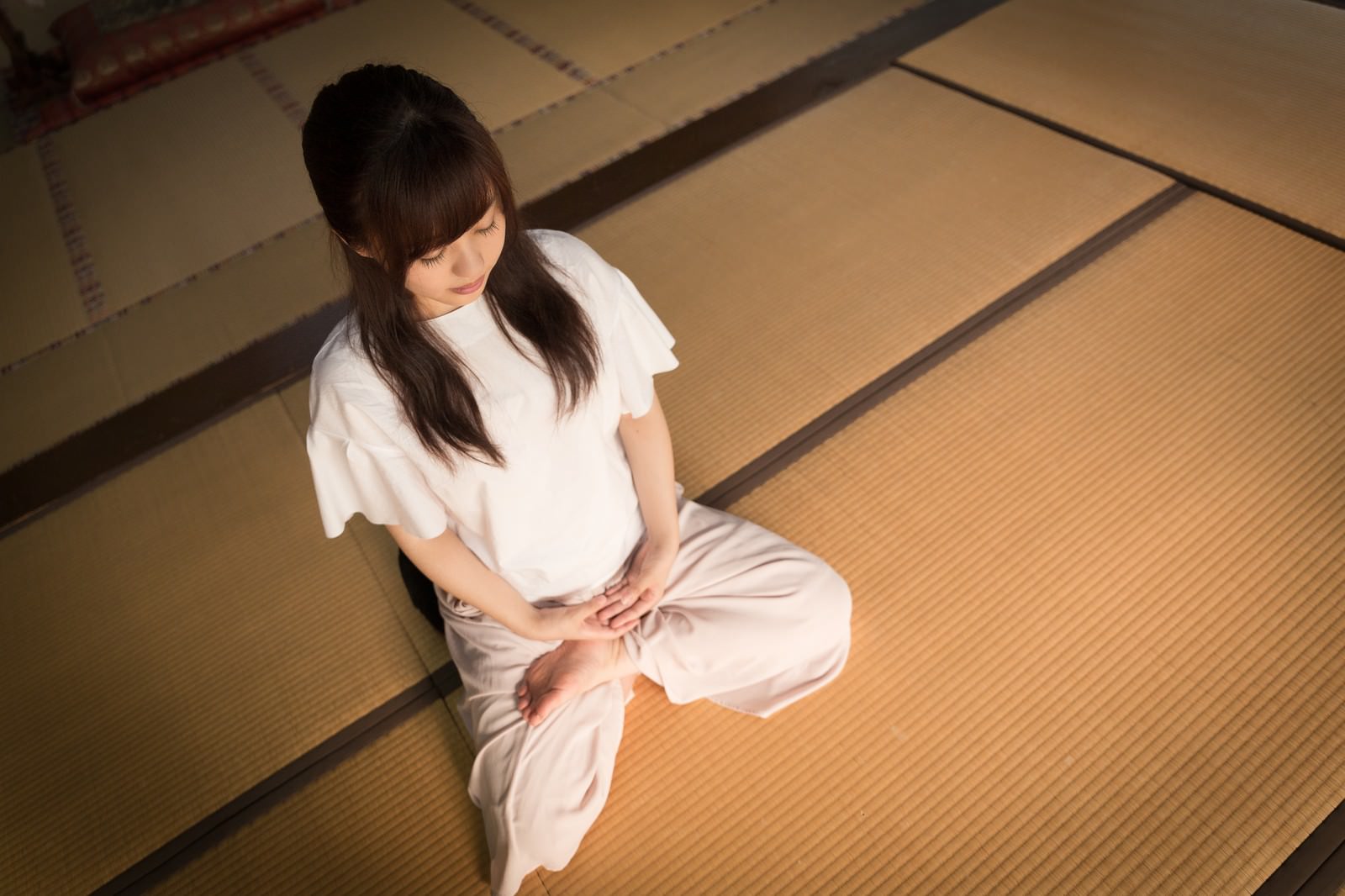
One of the central practices of Zen is Shikantaza (只管打坐) , often translated as “just sitting.” On the surface, it may appear passive: a person seated in silence, doing nothing. Yet this “doing nothing” is one of the most radical acts in a world obsessed with productivity and solutions.
When a practitioner sits, thoughts arise—questions about the future, memories of the past, worries, desires. Instead of grasping them or pushing them away, the practice is to simply observe. The mind is not forced into silence, but rather allowed to rest in openness. The result is a deep recognition: not every question needs to be answered, and not every problem requires immediate resolution.
The Koan: A Question That Breaks the Habit of Answers
Zen also uses the method of koan—a riddle or paradoxical question given by a teacher, such as:
- “What is the sound of one hand clapping?”
- “What was your original face before your parents were born?”
These questions are not meant to be solved like puzzles. They resist logic. They frustrate the intellect. But in the very act of wrestling with them, the practitioner begins to see differently. The lesson is not in finding the answer but in being transformed by the questioning itself.
This approach reflects a deeper truth: the human need for certainty often blinds us to the reality that life itself is fluid, impermanent, and beyond the grasp of fixed answers.
Carrying Zen into Daily Life
Though these teachings may seem lofty, they are woven into everyday Japanese life.
- Choosing a path in school or career: Rather than expecting a perfect, predetermined answer, many Japanese people accept uncertainty, adjusting as life unfolds.
- Relationships: Ambiguities and unspoken feelings are tolerated, sometimes even cherished, as part of the human experience.
- Moments of transition: When facing the unknown—whether illness, job change, or aging—the cultural practice is often to accept the mystery, to live with the question rather than force a conclusion.
This patience with uncertainty reflects a trust in life’s natural rhythms. Just as the seasons turn without our control, some answers will ripen in their own time—or never at all.
The Peace of “Not Knowing”
In Zen, to admit “I don’t know” is not weakness, but freedom. It allows a person to remain open, flexible, and compassionate. A closed answer shuts down possibility; an open question keeps the heart alive.
For the traveler sitting in a Zen temple in Kyoto, watching the patterns of stone and sand, this lesson becomes tangible. The unanswered question is not a source of anxiety, but of peace. The absence of resolution is itself a resolution: to live gracefully within the unknown.
Modern Anxiety and the Need for Certainty
We live in an age that hungers for answers. Questions are no longer allowed to linger in silence; they must be resolved, explained, categorized, and stored away. This cultural and technological environment has created what could be called an addiction to certainty.
The Digital Habit of Instant Answers
With a smartphone in hand, almost any question can be “answered” in seconds.
- What is the population of Tokyo?
- How do I fix a leaky faucet?
- What does this symptom mean?
The internet supplies an endless stream of responses, explanations, and solutions. Search engines, social media feeds, and recommendation algorithms have conditioned us to believe that not knowing is intolerable—that every uncertainty is a problem demanding resolution.
This habit seeps into our psychology. We begin to fear the space of unknowing, filling every gap with information—even if the information is shallow, misleading, or unsatisfying.
The Pressure of a “Solution-Oriented” Culture
Modern society rewards decisiveness. In classrooms, children are trained to raise their hand with the correct answer. In offices, employees are praised for quick problem-solving. Politicians are expected to deliver confident solutions to complex issues.
This creates immense pressure: if you cannot produce an answer, you appear weak, uninformed, or indecisive. “I don’t know” becomes a forbidden phrase. The collective result is a narrowing of imagination, where the freedom of open-ended inquiry is sacrificed for the comfort of closure.
The Cost of Certainty: Anxiety and Burnout
Ironically, the relentless pursuit of answers does not bring peace—it brings stress. Because life is full of ambiguity, uncertainty, and complexity, no amount of information can ever fully satisfy our need for certainty.
- Career choices rarely come with guaranteed outcomes.
- Relationships cannot be reduced to formulas.
- The future of the world—climate, politics, technology—remains inherently unpredictable.
When people are conditioned to believe that every unknown must be resolved, the natural uncertainties of life become intolerable, breeding anxiety, insomnia, and a sense of inadequacy.
The Forgotten Value of “Not Knowing”
Yet within this culture of answer-seeking lies a forgotten truth: many of humanity’s greatest achievements emerged not from certainty, but from dwelling in the unknown.
- Scientific breakthroughs often began with open questions that defied easy answers.
- Works of art thrive on ambiguity and unfinishedness.
- Deep friendships grow not from knowing everything about each other, but from sharing mysteries together.
In this sense, the obsession with answers may be starving us of the very creativity and depth we need most.
Japan’s Gentle Reminder
Contrasted with this modern anxiety, Japanese culture—especially Zen traditions—offers a counterbalance. By normalizing ambiguity, silence, and the acceptance of “no final answer,” it provides a model for how to live without being crushed by uncertainty.
The lesson is not that answers are unimportant, but that they are not everything. Sometimes, allowing the question to remain open is healthier than rushing to closure.
Finding Beauty in Open-Endedness
To many people raised in cultures that prize clarity, open-endedness can feel uncomfortable, even irresponsible. But in Japan, open-endedness is not a flaw to be corrected—it is a space of possibility, a container for beauty.
Haiku: The Poetics of Incompletion
Consider the haiku, Japan’s most famous poetic form. With only seventeen syllables, it cannot possibly capture an entire story. Instead, it leaves much unsaid, creating a silence into which the reader’s imagination flows.
A single haiku about spring may not mention the cherry blossoms directly, but the suggestion of warmth, light, or falling petals is enough for the listener to complete the scene internally. The beauty arises precisely from what is not described.
This open-endedness transforms the reader into a co-creator. The poem does not dictate a single answer—it invites multiple interpretations, each valid, each personal.
Wagashi: The Taste of the Unfinished
The tradition of wagashi, Japanese confectionery, also embodies the allure of incompletion. A seasonal sweet shaped like a maple leaf is not meant to be a definitive representation of autumn—it is a fleeting gesture toward it.
The sweet melts quickly in the mouth, disappearing almost as soon as it is tasted. Its temporariness is the point: the joy lies in the awareness of its passing. This transient, open-ended quality makes wagashi more than food—it becomes an encounter with impermanence, with the unfinished.
The Aesthetics of “Ma” (間)
Central to this appreciation is the Japanese concept of ma, the space between things. In art, music, architecture, and conversation, silence and absence carry as much meaning as sound and presence.
A pause in music heightens the next note.
A moment of silence in a tea ceremony allows the heart to settle.
A blank space on a scroll painting suggests a horizon beyond sight.
Rather than rushing to fill every gap, Japanese culture embraces these intervals. The openness invites reflection, giving the participant freedom to dwell in what remains unsaid.
The Bond of Shared Questions
Open-endedness is not only aesthetic—it is relational. When two people share a question without demanding an answer, they create intimacy.
A friend confides: “I don’t know what I want to do with my life.”
Another responds not with advice or solutions, but with presence: “I feel the same sometimes.”
In this way, unknowing becomes a bridge rather than a barrier. Instead of severing connection with a premature answer, the shared openness deepens the bond.
Open-Endedness as an Antidote
In a world that often feels suffocating with answers, instructions, and explanations, open-endedness can be a breath of fresh air. It gives permission to pause, to wonder, to dwell in uncertainty without fear.
It is not about abandoning answers altogether. Rather, it is about cultivating the patience to wait, the humility to not know, and the openness to let multiple truths coexist.
This is the quiet beauty of living with questions: life itself becomes a poem, a sweet, a silence—unfinished, and therefore endlessly alive.
Practical Ways to Embrace No-Answers
Philosophy and poetry can sound beautiful in theory, but how do we carry the Japanese wisdom of not-knowing into the rhythms of daily life? Here are several practical ways to nurture a deeper comfort with open-endedness.
1. Keep a Journal of Unanswered Questions
Instead of recording only resolutions or goals, dedicate a page each day to the questions that remain unresolved.
“What do I really want from this career?”
“How can I grow closer to my family?”
“What is enough?”
Do not attempt to solve these questions on the spot. Let them breathe. Over weeks and months, you may discover that the act of holding the questions gently, without rushing toward an answer, shifts your perspective.
2. Practice Pausing in Conversation
Modern communication is fast. We rush to reply, to offer opinions, to prove we know. But what if we allowed more silence?
Next time someone shares something uncertain or vulnerable, resist the urge to fill the gap with advice. Instead, leave space. Nod. Breathe. Let the pause itself communicate: “I am with you, even if we don’t know the answer.”
This practice transforms conversations from problem-solving sessions into moments of shared humanity.
3. Sit with Koans of Daily Life
Zen monks contemplate koans—paradoxical riddles like, “What is the sound of one hand clapping?” These are not puzzles to be solved, but mirrors to reflect the mind.
In daily life, we also encounter koans:
- Why do I feel restless when everything is going well?
- Why is it harder to forgive myself than others?
- What does success truly mean to me?
Rather than dismissing these as unanswerable, treat them as companions. Walk with them, let them provoke wonder instead of frustration.
4. Create Space for “Ma” in Daily Routine
Introduce intentional pauses into the structure of your day.
- Take a short walk without headphones.
- Drink tea without multitasking.
- Allow a moment of stillness before answering an email.
These intervals—small spaces of ma—remind you that life is not a race to closure, but a series of moments worth inhabiting fully.
5. Redefine Success as Openness
We often equate success with finality: the finished project, the clear answer, the resolved issue. But what if success also included the courage to keep a question alive?
For example:
- A leader does not need to provide all solutions, but can guide a team to explore possibilities together.
- A parent need not always explain life to a child, but can model curiosity and humility.
Redefining success as openness transforms uncertainty from a weakness into a strength.
6. Embrace Uncertainty as a Teacher
Instead of fearing ambiguity, recognize it as a source of growth. Every period of uncertainty—whether about career, relationships, or identity—contains hidden lessons.
Ask yourself: What is this uncertainty teaching me about patience, about trust, about resilience?
Seen this way, not-knowing is not a void to be avoided, but a teacher to be welcomed.
7. Practice Gratitude for the Unfinished
At the end of each day, instead of only listing what you accomplished, note what remains open—and give thanks.
“The project is not done, but I am grateful for today’s progress.”
“My future path is unclear, but I am thankful for the people walking beside me now.”
This reframes incompleteness not as failure, but as a natural, even beautiful, state of life.
Living the Practice
Embracing no-answers does not mean passivity. It is an active, mindful practice of humility, patience, and presence.
By journaling, pausing, listening, creating space, and redefining success, we begin to internalize the Japanese way of living with questions. Life becomes less about conquering uncertainty and more about walking gracefully alongside it.
Closing Reflection: The Freedom of Not Knowing
To live in constant pursuit of answers is to live in tension. Our minds are conditioned to believe that once we solve a problem, peace will arrive—that once we unlock the secret of life, happiness will follow. Yet as soon as one answer appears, another question rises, demanding attention. The horizon of certainty recedes as quickly as we approach it.
Japanese culture, with its quiet reverence for ambiguity and impermanence, offers us a different possibility: the realization that freedom lies not in collecting answers, but in releasing the need for them.
When we sit in a Zen garden, tracing the raked lines of sand with our eyes, there is no resolution, no tidy conclusion. The rocks are arranged in patterns that resist final interpretation. Some see islands, some mountains, some silence itself. The garden is not incomplete; it is intentionally open. It whispers a truth that Western logic often struggles to hear: unanswered does not mean unfinished.
This wisdom expands beyond temples into the daily flow of life. The mother who watches her child grow knows that no manual can provide every answer to parenting. The artist standing before a blank canvas understands that creativity thrives in the unknown. The traveler, lost in a narrow Kyoto alley, may find more wonder in the journey than in the destination.
To embrace not-knowing is to loosen the grip of fear. Instead of being haunted by uncertainty, we can recognize it as the very condition that makes growth, creativity, and intimacy possible. If we knew all outcomes in advance, what would be the point of living at all? It is precisely the openness of the future that allows love to surprise us, beauty to move us, and meaning to reveal itself in unexpected places.
There is also a gentle humility in living without answers. To admit, “I don’t know,” is not defeat—it is an invitation. It invites dialogue instead of debate, collaboration instead of isolation, wonder instead of arrogance. In this humility lies connection: when we acknowledge our shared questions, we discover that we are never truly alone.
In a world obsessed with instant responses and perfect clarity, choosing to dwell in mystery can feel radical. And yet, there is peace in this choice. Peace in allowing a question to accompany us like a friend. Peace in leaving room for silence, for ambiguity, for possibility.
Perhaps this is the ultimate gift of Japanese aesthetics—the recognition that beauty often lives in what remains unsaid, unresolved, unfinished. Like the fleeting bloom of cherry blossoms, the unanswered moment carries within it a poignancy that complete knowledge could never provide.
At its heart, the philosophy of not-knowing is not about ignorance, but about freedom. Freedom from the tyranny of having to solve every riddle. Freedom to live with curiosity instead of certainty. Freedom to allow life to be larger than any single explanation.
QuietTether’s philosophy echoes this truth:
“Sometimes, the beauty of life is not in finding the answer, but in learning to live gracefully with the question.”
And so, we close not with an answer, but with an invitation: may you hold your questions lightly, may you find comfort in their company, and may you discover, in their openness, the quiet freedom of simply being alive.