Opening Story: The Unspoken Comfort at a Ryokan
When Samuel, a young traveler from Canada, arrived in Japan for the very first time, his excitement was mingled with exhaustion. He had been on a plane for more than twelve hours, navigated the complexity of Narita Airport, and then endured a long train journey into the mountainous countryside of central Honshu. By the time he stepped off at a quiet local station, dragging his suitcase across the wooden platform, he felt the subtle ache in his shoulders that comes from carrying too many expectations alongside too much luggage.
A short taxi ride carried him to a ryokan, a traditional Japanese inn that his guidebook had described as “a place where time slows down.” The wooden gate, slightly bowed with age but lovingly polished, welcomed him into another world. Sliding doors opened onto tatami mats, and the faint fragrance of cedar and incense drifted into the air. There were no neon signs, no buzzing phones, no hurried voices. Just stillness.
A middle-aged woman in a crisp kimono bowed deeply to greet him. Her smile was warm but not imposing, as if it invited him without demanding anything in return. She took his luggage with effortless grace and guided him down a narrow hallway. Samuel, unused to being treated with such gentleness without fanfare, felt a little embarrassed. He mumbled a thank you in clumsy Japanese—“Arigatou gozaimasu”—and she nodded, her expression radiating patience and understanding.
When they entered his room, the space felt both empty and alive. Tatami mats stretched across the floor, a low wooden table stood in the center, and sliding shoji doors opened to reveal a small balcony overlooking a garden pond. There were no ornate decorations, no distracting televisions, only the quiet whisper of wind through bamboo. Samuel set down his backpack, exhaled, and for the first time that day, felt a measure of peace.
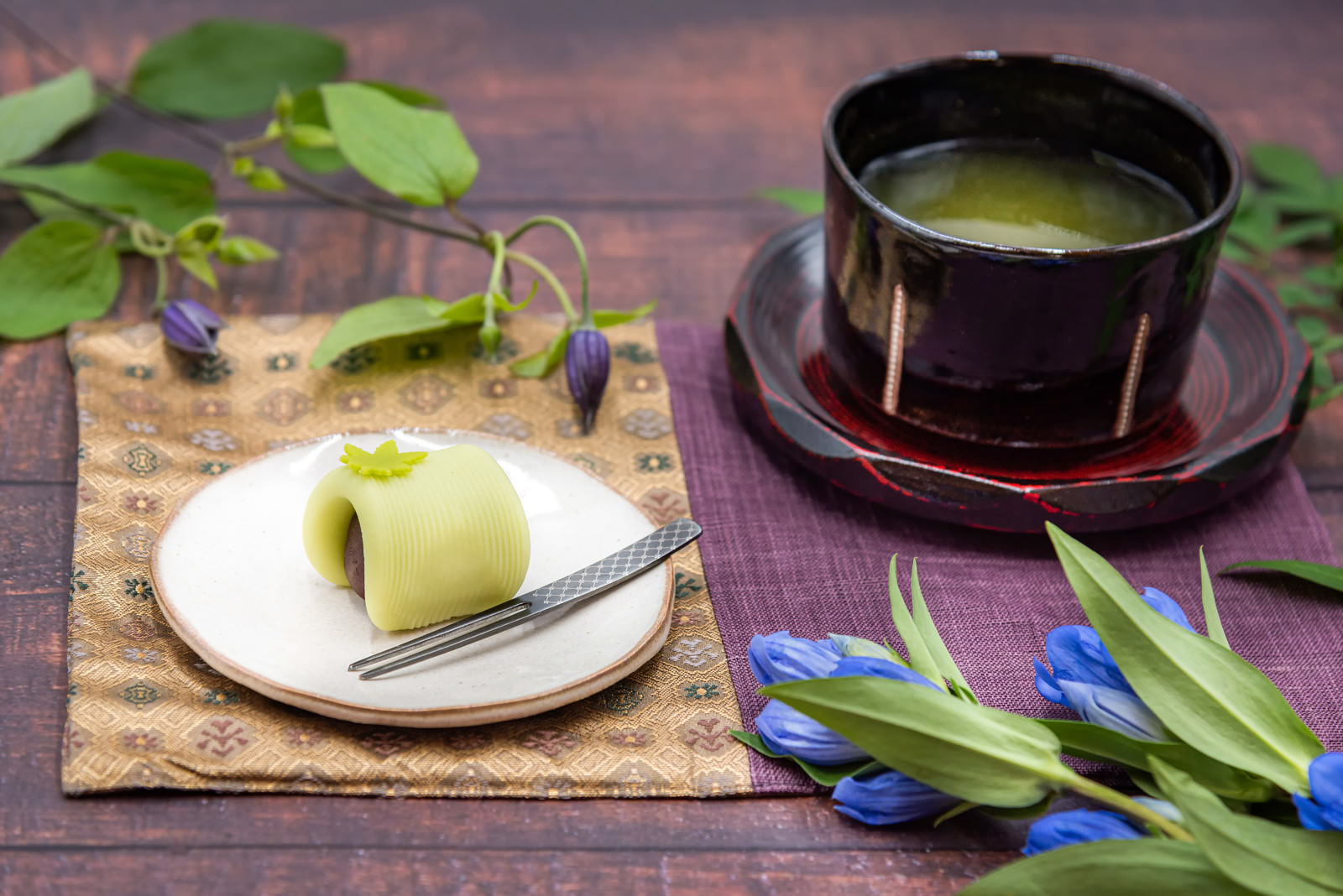
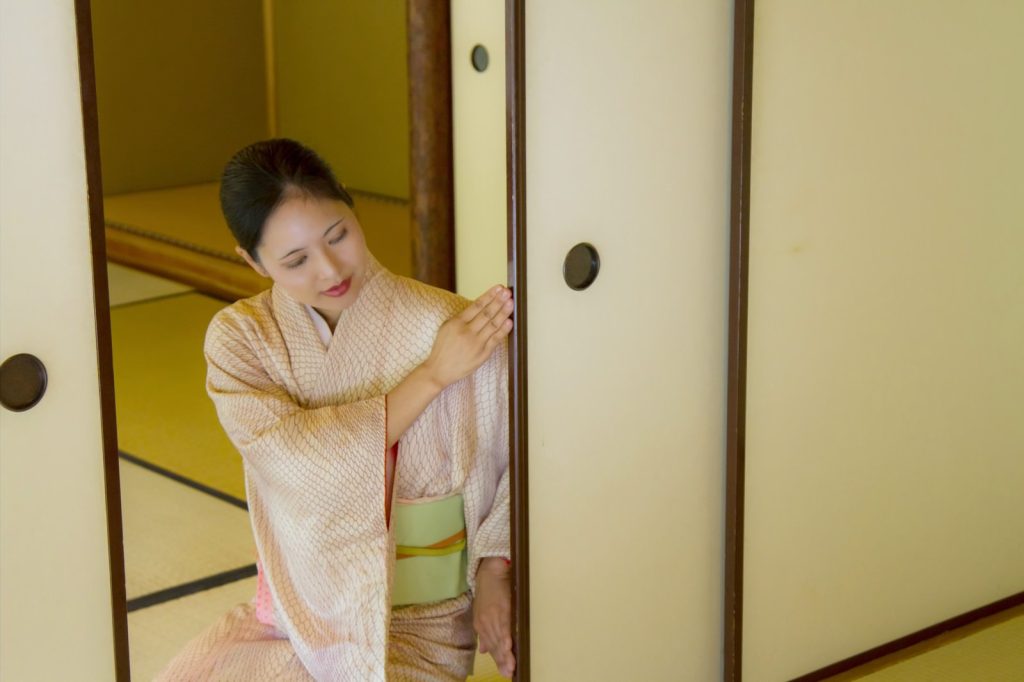
He was still taking in the scene when the woman reappeared. She slid open the door softly, carrying a tray with a teapot, two delicate cups, and a small plate of Wagashi 和菓子—traditional Japanese sweets. She placed the tray on the table, bowed, and said in gentle Japanese, “Ocha wo omochi shimashita お茶をお持ちしました” — I’ve brought you tea.
Samuel blinked. He hadn’t asked for tea. He hadn’t asked for anything at all. In fact, his first instinct was to protest—oh, you didn’t have to, I can take care of myself. But something in her quiet presence made him pause. She had noticed what he could not articulate: that his body was weary, his throat was dry, and his spirit longed for rest. She had prepared what he needed before he realized he needed it.
He poured the tea, the steam rising like a small offering. The taste was soft and earthy, slightly bitter but grounding. The Wagashi, sweet and delicate, melted in his mouth. A warmth spread through him that was not just from the tea but from the realization that someone had seen him—not as a customer, not as a tourist, but as a human being carrying fatigue.
Later, when he tried to explain this moment to a Japanese friend, he confessed, “At first, I thought it was just part of the service. But then I realized it was more than that. She didn’t just serve me tea. She anticipated my state of mind. She understood without words.”
His friend smiled and said, “That is Omotenashi おもてなし. It is not service. It is care without calculation. It is welcoming you with a heart that has no front or back, no mask.”
Samuel thought about that phrase again and again: care without calculation. In his own country, hospitality was often measured in efficiency—how quickly a request was met, how smoothly a transaction was handled. But here, at this quiet ryokan in the mountains, hospitality was not about speed or efficiency. It was about presence, attention, and the gift of being understood without asking.
As he sat on the tatami floor, sipping the last of his tea, Samuel felt something he had rarely experienced in all his travels: the comfort of being cared for without the pressure to reciprocate. It was not an embrace, not a verbal reassurance, not even a smile that demanded acknowledgement. It was a silent gesture, a quiet kindness. And in that silence, he felt deeply welcomed.
For the rest of his journey through Japan, Samuel would carry this memory like a lantern: the moment when someone, without words, anticipated his need and met it with warmth. It was then he realized that in Japan, true hospitality is not loud or grand, but often invisible, moving gently before words, before requests, before the guest even knows what they need.
That was the unspoken comfort of a ryokan. That was the first lesson of omotenashi.
Defining Omotenashi
To understand Omotenashi, one must begin by clearing away the assumption that it is simply “hospitality.” While many guidebooks and tourist brochures translate the word as such, the Japanese concept carries a depth and subtlety that stretches far beyond the transactional frame implied in Western languages. It is not merely about serving guests, fulfilling their requests, or providing comfort in exchange for payment. Instead, Omotenashi arises from a cultural philosophy that blends sincerity, anticipation, and a quiet devotion to the well-being of another person—without calculation, without expectation of reward.
The very word itself offers insight. Linguistically, Omotenashi is sometimes explained through the phrase “Omote nashi”, which can be understood as “without façade” or “without front.” In other words, it suggests a form of care that is given without pretense or hidden motive. When a host offers Omotenashi, they are not performing kindness for appearance’s sake; they are embodying kindness as an expression of genuine presence. There is no mask to hide behind, no ulterior motive, no strategy of manipulation. The heart offered is unadorned, transparent, and authentic.
This is perhaps the first and most crucial distinction between omotenashi and what is commonly described as “hospitality” in the West. Hospitality, particularly in a service-oriented economy, is often tied to expectations of reciprocity. A guest is treated kindly because they are paying; excellent service is provided because it will yield higher tips, better reviews, or customer loyalty. Even when sincere, such hospitality is often tangled with calculation: If I do this, then I will receive that in return.
Omotenashi, by contrast, insists on a different principle: the absence of calculation. The host offers care because it is right to do so, because it honors the relationship, because it creates harmony in the moment. Whether or not the guest recognizes it, whether or not they can reciprocate, whether or not it benefits the host materially—none of these are decisive. What matters is the offering of heart.
Yet Omotenashi is not simply about selflessness. It is also about attentiveness. To practice Omotenashi is to sharpen one’s awareness of another’s unspoken needs, to anticipate what might bring ease or comfort before the guest even articulates it. The tea placed before the weary traveler, the umbrella quietly offered before a sudden rain, the seat surrendered before an elder has to ask—these gestures exemplify the spirit of anticipation. In this sense, Omotenashi is less about doing more and more about seeing more.
The subtlety of this attentiveness lies in its invisibility. True Omotenashi is not meant to draw attention to itself. It is not a stage performance designed to impress. In fact, the more seamless and unnoticeable the care is, the more authentic it becomes. A guest may leave a ryokan or a tea ceremony without being able to point to any single extraordinary gesture, yet carry within them the memory of having felt deeply cared for. The invisible quality is the very strength of Omotenashi: it transforms service into presence, transaction into relationship.
This invisibility also separates Omotenashi from simple generosity. In generosity, the giver often highlights their act—a gift is presented, assistance is declared, kindness is named. In Omotenashi, however, the care often vanishes into the background, blending into the environment so naturally that the guest does not even feel the weight of being “helped.” Instead, they feel as though the world itself has aligned to support them.
The roots of this approach to care can be traced into Japanese aesthetics and philosophy. The culture has long valued forms of beauty that are subtle rather than flamboyant, understated rather than ostentatious. Just as the blank spaces in a painting are as important as the ink strokes, the silences in a conversation as meaningful as the words, Omotenashi thrives in what is not said, what is not shown. It resides in anticipation rather than declaration, in presence rather than performance.
To define Omotenashi is therefore to grasp three interwoven dimensions:
- Sincerity without façade — The heart of the host is genuine, free from calculation or hidden motive.
- Anticipation of unspoken needs — The host perceives and responds to what the guest has not yet articulated.
- Invisibility of care — The offering is made quietly, seamlessly, without demanding recognition or gratitude.
Taken together, these qualities create an atmosphere in which the guest feels both respected and cherished. They do not feel indebted, nor do they feel intruded upon. Instead, they feel that their very humanity has been acknowledged and supported.
This is why Omotenashi is not bound to the realms of hotels or restaurants. It can exist in the smallest gestures of daily life: a neighbor who sweeps fallen leaves from the sidewalk so you don’t slip, a friend who brings a scarf because they noticed you shiver in the cold, a colleague who pours water into your glass before you notice it is empty. None of these actions are large, and none require grand declarations. Yet in them resides the essence of Omotenashi: a heart that moves before words do.
To define Omotenashi, then, is not merely to give a dictionary meaning. It is to recognize a worldview: a way of relating to others that dissolves the boundary between self and other, need and response, giver and receiver. It is to step into a philosophy where kindness does not announce itself, but quietly arranges the world so that others may feel at ease.
And in this recognition lies the quiet brilliance of Japanese culture: the realization that the greatest acts of care may be those that go unnoticed, and the deepest bonds may be those woven without words.
Everyday Omotenashi in Japan
While the word Omotenashi often conjures images of exquisite tea ceremonies, luxurious ryokan stays, or refined kaiseki meals, the true essence of this practice is found not in extravagance but in the quiet details of daily life. In Japan, Omotenashi is not a rare performance reserved for honored guests; it is a cultural rhythm, woven seamlessly into the ordinary exchanges of restaurants, shops, trains, and homes. It is this everyday omnipresence that makes Omotenashi so deeply embedded in the Japanese social fabric.
The Unasked-for Glass of Water
One of the most striking examples for foreign visitors is the simple act of being served a glass of cold water—o-hiya—in a Japanese restaurant, often before even ordering. In many countries, water is something a customer must specifically request, and in some places, it is even charged as an item on the bill. In Japan, however, the guest’s thirst is assumed. The host does not wait for the guest to voice discomfort; instead, they preemptively offer refreshment. The glass of water is not just a beverage—it is a symbol of attentiveness.
This small ritual demonstrates two principles at once: anticipation and invisibility. The water appears without fanfare, requiring no gratitude, and disappears from notice as soon as the guest begins their meal. Yet the guest’s comfort has already been secured, subtly and effectively, without the need for words. This is Omotenashi at its most distilled form: the ability to make care seem effortless.
The Convenience Store Clerk
A second everyday setting where Omotenashi becomes visible is the convenience store, or Konbini コンビニ. Foreign travelers are often astonished at how attentive clerks are when handling purchases. A common example: when buying both a hot item (such as fried chicken) and a cold item (such as ice cream), the clerk will instinctively separate them into different bags, without being asked. The act may seem small, but it reflects a profound consideration for the guest’s experience after leaving the store.
Even the way items are handed to the customer reflects omotenashi. Bags are offered with both hands, receipts are presented neatly folded, and change is counted slowly, ensuring accuracy and avoiding confusion. These gestures are not simply “rules of customer service”; they are reflections of a cultural ethic in which the guest’s ease is prioritized, and where even mundane transactions become opportunities for quiet care.
Politeness on Public Transport
In crowded trains, where personal space shrinks to its smallest dimensions, one might assume that Omotenashi disappears under the pressure of necessity. Yet even here, the ethos persists in subtle ways. The almost instinctive act of standing to offer one’s seat to the elderly, pregnant, or disabled is a manifestation of this spirit. So too is the way commuters angle their bodies slightly to create more space, or keep bags in front rather than swinging them on their backs.
In these moments, Omotenashi takes the form of restraint rather than offering: it is the choice not to intrude, not to inconvenience, not to place one’s own comfort above that of another. This restraint, invisible though it may be, is a form of anticipation as well—imagining how one’s actions may affect another, and choosing to minimize discomfort before it is ever voiced.
Familial and Friendly Bonds Without Excessive Touch
In Western societies, warmth among friends and family often takes physical form: hugs, pats on the back, kisses on the cheek. In Japan, such gestures are rare, but intimacy is by no means absent. Instead, care is expressed in different ways: preparing a friend’s favorite dish without mentioning it, remembering small details of someone’s preference, or walking them partway home after an evening together, even if it means going out of one’s way.
In such cases, the love or friendship expressed is not measured by physical closeness but by attentiveness to small comforts. These gestures may not be dramatic, but they carry immense weight precisely because they are thoughtful and unobtrusive. To the untrained eye, they may pass unnoticed; to the recipient, they signal deep regard.
Communication That Reduces Burden
Omotenashi is also present in language. Japanese conversation is filled with expressions that lighten the load of the listener, soften requests, and avoid imposing direct pressure. Phrases such as “Moushi wake gozaimasen” (“I have no excuse”), “Sumimasen” (“I trouble you”), and “Yoroshiku onegaishimasu” (“I leave myself in your care”) are linguistic tools for framing one’s needs in a way that reduces burden.
This is not false humility but a form of Omotenashi through words. It anticipates the emotional weight that direct statements might impose and instead creates a softer, more balanced exchange. Even silence itself—allowing space for the other person to think without interruption—can be an act of Omotenashi.
Invisible Help in Public Life
Beyond formal interactions, Japanese cities are filled with quiet examples of Omotenashi. The presence of tactile paving for the visually impaired, found on almost every sidewalk and train platform, is not just infrastructure—it is an anticipatory gesture, a city saying: We thought of you before you arrived. Similarly, umbrellas left in shared spaces for strangers to borrow, or lost items carefully placed where they can be easily found, reflect a communal ethic of care that extends beyond individual transactions.
Each of these acts reinforces the same principle: kindness need not be asked for, and it need not be dramatic. It need only be present, woven into the ordinary rhythm of life, so seamlessly that it almost disappears into the background.
In summary, everyday Omotenashi reveals that the concept is not about extravagance or luxury. It is not reserved for moments when guests are formally honored. Rather, it lives in the subtle, almost invisible gestures of daily existence: a glass of water, a separate bag for hot and cold items, a seat quietly offered, a word chosen to reduce burden. These are not accidents; they are deliberate acts of attentiveness that anticipate needs before they are spoken.
And for the foreign traveler, encountering these gestures often becomes the most memorable part of their experience in Japan—not the grand attractions, but the quiet care in the smallest details.

Historical and Philosophical Roots
Although Omotenashi is often experienced in the everyday gestures of modern Japan, its roots lie deep in the cultural, philosophical, and spiritual history of the country. To understand why anticipation and invisible kindness became so central to Japanese society, one must trace the lineage of ideas that shaped the nation—from Zen Buddhism to Confucian ethics, from samurai discipline to the aesthetic sensibilities of classical literature.
The Spirit of “Ichigo Ichie” in the Tea Ceremony
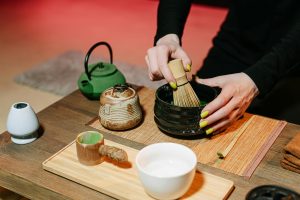
Perhaps no tradition illustrates Omotenashi more clearly than the Japanese tea ceremony, or chanoyu. At first glance, this ritual appears to revolve around the preparation of tea. But its true meaning lies in the cultivation of presence, respect, and attentiveness to the guest. The guiding principle of tea ceremony, Ichigo ichie 一期一会—literally “one time, one meeting”—emphasizes that every encounter is unique and will never be repeated in the same way.
Because of this, the host strives to anticipate every need before it arises: the temperature of the room, the seasonal arrangement of flowers, the choice of tea utensils, the silence between movements. The guest should never have to ask for anything; the host has already considered it. This philosophy embodies the essence of Omotenashi: caring so deeply for the moment that nothing is left unattended, while never flaunting one’s effort.
Tea masters such as Sen no Rikyū taught that the highest form of hospitality is simplicity—removing extravagance so that sincerity may shine through. In this way, the tea ceremony served as a model for all Japanese hospitality: attention to detail, invisibility of service, and the quiet dignity of anticipating unspoken needs.
Confucian Roots of Respectful Distance
Alongside Zen influence, Confucian philosophy contributed significantly to the ethos of Omotenashi. Introduced to Japan through China, Confucian teachings emphasized the importance of Rei (礼)—ritual propriety, etiquette, and respect for roles in human relationships. Maintaining harmony in society required individuals to act with awareness of others, restraining selfish impulses in favor of mutual consideration.
In practice, this meant observing proper distance and boundaries, showing humility, and ensuring that one’s actions did not cause unnecessary burden. These principles became embedded in Japanese etiquette, from bowing instead of touching, to the use of honorific language that elevates the listener. What looks like “politeness” to outsiders is, at its core, the Confucian ethic of anticipating how one’s words or actions may affect another.
Thus, Omotenashi draws not only from emotional empathy but also from a moral and philosophical framework: to act with rei is to respect the dignity of others through careful anticipation and restraint.
Zen Buddhism and the Letting Go of Self
Zen Buddhism, which took root in Japan during the Kamakura period, deepened the spirit of selflessness in hospitality. Zen teaches the release of attachment to ego, encouraging practitioners to see beyond the self to the interconnectedness of all beings.
Applied to Omotenashi, this means that service is not an act of subordination, nor a performance for praise, but a natural extension of awareness. The host, by quieting their own ego, becomes deeply attuned to the guest’s presence. Rather than asking, “How can I impress them?” the question becomes, “What do they need in this moment, even if unspoken?”
The simplicity and restraint of Zen aesthetics—seen in rock gardens, calligraphy, and architecture—also shaped the character of Japanese hospitality. A guest is not overwhelmed with excess but welcomed into an environment where space, silence, and minimalism allow the heart to breathe. In this stillness, the host’s attentiveness becomes all the more profound.
Samurai Discipline and the Concept of Maai
Even the martial culture of the samurai contributed to the ethos of anticipation. In swordsmanship, the concept of Maai 間合い—the proper distance between oneself and one’s opponent—was central to survival. To understand Maai required not only technical skill but also the ability to read subtle shifts in the other’s intention, often before any visible movement occurred.
This discipline of anticipation, though born in conflict, carried over into daily life and hospitality. To be attentive to the unseen, to prepare before being asked, to sense another’s need through silence and subtlety—all of these were skills cultivated in the warrior’s path. Over time, the martial notion of readiness evolved into a cultural value of attentiveness in peace.
Edo-Period Merchant Ethics and Town Culture
During the Edo period, Japan’s economy flourished, and merchant culture began to play a larger role in society. Successful merchants often emphasized Shojiki 正直 (honesty and sincerity) and cultivated reputations not only for quality goods but for attentive service. Guests and customers were seen as members of a larger human network, and business was guided by the belief that anticipating and fulfilling needs would secure long-term trust more than short-term gain.
In the inns (Hatago 旅籠) and teahouses that dotted the highways of Edo Japan, travelers found care that went beyond commercial transaction. The innkeeper would remember a guest’s preferences from previous visits, prepare their room with quiet foresight, and ensure they departed with comfort for the road ahead. Such practices were not considered “luxuries” but the expected rhythm of human interaction.
The Aesthetics of Classical Literature
Japanese literature, from The Tale of Genji to haiku poetry, often reflects an attentiveness to subtleties of mood, season, and unspoken emotion. Relationships in classical works are rarely expressed through overt declarations; instead, they unfold in gestures, silences, and anticipations. A poem left at a doorway, a seasonal reference in correspondence, or the choice of incense in a gathering—all communicate thoughtfulness without words.
This aesthetic tradition trained generations to perceive meaning in the unsaid, to value anticipation over directness, and to cultivate sensitivity to the emotional climate of others. Omotenashi is, in this sense, not only a moral practice but also an artistic one: the artistry of emotional anticipation.
In summary, Omotenashi did not arise in a vacuum. It is the confluence of philosophies and practices: the presence of Ichigo ichie from the tea ceremony, the ethical guidance of Confucian Rei, the selflessness of Zen, the attentiveness of samurai discipline, the trust-based service of Edo merchants, and the subtle aesthetics of literature. Together, these traditions created a culture where anticipating the needs of others became not only good manners but a way of expressing humanity itself.
The Psychology of Anticipation
If history provides the roots of Omotenashi, psychology reveals its blossoms: the inner effects it has on both giver and receiver. Why does anticipation—quietly meeting needs before they are spoken—create such powerful bonds? Modern psychology offers several insights into how subtle acts of foresight foster trust, reduce anxiety, and deepen emotional connection.
The Power of Being “Seen” Without Words
At the heart of anticipation is the psychological need for recognition. Human beings are wired to crave acknowledgment—not necessarily in the form of praise or reward, but in the simple assurance that one’s presence and state of being are noticed. When a host offers tea before fatigue is voiced, or prepares an umbrella before rain begins, the recipient feels an almost childlike comfort: “They see me. They understand me without me needing to explain.”
Psychologists describe this as “attunement”—the capacity to align with another’s inner world. Attunement is especially important in early childhood, where infants rely on caregivers to sense hunger, tiredness, or distress before words are possible. Adults never lose this longing. Thus, Omotenashi resonates on a deep level: it satisfies a universal desire to be known without demanding verbal explanation.
Anticipation as Anxiety Reduction
Another psychological effect of anticipation is the reduction of cognitive and emotional burden. In daily life, individuals constantly engage in what psychologists call “decision fatigue”: the mental exhaustion that comes from making countless small choices. When someone else quietly removes even a small burden—placing chopsticks in the correct orientation, offering a towel before it is asked for—the mind experiences relief.
This relief is not trivial. Studies in cognitive psychology show that lowering the “decision load” creates space for relaxation and emotional openness. In hospitality settings, this means the guest can focus not on logistics but on experience, allowing them to feel fully welcomed. Anticipation, in this sense, is not just kindness; it is a form of stress regulation.
Trust Built on Predictability
Trust, according to many psychological models, emerges from predictability. When we sense that another person understands our needs and acts upon them without requiring explicit instruction, we learn to rely on them. This reliability deepens the bond.
For example, in long-term relationships—between partners, friends, or colleagues—the ability to “know without asking” is often cited as a sign of intimacy. A friend who remembers how you take your coffee, or a colleague who senses when you need quiet before a presentation, creates an environment of safety. Omotenashi functions on the same principle: by anticipating, the host signals reliability, which plants the seeds of trust.
The Subtlety of “Non-Burdening” Kindness
Importantly, the psychology of Omotenashi differs from overt or intrusive help. A central value is not to make the recipient feel indebted or uncomfortable. If assistance feels like charity, or if kindness is performed too loudly, it risks creating a sense of obligation.
Japanese hospitality excels at what psychologists might call “low-friction kindness”—gestures so seamlessly woven into interaction that the recipient can accept them without self-consciousness. The tea is already there, the bag is already packed thoughtfully, the path is already cleared. The guest does not need to ask, nor to thank profusely. This preserves dignity on both sides, and creates the impression that kindness is natural rather than staged.
Anticipation as Mutual Ease, Not Self-Sacrifice
A common misconception is that Omotenashi requires self-sacrifice or exhaustion on the part of the host. Psychologically, however, true anticipation is not martyrdom but mutual easing of life. The host takes satisfaction in sensing and meeting needs; the guest feels comfort and gratitude. Both sides are enriched.
This aligns with theories of prosocial behavior in psychology, which emphasize that helping others often increases the well-being of the helper. Neuroscientific research shows that acts of kindness activate reward pathways in the brain, releasing oxytocin and dopamine. Thus, the art of anticipating needs is not only sustainable but also nourishing for the host.
The Invisible Contract of Respect
Finally, anticipation in Omotenashi creates what could be called an “invisible contract.” By meeting needs without words, the host communicates: “I respect you enough to prepare for you.” This message touches a deep psychological chord. To be respected in this way affirms dignity, and dignity strengthens bonds more than any material gift.
In modern psychology, respect is often identified as one of the foundational components of long-term relational satisfaction. Without it, affection wanes. With it, even silence becomes warm. Anticipation, therefore, is not about service mechanics—it is about dignifying the other person’s existence.
In summary, the psychology of anticipation reveals why Omotenashi feels so profound. It satisfies the need to be seen, reduces cognitive burden, builds trust, preserves dignity, nourishes both host and guest, and establishes respect at the deepest level. In this way, Japanese hospitality is not merely cultural ornament—it is a practice aligned with the fundamental psychology of human connection.
Cross-Cultural Contrasts
To understand the uniqueness of Omotenashi, it is helpful to place it alongside other cultural traditions of hospitality. Every society welcomes guests, yet the manner of welcome often reflects deeper values—individual freedom, communal warmth, or reverence for dignity. By comparing Japan with Western, Middle Eastern, and South Asian approaches, we see how anticipation-based hospitality reveals an alternative vision of human connection.
Western Hospitality: Freedom Through Self-Service
In much of Europe and North America, hospitality is closely linked to the ideals of independence and personal freedom. Guests are often treated as equals who should feel “at home.” This might mean being told, “Help yourself to the fridge,” or being encouraged to choose what they want rather than waiting for the host to decide.
Hotels in the West often emphasize efficiency and autonomy: self-check-in kiosks, buffets, and open bars where customers can serve themselves. The underlying message is: “We trust you to take care of yourself, and in that freedom lies comfort.”
From a Japanese perspective, however, this can feel surprisingly impersonal. A guest might wonder: “If I am left alone to do everything, am I truly being cared for?” Yet from a Western perspective, too much attention can feel suffocating, even patronizing. Here lies a cultural paradox: one culture expresses respect through space and independence, while another expresses it through careful, anticipatory service.
Japanese Hospitality: Anticipation Over Autonomy
By contrast, Omotenashi emphasizes relieving the guest of burdens. Rather than being asked to serve oneself, the guest is guided through the experience so seamlessly that choices feel already cared for. The host predicts what is needed—slippers at the door, a towel at the bath, seasonal dishes without requiring a menu decision.
The key is that the guest does not feel controlled but cared for. The structure of the experience is designed so subtly that freedom is preserved while effort is removed. To Westerners, this may feel unusually attentive, even luxurious. To Japanese people, it is simply natural—because respect is expressed not by granting autonomy but by preventing unnecessary struggle.
Middle Eastern and South Asian Hospitality: Abundance as Honor
In Middle Eastern, Indian, and South Asian contexts, hospitality is often measured by generosity and abundance. A guest might be greeted with lavish meals, insistent offers of food and drink, and repeated affirmations: “Please, have more. It is an honor to serve you.”
Here, the host’s pride is in displaying wealth or abundance for the guest’s enjoyment. Refusing an offer can even be seen as impolite, because the host’s honor rests on the guest’s acceptance. The emphasis is not subtlety or anticipation, but openness and abundance—hospitality is a visible, celebratory act.
Compared with this, Japanese Omotenashi is almost invisible. A perfectly arranged meal is served without insistence; the host quietly observes whether the guest wants more, rather than urging them. The contrast is striking: abundance versus restraint, overt generosity versus silent attentiveness. Both express care, but in profoundly different languages.
Omotenashi as a Third Path
Placed between these extremes—Western autonomy and Middle Eastern abundance—Omotenashi appears as a “third path.” It does not insist on overwhelming the guest with offerings, nor does it leave them entirely to their own devices. Instead, it whispers through quiet actions: “I have seen you, I have anticipated you, I will not burden you with either choice or insistence.”
This anticipatory style avoids two psychological risks common in other traditions: the burden of self-sufficiency, and the pressure of obligation. Guests neither feel abandoned nor overwhelmed; they feel guided yet free, respected yet unpressured.
The Traveler’s Discovery: Many Languages of Care
For the foreign traveler, these contrasts often spark moments of revelation. A Westerner accustomed to independence may initially misinterpret Japanese attentiveness as excessive, only later realizing it reflects respect. A Middle Eastern guest might find the subtlety too quiet, then recognize its elegance. An Indian traveler may notice that while Japanese hosts do not insist, their readiness is equally profound.
The broader lesson is that closeness has many dialects. Touch, abundance, freedom, and anticipation are all expressions of care. Each culture, in shaping hospitality, reveals what it values most deeply—whether it be autonomy, honor, or dignity preserved through silence.
In conclusion, Omotenashi is not superior or inferior, but distinct. It demonstrates that hospitality is not merely about serving, but about embodying cultural values through service. Where Western traditions highlight independence, and Middle Eastern traditions highlight generosity, Japan highlights dignity through anticipation. This difference enriches the global conversation on how human beings can honor one another in the act of welcome.
Emotional Impact of Omotenashi
When a traveler recalls a trip to Japan, the strongest memory is often not a landmark or a meal, but a subtle gesture—an umbrella lent in the rain, a smile that required no words, a towel already warmed for their comfort. These moments of Omotenashi linger not because of their scale, but because of their emotional resonance. The art of anticipation leaves a mark on the heart, communicating: “You are seen, you are valued, you are cared for.”
The Feeling of Being Genuinely Valued
One of the most profound emotional effects of Omotenashi is the sense of being truly valued. Unlike commercial hospitality that seeks a transaction, Omotenashi is often delivered without expectation of return. A complimentary tea at a ryokan, a free glass of cold water at a restaurant, or the quiet arrangement of shoes at the entrance—all suggest: “Your presence itself is enough. You do not need to earn this kindness.”
Psychologically, this creates a moment of relief. In a world where so much interaction is transactional, being cared for without condition feels rare and precious. The guest feels not like a customer, but like a human being honored for simply existing.
Beyond Memory: Imprints on the Heart
Services can be forgotten; emotions remain. A traveler may forget the details of a hotel’s décor, but they remember how the staff anticipated their needs when they were tired. A commuter might forget the exact train ride, but never forget the stranger who wordlessly guided them through a confusing station.
Neuroscience supports this: experiences that combine surprise with emotional resonance are more likely to be stored as long-term memories. Omotenashi creates exactly this blend. The guest did not expect such foresight, and the emotional impact engraves the memory deeply. Years later, the traveler might not recall the menu, but will vividly remember the warmth of feeling cared for.
The Power of Silent Comfort
Words are not always needed. In fact, one of the most distinctive aspects of Omotenashi is how much is communicated in silence. A bow, the placement of chopsticks, the timing of tea service—all convey a kind of care that transcends language.
This silence is powerful because it does not demand. A verbal insistence (“Please let me help you!”) can sometimes create pressure. A silent gesture removes this burden, allowing the recipient to accept care without feeling indebted. The psychological result is freedom within gratitude—a rare and liberating experience.
Omotenashi as the Seed of Trust
Trust is not built on grand promises but on consistent, subtle acts of reliability. Omotenashi creates trust by showing, not telling, that someone is paying attention. When a guest sees that their need has been anticipated before being spoken, they learn: “This person will not let me fall.”
Over time, this trust becomes the foundation of enduring relationships—between host and guest, between neighbors, even between strangers. Unlike transactional service, which ends at the exchange, Omotenashi opens a door to long-term emotional connection.
The Quiet Warmth That Travels Home
Perhaps the greatest impact of Omotenashi is that it does not remain in Japan. Travelers carry it back with them. They recall the feeling of being cared for without asking, and they begin to replicate it in their own lives: offering a glass of water to a tired friend, arranging a chair quietly for an elder, or choosing words that lessen another’s burden.
This ripple effect shows that the emotional impact of Omotenashi is not passive—it is generative. To receive it is to learn it, and to learn it is to give it. The warmth of anticipation spreads quietly, shaping cultures beyond Japan.
In essence, the emotional impact of Omotenashi lies not in the service itself but in the inner message it communicates: “You are safe here. You do not need to ask. You are already cared for.” This message, once felt, cannot be forgotten. It becomes a lifelong reminder that true kindness often arrives before a word is spoken, and its warmth lasts far beyond the moment of its giving.
Lessons for Daily Life
The brilliance of Omotenashi is not confined to ryokans or restaurants. Its deepest power lies in how ordinary people can weave it into everyday life. While grand gestures are rare, quiet anticipation of another’s need is always possible. In this sense, Omotenashi is less a cultural artifact than a daily practice—a way of living with awareness, restraint, and generosity.
Anticipating Needs at Home
In the family, love is often expressed through presence rather than words. Japanese mothers prepare children’s lunches with small touches that anticipate hunger and comfort. A spouse might warm the bath before the partner arrives home. None of these actions are announced; they are simply done.
We, too, can practice this spirit:
- Noticing when a family member is tired and preparing tea without being asked.
- Adjusting lighting or noise levels to create ease for others.
- Doing household chores quietly before anyone complains.
Such anticipations are rarely dramatic, but they build an atmosphere where love feels constant, not conditional.
The Workplace as a Stage for Quiet Care
Modern workplaces can be stressful and competitive, but Omotenashi offers an alternative model of interaction. A colleague who clears the whiteboard after a meeting, refills the coffee pot, or anticipates the boss’s unspoken concern demonstrates Omotenashi.
Importantly, these actions are not about currying favor; they are about reducing invisible burdens. When a culture of quiet anticipation develops, trust and morale rise. Everyone feels seen. Work becomes less about individual survival and more about collective ease.
Practical steps include:
- Preparing documents in advance so others need not ask.
- Anticipating questions and answering them before they arise.
- Respecting unspoken signals of fatigue or stress and adjusting accordingly.
Omotenashi in Digital Life
In the age of constant connectivity, Omotenashi takes new forms online. It means choosing words that reduce, rather than add, to someone’s mental load. A considerate email anticipates the recipient’s needs by being clear, concise, and respectful of time. A message of comfort arrives not when asked for, but when sensed.
Examples of digital omotenashi:
- Summarizing key points so others need not read excessively.
- Timing messages so as not to intrude on rest hours.
- Offering help in advance when someone hints at difficulty online.
Here, the art is the same as in a ryokan: notice what is not said, and answer it gently.
In Parenting and Friendship
Children often thrive not on constant instruction, but on the quiet assurance that someone has anticipated their needs. Packing a favorite snack, preparing a toy before tears arise, or offering space before a teenager asks—all are forms of parental Omotenashi.
Similarly, in friendship, Omotenashi means creating ease without fanfare: saving a seat for a friend, remembering small preferences, or stepping back when silence is more healing than advice.
This style of care teaches children and friends alike that love is not loud, but steady; not demanding, but freeing.
The Balance: Care Without Self-Erasure
A common misconception is that Omotenashi requires self-sacrifice. In truth, it is not about erasing oneself, but about heightening awareness. True Omotenashi does not drain the giver, because it is not about excess effort—it is about sensitivity.
The lesson for daily life is simple: anticipate, but do not overextend. Care, but do not vanish. The best Omotenashi is sustainable precisely because it is woven into the natural rhythm of life.
QuietTether’s Perspective
“Omotenashi is not about doing more, but about seeing more. It is the art of noticing what is not said, and answering it with quiet kindness.”
This perspective reframes daily life. It reminds us that care is not a burden when it arises from presence. To live with Omotenashi is to walk with open eyes, noticing subtle needs, and gently weaving responses into the flow of everyday interactions.
In essence, the lessons of Omotenashi teach us that kindness is not an extra layer to add on top of life—it is a way of being within life. At home, at work, online, and in friendships, we can embody it not by doing more, but by noticing more. It is not about performance; it is about presence.
Closing Reflection: The Silent Gift of Omotenashi
The foreign traveler at the ryokan carried home more than memories of tatami mats and hot springs. What lingered was the quiet moment when a steaming cup of tea appeared before words were spoken. That moment became a lesson: the deepest forms of care often arrive without announcement.
Japanese culture teaches us that Omotenashi is not merely hospitality—it is presence in its purest form. It asks us to look beyond transactions, beyond the visible exchange of service for payment, and to enter the realm of unspoken empathy. In that realm, love precedes words.
Distance and Nearness in Silence
When a host bows instead of embracing, when tea is prepared instead of explanations, when space is left instead of filled—these gestures reveal that kindness does not need to press itself forward. It can stand quietly, giving room for the other to breathe.
In this silence, we discover a paradox: anticipation without intrusion, care without weight, love without demand. Such Omotenashi teaches us that human bonds do not always require touch, sound, or even acknowledgment. Sometimes the strongest bond is the one that moves first, softly, and disappears without trace.
The Legacy of Invisible Care
Unlike a gift that can be unwrapped, Omotenashi leaves no tangible souvenir. Instead, it creates an emotional memory: the moment of being understood without having to explain. This memory often endures longer than any object.
In daily life, this invisible care becomes the soil from which trust grows. Whether in families, friendships, workplaces, or encounters with strangers, the practice of anticipating without imposing weaves unseen threads of connection.
Beyond Japan
Though deeply associated with Japanese tradition, the essence of Omotenashi belongs to all humanity. It is not a cultural ornament but a universal possibility. Wherever people seek to live together with grace, the spirit of quiet anticipation can take root.
It asks only for awareness, humility, and the courage to let kindness move before words.
QuietTether’s Philosophy
“True Omotenashi is not service, but presence. It is the quiet gift of anticipation, where love moves before words do.”
This is the silent gift: a way of being that does not announce itself, but that leaves an indelible warmth in the heart of the one who receives it.
Final Reflection
The art of Omotenashi is not about doing more, but about seeing more. It is not performance, but perception. It is not service, but spirit. And in a world where noise often drowns out tenderness, its quietness may be its greatest power.
To live with Omotenashi is to live with eyes open, heart attuned, and presence awake. It is to meet the unspoken need with gentle foresight, and to let love arrive silently, before words.